
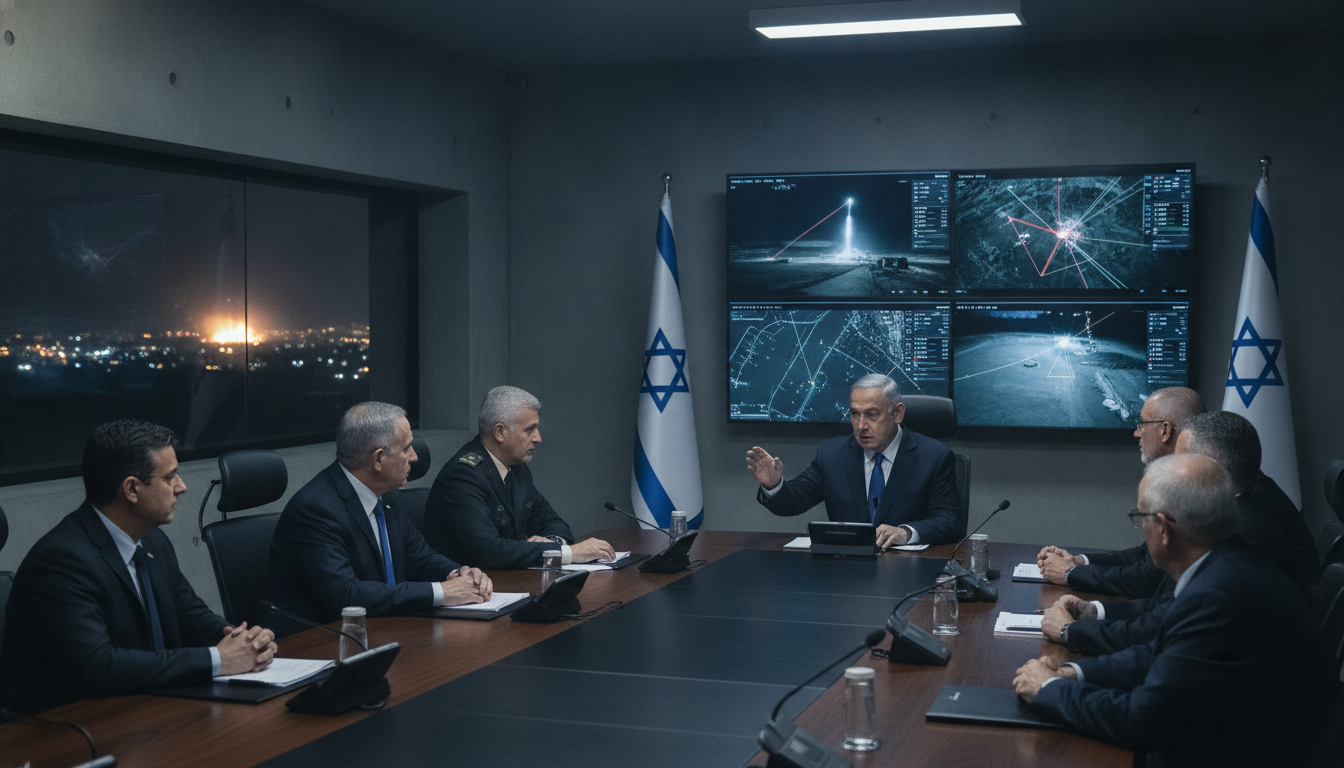
Israeli air strikes on Iran hit military targets in west and centre after Tehran missile launch
Israeli air strikes on Iran struck military targets in western and central areas after missiles were fired at Israel, raising tensions since the April ceasefire.
Israel said its air force carried out strikes on military sites in western and central Iran in response to a missile barrage launched by Iran at Israeli territory. The Israeli military described the targets as linked to Iran’s military infrastructure and said the operation was conducted shortly after Tehran’s missile fire.
Israeli military statement on the strikes
The Israel Defense Forces issued a brief statement saying the air force “struck military targets” belonging to what it called the Iranian regime in western and central Iran. The military did not provide detailed locations or casualty figures in its initial announcement.
Israeli officials characterized the action as a targeted military response to Iran’s missile launch, which marked the first such direct strike since a ceasefire was announced in April. The statement emphasized precision strikes aimed at degrading Iran’s military capabilities rather than broader escalation.
Iran’s missile launch and the April ceasefire context
Iran’s missile launch toward Israel was described by both parties as the pivotal provocation that prompted the Israeli response. According to the reports, this was the first time Iran fired missiles at Israeli territory following the ceasefire arrangements in April.
Analysts say the return to direct strikes breaks a period of relative lull and risks undoing diplomatic efforts tied to the ceasefire. Both Tehran and Israel have long signalled that they view strategic deterrence as central to their policies, and recent moves suggest a renewed cycle of tit-for-tat actions.
Locations and military targets reported
The Israeli announcement identified the strikes as occurring in western and central parts of Iran, areas where Tehran hosts a range of military and logistical facilities. Observers noted that such regions include military installations, weapons storage and transportation corridors used by Iran’s armed forces.
Neither side provided a full account of the specific sites hit or the extent of material damage in early reports. International monitoring sources and regional officials typically seek to corroborate initial military claims before publishing independent assessments.
Potential regional security implications
The exchange represents a significant escalation in a theatre that has seen intermittent cross-border strikes, proxy clashes and maritime incidents. Regional capitals and security planners will be assessing the risk of spillover to neighbouring states and the safety of shipping lanes and energy infrastructure.
Heightened military activity could prompt other regional actors to recalibrate posture and readiness, increasing the risk of miscalculation. Gulf states, which have advocated for de-escalation in recent months, may face diplomatic pressure to mediate or to bolster their own defenses.
Diplomatic responses and international concern
Global and regional powers are likely to express concern and call for restraint amid the renewed hostilities. In previous flare-ups, international actors have urged both sides to avoid actions that could spiral into wider conflict and to resume diplomatic channels to prevent further escalation.
Diplomatic missions and international organisations typically monitor such developments closely and may seek urgent consultations to defuse tensions. Calls for investigations into civilian harm and adherence to international law often follow when state-to-state strikes occur.
Operational risks and next steps for the parties
Military analysts say the immediate period following reciprocal strikes is one of heightened risk as both sides test deterrence and response thresholds. The Israeli air strikes on Iran will be watched for any follow-up moves, including retaliatory operations, shifts in air or naval deployments, or expanded use of proxies in the region.
Governments and military commands on all sides are expected to remain on alert while intelligence services refine assessments of damage, intent and potential next steps. The scope and duration of the current cycle of actions will depend heavily on political calculations in Tehran and Jerusalem and on regional diplomatic pressures.
For now, both governments have framed recent actions as targeted military measures tied to security imperatives, while regional actors push for cooling measures to prevent broader conflict. The coming days will be critical in determining whether this exchange becomes an isolated incident or the start of sustained escalation.
