
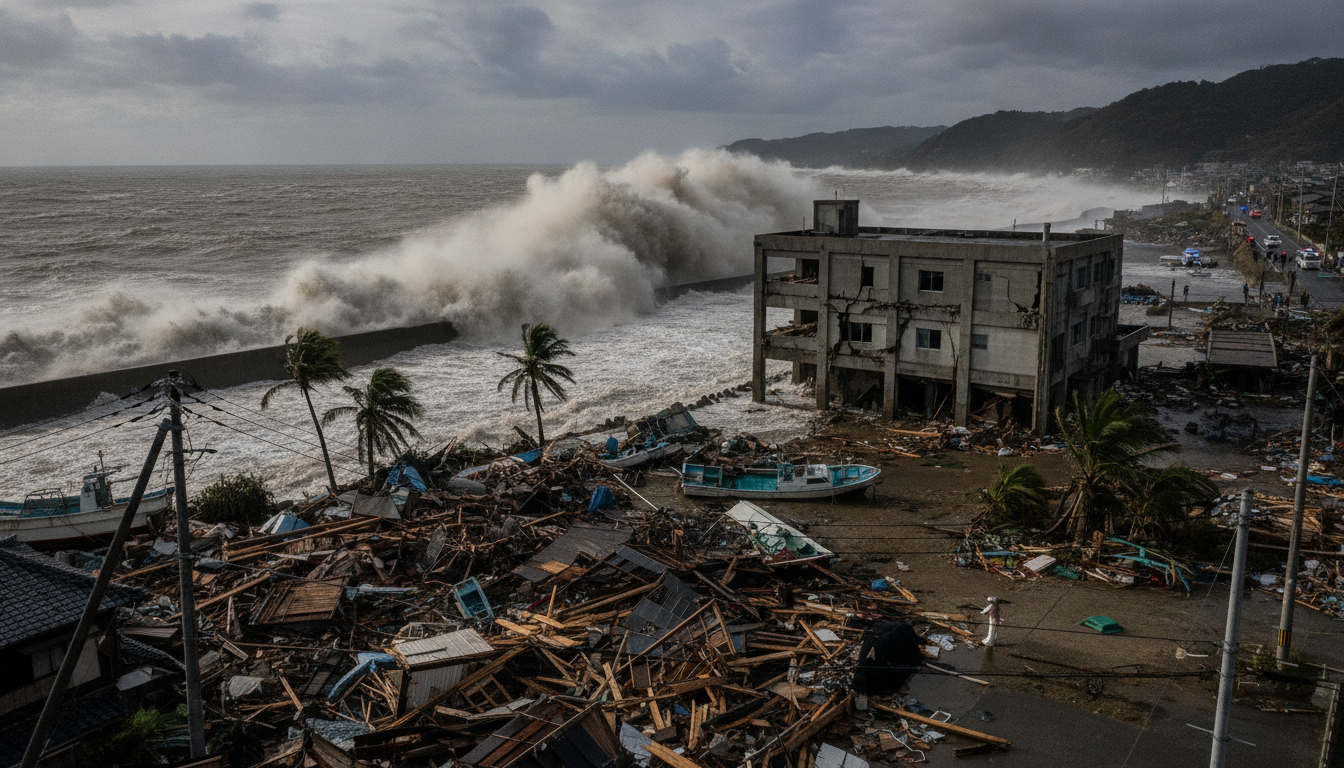
7.1-Magnitude Earthquake in Southern Japan Triggers Tsunami Warning
7.1-magnitude earthquake hits southern Japan on July 28, 2026, triggering a tsunami warning and Shindo 7 reading; evacuations ordered and services suspended.
A 7.1-magnitude earthquake in southern Japan struck on Tuesday, July 28, 2026, prompting the Japan Meteorological Agency to issue a tsunami warning for coastal areas. The agency reported the quake reached the highest level on the Japanese Shindo intensity scale, and authorities moved quickly to order evacuations and suspend services in affected zones.
Tsunami Warning Issued by Japan Meteorological Agency
The Japan Meteorological Agency announced a tsunami warning shortly after the tremor was recorded, urging residents along vulnerable coastlines to move to higher ground. Emergency bulletins advised people to avoid the shore and to follow instructions from local disaster management authorities.
Coastal municipalities broadcast sirens and mobile alerts soon after the warning, and some prefectures activated evacuation centers for residents and tourists. Authorities emphasized that the warning covered a wide swath of shoreline and would remain until tsunami risk assessments were completed.
Shindo 7 Intensity Recorded at Epicentral Areas
The quake registered as Shindo 7 in areas closest to the epicenter, the highest intensity on Japan’s instrumental seismic scale and indicative of severe ground shaking. The Japan Meteorological Agency said such readings typically correspond to extensive structural damage and pose significant risk to life and property.
Seismologists stressed that Shindo measurements reflect ground motion at specific locations rather than only magnitude, meaning localized effects can be extreme even if overall magnitude is medium-high. Officials warned residents that aftershocks could produce further intense shaking in the hours and days ahead.
Immediate Impact and Local Reports
Initial reports from southern prefectures indicated collapsing walls, fallen utility poles, and disrupted roadways in towns nearest the epicenter. Emergency services were dispatched to assess building safety and to reach areas where communications were limited due to power outages.
Hospitals in affected cities began triage operations for people with injuries consistent with falling debris and structural damage. Local governments cautioned that casualty figures and damage assessments were preliminary and subject to change as teams complete reconnaissance.
Transportation and Infrastructure Disruptions
Rail networks serving the southern region suspended services as a precaution while lines and bridges underwent safety inspections following the quake. Several airports temporarily halted flights to verify runway integrity and airport systems, impacting both domestic and international connections.
Port authorities restricted vessel movements until tsunami risk subsided and harbor surveys were completed. Utilities companies reported localized power and water outages and mobilized crews to restore services and inspect critical infrastructure.
Emergency Response and Evacuations Underway
Municipal authorities ordered evacuations in low-lying coastal districts and opened shelters equipped to receive displaced residents and tourists. Prefectural disaster coordination centers activated search-and-rescue teams, while national agencies prepared to deploy additional personnel and resources to hard-hit areas.
Local governments urged residents to carry emergency kits, stay informed via official channels, and avoid returning to coastal zones until the tsunami threat was lifted. Community volunteers and non-profit groups mobilized to assist with shelter operations and supply distribution.
Seismological Context and Aftershock Risk
Japanese seismologists noted that a 7.1-magnitude event can be followed by numerous aftershocks, some potentially large enough to cause further damage. Experts advised that structural inspections be completed before reoccupying compromised buildings and that the public remain vigilant for additional alerts.
Historical seismicity in Japan underscores the country’s experience in rapid emergency response and public preparedness, but experts emphasized that each event presents unique challenges, particularly when strong coastal shaking elevates tsunami risk. Monitoring will continue as agencies analyze fault activity and potential tsunami wave heights.
An independent assessment of damage and casualty figures is expected to be released by local authorities as emergency teams complete initial surveys and restore communications. The Japan Meteorological Agency and prefectural governments will continue to issue updates regarding tsunami advisories, transportation resumptions, and safety information for residents and visitors.
