
Iranian missiles land in Jordan: three projectiles fall early Sunday, army says
Three Iranian missiles landed in Jordan early Sunday, the Jordanian army said; no casualties were reported and authorities have opened an investigation.
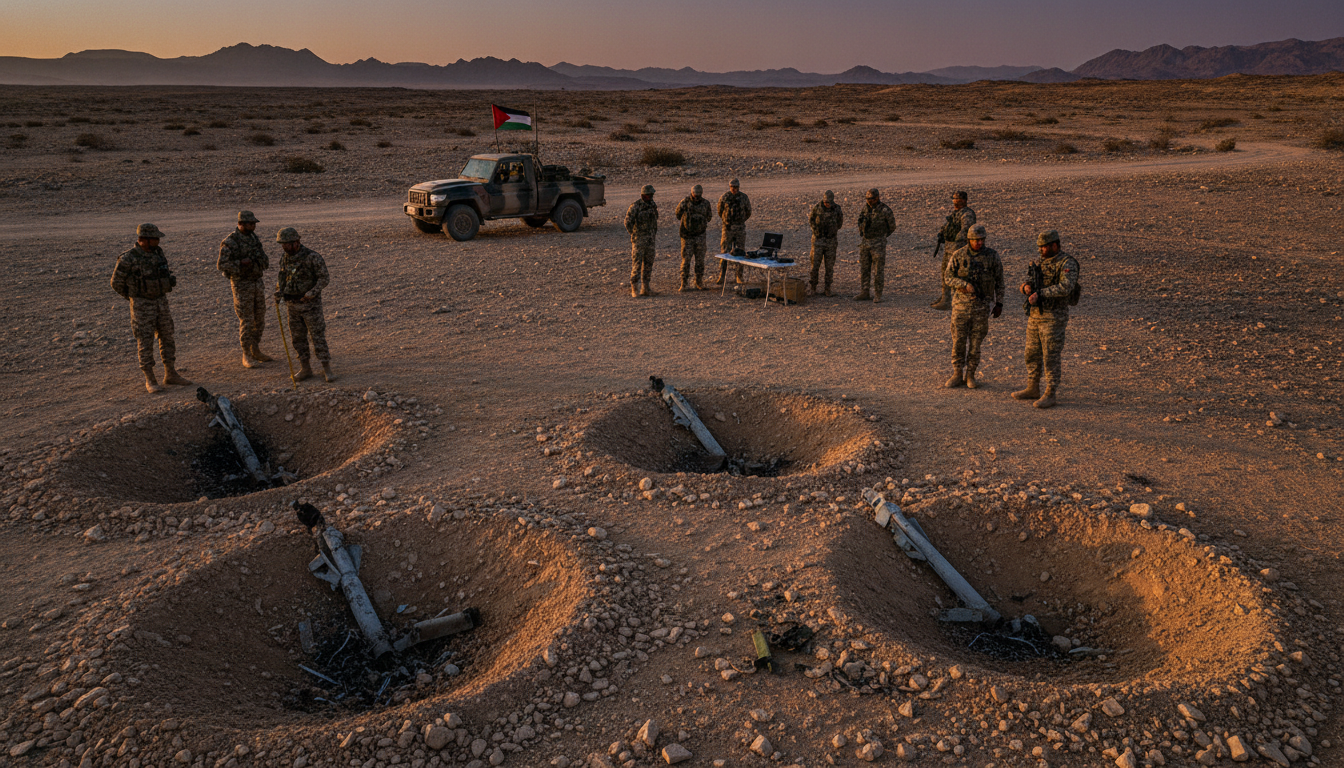
The Jordanian Armed Forces said three missiles originating from Iranian territory fell across several sites inside Jordan in the predawn hours on Sunday, according to an official military statement. The announcement, quoted by the state news agency, said there were no human casualties and that damage was limited to minor material losses. Authorities described the event as under active investigation while emergency responders assessed affected locations.
Jordanian Army Confirms Three Iranian Missiles Fell
The Jordanian military’s statement identified the projectiles as coming from Iranian soil and said they struck multiple sites within the kingdom. Military officials emphasized that the strikes caused no human injuries and that any physical damage was relatively minor. The armed forces said they were coordinating an immediate response to secure the impacted areas and preserve evidence for investigators.
No Casualties, Only Limited Material Damage Reported
Local emergency services carried out inspections at the locations reported by the army and found only small-scale property damage, the statement added. Hospitals and medical services reported no influx of casualties related to the incident. Authorities reiterated that civilian safety remained the priority while containment and recovery operations continued.
Investigations Underway into Trajectory and Origin
Military and civilian investigators have been mobilised to determine the precise trajectories of the missiles and to verify the point of origin. Officials said forensic teams will examine impact sites, collect fragments where possible, and analyse radar and tracking data to reconstruct events. The investigation aims to establish whether the missiles were the result of an accidental launch, technical failure, or another cause; authorities have not offered a public conclusion pending analysis.
Security agencies are also reviewing surveillance and airspace monitoring records to ensure no gaps in detection and early warning systems. Military spokespeople noted cooperation among relevant national agencies and indicated they would share verified findings once available. The process is likely to involve cross-checking international monitoring data if required.
Border Monitoring and Military Readiness Increased
In response to the incident, Jordanian forces have heightened vigilance along relevant border sectors and upgraded monitoring procedures in the immediate term. Troops and air defence units have been placed on alert to respond to any further stray munitions or unidentified aerial activity. Military officials stressed that these measures are precautionary and intended to protect civilian populations and critical infrastructure.
Civil defence units have been dispatched to reinforce local emergency readiness and to liaise with municipal authorities in areas close to the impact sites. Public communications outlets were used to inform residents in affected districts and to advise on safety procedures while investigations proceed. Authorities have asked the public to report any additional debris or suspicious findings to security services rather than handling them directly.
Regional Diplomatic Channels Notified
Jordan has notified relevant diplomatic and international partners about the incident, according to military sources, and said that formal communications are underway to establish facts and seek clarifications. While the army’s statement did not specify which channels were used, such incidents typically prompt contact with foreign ministries and regional security partners. Officials indicated that any necessary diplomatic steps will be taken once investigators have confirmed the missile origins and circumstances.
The response underscores Jordan’s preference for resolving questions through official and measured diplomatic and investigative means rather than through public speculation. Government spokespeople have called on neighbouring states and international observers to exercise restraint and to cooperate in the fact-finding process.
Implications for Civilian Safety and Airspace
The presence of stray missiles falling inside Jordanian territory highlights ongoing risks to civilian safety in a region where military activity can cross borders unintentionally. Authorities said the incident will prompt a review of civil-defence protocols and any necessary adjustments to airspace monitoring and early-warning alerts. Emergency planners are expected to reassess evacuation procedures, public alert systems, and the distribution of resources to ensure rapid response in similar future events.
Local communities near the impacted sites were told that assessments and any necessary repairs would be coordinated by municipal authorities with military support. Officials emphasized that restoring normal public services and ensuring the safety and confidence of residents remain immediate priorities as investigators complete their work.
The Jordanian government has pledged transparency regarding verified findings and urged the public to rely on official channels for information. Investigators continue to examine evidence and consult technical experts to produce a clear account of how the missiles came to fall inside Jordan.
Authorities remain on heightened alert as they complete forensic analysis and continue regional consultations.
