
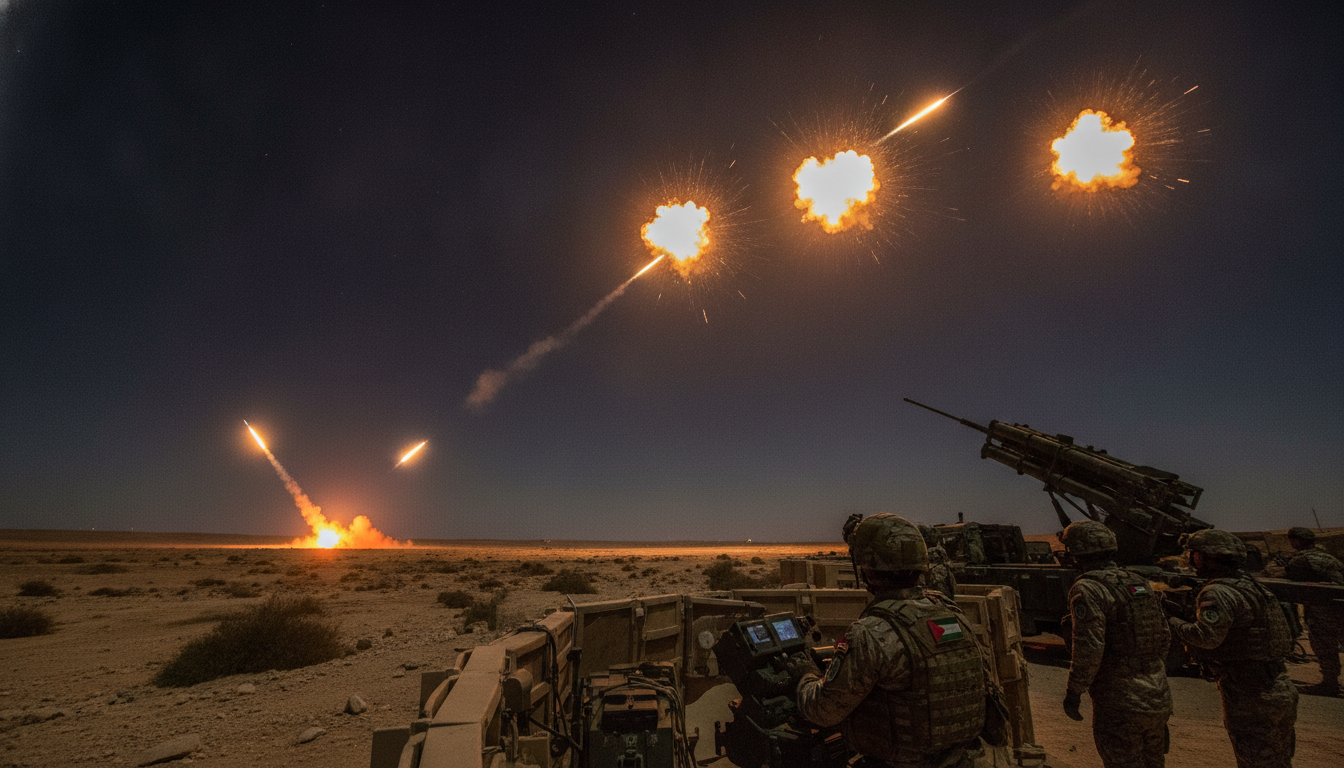
Jordan intercepts Iranian missiles; three shot down, fourth falls in remote southern area
Jordan intercepts Iranian missiles: military says three were shot down and a fourth fell in a remote southern area; no injuries and sites secured, officials say.
Jordanian Armed Forces report missile interceptions
Jordan intercepts Iranian missiles, the Jordanian Armed Forces announced, confirming that their air-defence systems engaged multiple projectiles targeting the kingdom. The military said three of four missiles were intercepted and destroyed over Jordanian territory, while the fourth impacted in a sparsely populated area in the south. The announcement was carried by the Jordan News Agency and attributed to a senior military source.
The statement emphasized that the interception operation did not result in any human casualties or material damage. Jordan’s armed forces said their air surveillance and defence assets remained at high readiness throughout the incident.
Three missiles destroyed; fourth landed in southern desert
According to the military source, three missiles were successfully intercepted and neutralized before they could strike populated areas. The fourth missile reportedly fell in a remote region in southern Jordan, away from towns and infrastructure. Authorities did not provide detailed coordinates but stressed the impact site posed no immediate risk to civilians.
Military officials described the intercepts as measured defensive actions carried out by Jordan’s integrated air-defence systems. They reiterated that responses were executed in accordance with established rules of engagement and national defence procedures.
No casualties or damage, engineering teams secure impact site
Jordan’s military spokesman told state media that there were no injuries and no reported damage to property as a result of the incident. The Royal Engineering Corps was dispatched to the site of the southern impact to secure the area and handle any unexploded ordnance or debris. Those teams are responsible for technical and security procedures designed to protect civilians and first responders.
The military source added that the engineering teams were employing standard technical and security protocols to examine and safeguard the impact zone. Local authorities were alerted and emergency services remained on stand-by in nearby governorates.
Airspace monitoring and heightened readiness across the kingdom
The armed forces said they would continue to monitor Jordan’s airspace with “the highest degree of readiness,” underlining a commitment to protect the kingdom’s sovereignty. Jordanian air-defence and surveillance assets were described as fully operational and prepared to respond to any further aerial threats. The military vowed to act firmly against any attempts to endanger Jordanian territory and citizens.
Officials did not indicate whether any defensive measures beyond the interceptions had been taken, nor did they disclose whether additional patrols or alert statuses had been imposed on border posts and bases. The statement served as a public assurance of ongoing vigilance.
Official attribution and source reporting
The announcement was attributed to an unnamed senior military official and was carried by Jordan’s official news service. The military communiqué referred to the incoming missiles as originating from Iran but provided no additional operational detail in its initial release. State media coverage focused on the absence of casualties and the swift response by defence and engineering units.
No further official clarification was provided about the motivation behind the attacks or whether any diplomatic channels had been engaged with neighboring states. The Jordanian government has not yet released a formal diplomatic notice or called for emergency international consultations in response to the incident.
Security implications and regional sensitivity
The interception of Iranian missiles over Jordan underscores the sensitivity of regional military activity and raises questions about spillover risks to neighbouring states. Jordan’s statement framed the incident strictly as a defensive success with no local harm, while stopping short of broader political commentary. Analysts say such events can prompt increased defence coordination and diplomatic inquiries among regional partners.
Jordan has historically maintained close security cooperation with international and regional partners to safeguard its borders and airspace. The military’s firm public posture in this incident signals a clear intent to deter further threats and to reassure residents of the kingdom’s protective measures.
The military confirmed continued surveillance and preparedness, and engineering units remain at the impact site to complete security and technical tasks. The government has not issued travel advisories or emergency measures for civilians, and authorities are expected to provide further updates as assessments conclude.
