
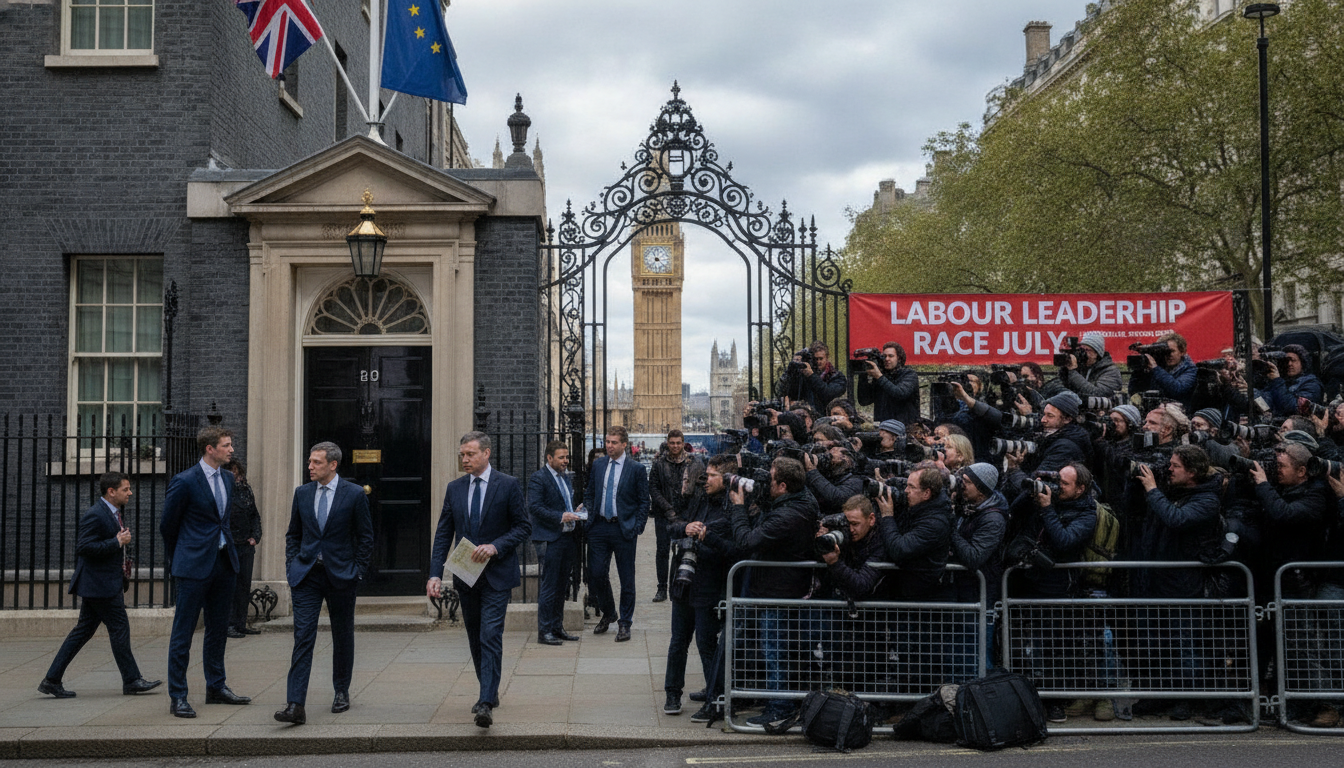
Keir Starmer resignation triggers July Labour leadership contest and paves way for Andy Burnham
Keir Starmer announces his resignation as UK prime minister, prompting a July Labour leadership contest and setting a September handover target as Andy Burnham prepares to re-enter Parliament.
Keir Starmer resignation announced at Downing Street
Keir Starmer announced his resignation as prime minister in a televised statement outside Downing Street on Monday, saying every decision during his tenure sought to put the country first. He confirmed he would remain in office while a leadership contest is run and pledged to ensure an orderly transfer of power.
Starmer told the public he would formally step down from Labour leadership and that the party would begin the process to choose his successor in July. He also assured that the new leader would take office before Parliament returns from its summer recess in September.
Leadership contest timetable and transition plan
The Labour Party will open its leadership contest in July, with Starmer staying on as caretaker prime minister until a successor is chosen. Party officials and insiders expect a compressed timetable designed to deliver a new leader ahead of the parliamentary session resuming in September.
Starmer said he would give his “full and unequivocal support” to the next leader as they inherit a country he described as stronger and fairer than the one he found. He added that he would do everything necessary to facilitate a smooth handover over the coming weeks.
Andy Burnham’s return to Parliament and leadership prospects
Veteran politician Andy Burnham is set to be sworn in as a Member of Parliament on Monday following a decisive by-election victory last Thursday. His return to the Commons immediately positions him as a front-runner and clears the way for a likely challenge for the Labour leadership.
Burnham’s rapid re-entry into parliamentary politics removes a key barrier to a leadership bid and reshapes the field of potential candidates. Observers say his win provides momentum that could translate into broader support within the party’s parliamentary and grassroots ranks.
Setbacks and controversies during Starmer’s tenure
Starmer’s premiership, which followed a decisive Labour victory in 2024 that ended 14 years of Conservative rule, was dogged by political setbacks and a collapse in public approval. His government faced criticism over cuts to social assistance and contentious proposals for defence spending that alienated parts of the electorate.
A series of high-profile resignations and scandals increased pressure on his leadership and contributed to mounting calls for change from within Labour. Despite credit for reshaping the party into an electable force, those challenges undermined his standing in office.
Political significance and the Brexit anniversary backdrop
The timing of the resignation coincides with the tenth anniversary of the Brexit referendum, a milestone that highlights a tumultuous decade of British politics and frequent changes in leadership. The announcement makes Britain likely to name its seventh prime minister in a decade, underscoring ongoing political volatility.
Analysts say the leadership contest will be closely watched for indications of Labour’s future policy direction and its capacity to stabilize government ahead of domestic and international challenges. The new leader will inherit responsibilities on the economy, defence and social policy at a time of heightened scrutiny.
How the contest could affect parliamentary and public dynamics
A rapid leadership election in July may intensify internal party maneuvering as candidates seek endorsements and build campaign teams. The outcome will determine whether Labour consolidates the centrist course credited with its 2024 victory or shifts in response to recent criticism and public sentiment.
The transition period could also influence parliamentary business during the summer recess and shape opposition strategy. Parties across Westminster will monitor Labour’s selection process closely as they recalibrate their positions in anticipation of a new government leader.
Political observers caution that while a new leader may stabilise the party’s fortunes, the broader public response will depend on policy clarity and delivery. The successor’s early weeks in office are likely to set the tone for Labour’s next phase.
The coming weeks will test Labour’s internal unity and ability to present a coherent programme under fresh leadership, and they will determine how swiftly the party can move past the controversies that marked the final months of Starmer’s premiership.
