
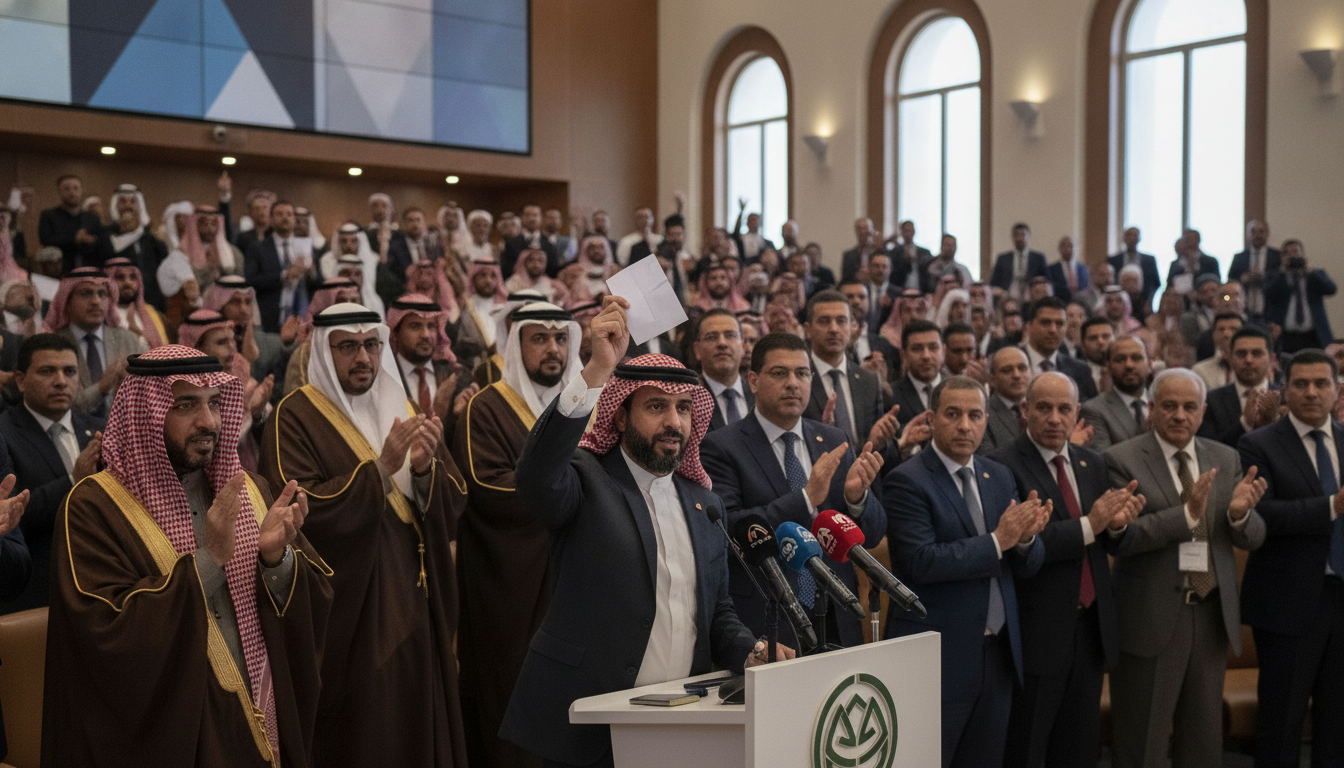
Khalil al-Hayya Elected Hamas Chief in Narrow 35-34 Vote, Signalling Continuity in Gaza
Khalil al-Hayya elected Hamas head in a 35-34 vote, placing a Gaza-based pragmatist at the movement’s helm and raising prospects for limited talks and diplomacy.
Khalil al-Hayya has been chosen as the new leader of Hamas, ending a nearly two-year period in which the movement operated without a single head.
The tight vote — 35 for al-Hayya out of 69 ballots cast — followed the assassination of former chief Yahya Sinwar in October 2024 and months under a five-member leadership council.
Al-Hayya’s elevation is likely to reinforce Gaza’s central role within Hamas decision-making while presenting a single interlocutor for external actors seeking engagement.
Leadership Vote and Narrow Margin
Al-Hayya secured the position by a single vote, highlighting deep divisions within Hamas’s wider membership and leadership.
The contest pitted him against Khaled Meshaal, the former head of the movement’s political bureau, and produced a result that many analysts describe as a razor-thin endorsement.
The outcome confirms that internal mechanisms for succession remained functional despite the targeting and killing of several senior figures in recent years.
Council Rule and Succession Background
Since October 2024, Hamas had been governed collectively by a five-member council after Sinwar’s assassination, with al-Hayya serving as one of the council’s senior figures.
The movement also suffered the killing of Ismail Haniyeh in Tehran in July 2024, a development that accelerated debates over leadership continuity and operational cohesion.
Hamas’s ability to convene and deliver a vote signals that its internal organizational processes endure even under sustained military and political pressure.
Rivals, Reputation and Internal Standing
Al-Hayya’s rise reflects both his proximity to Gaza’s organisational structures and his standing as a continuity candidate within the group.
Senior analysts note he was deputy head in Gaza under Sinwar and enjoyed longstanding ties to other senior leaders, which smoothed his path to the top job.
Observers describe him as a pragmatist who has combined hardline credentials with a willingness to engage in pragmatic arrangements when politically necessary.
Negotiations and Contact with US Envoys
Al-Hayya has been linked to direct contacts with US-linked envoys during previous ceasefire talks, a history that could shape future engagement dynamics.
Reports say he took part in negotiations that involved Jared Kushner and US special envoy Steve Witkoff, and that the rapport established during those exchanges could make him a focal point for any renewed diplomatic outreach.
Analysts caution, however, that prior contacts do not guarantee a durable negotiating channel and that any talks will remain sensitive and conditional.
Gaza Control and Administrative Role
Despite heavy military pressure and extensive destruction across the Strip, Hamas retains administrative functions in Gaza, and al-Hayya is widely seen as closely connected to that territorial base.
The movement continues to oversee essential civil services, including emergency medical and rescue operations, even as its military capabilities have been degraded by sustained strikes.
His election reinforces the message that Gaza remains central to Hamas’s organisational identity and political priorities.
Regional Alignments and Iranian Links
Al-Hayya is often portrayed as having ties to Iran, yet analysts stress the movement has historically balanced relationships across the region.
Experts note that while factions within Hamas may advocate closer alignment with Tehran, the organisation has repeatedly calibrated its external partnerships to preserve strategic autonomy.
His selection is therefore interpreted by some as a signal that Hamas will maintain a pragmatic posture, weighing regional relationships against on-the-ground priorities in Gaza.
What the Election Means for Diplomacy and Security
For international actors, al-Hayya’s appointment presents both potential clarity and continued uncertainty.
On one hand, a single named leader creates a clearer interlocutor for diplomacy and for actors seeking to stabilise humanitarian conditions in Gaza.
On the other hand, the narrowness of the vote and the unresolved fractures within Hamas mean that policy shifts will likely be incremental and contested.
Khalil al-Hayya’s elevation closes a chapter of collective interim rule and opens a new phase in which Gaza-based leadership and pragmatic bargaining are expected to shape Hamas’s short-term agenda.
