
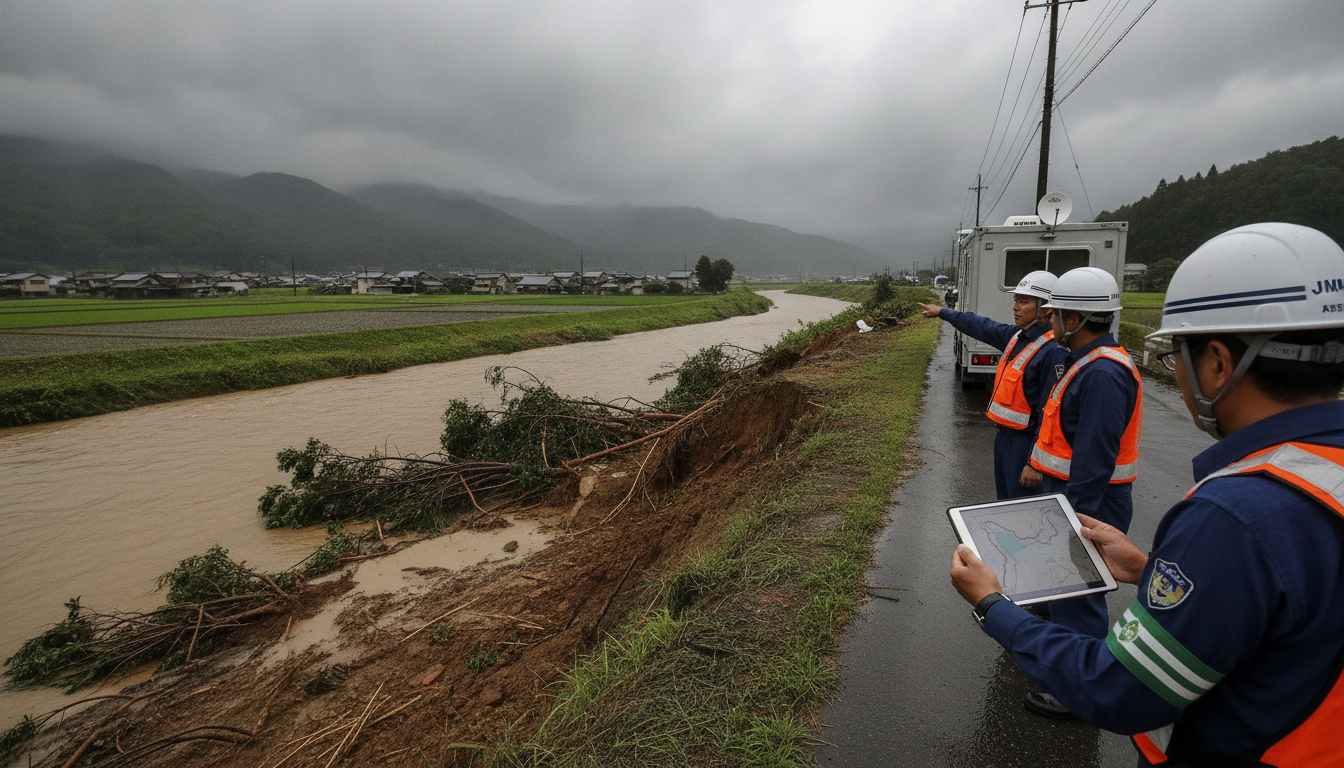
Heavy Rain in Kyushu Sparks Landslide and Flood Alerts
Heavy rain in Kyushu prompted urgent warnings from the Japan Meteorological Agency (JMA) on Sunday, as linear rainbands drenched Miyazaki and Kagoshima and raised the risk of landslides and river flooding.
The JMA and local media reported that unstable conditions could spread across western Japan, with authorities urging residents in low-lying and mountainous areas to remain on alert.
Heavy Rain Triggers Emergency Warnings
The Japan Meteorological Agency issued advisories early Sunday after intense showers formed over southern Kyushu, the agency said.
Officials warned that continuous downpours and concentrated rainbands could produce sudden rises in river levels and ground instability, increasing the likelihood of landslides in vulnerable zones.
Kyodo News and other outlets relayed the agency’s concerns that linear rainbands — long, narrow zones of heavy convective rain — were moving repeatedly over the same areas.
This pattern can rapidly saturate soil and overwhelm drainage systems, prompting the JMA to highlight immediate risks to communities in Miyazaki and Kagoshima prefectures.
Linear Rainbands Lash Miyazaki and Kagoshima
Meteorologists observed several linear rainbands develop late Sunday morning, repeatedly focusing intense rainfall on swathes of Miyazaki and Kagoshima.
These bands tend to bring very heavy precipitation in short periods, raising the danger of flash flooding and debris flows on steep terrain.
Local officials reported sharp increases in short-term rainfall totals in affected districts, and monitoring teams were dispatched to track river gauges and slopes prone to collapse.
Emergency services said they were prepared to respond to calls for assistance and to support evacuations if conditions deteriorated further.
Unstable Conditions May Spread to Shikoku and Western Japan
The JMA warned that the unstable weather pattern was not limited to Kyushu and could affect other parts of western Japan, including the island of Shikoku.
Forecasters indicated that heavy rain advisories might be expanded if downpours intensify or if new rainbands develop over adjacent prefectures.
Residents across the region were advised to expect intermittent but intense heavy rain, with potential for localized warnings or evacuation orders as river levels rise.
Authorities cautioned that conditions can change rapidly with these systems, so people should monitor official announcements and weather updates closely.
Authorities Urge Precautions and Possible Evacuations
Local governments in the hardest-hit prefectures issued precautionary notices for households in low-lying areas and near riverbanks, urging preparations for possible evacuations.
Many municipalities maintain designated shelters and have protocols to assist elderly and mobility-impaired residents during emergency relocations.
The JMA and municipal offices recommended basic safety measures: avoid travel through flooded roads, keep away from riverbanks and steep slopes, and secure loose outdoor items that could be swept away.
Emergency hotlines and community alert systems were activated to deliver rapid warnings and instructions to residents at risk.
Transport Disruptions and River Monitoring Underway
Rail and road operators in southern Kyushu temporarily adjusted services in response to heavy rainfall and to allow inspection of tracks and routes for flood or landslide damage.
Coastal and river patrols were stepped up to monitor critical waterways and to warn communities where water levels began to rise.
Authorities emphasized that driving through standing water can be hazardous and that submerged roadways may conceal damage.
Transport agencies advised commuters to check service notices and to postpone non-essential travel while conditions remain unstable.
Emergency responders and meteorological teams continued to share updates through official channels, urging the public to heed evacuation guidance without delay when issued.
Local disaster management centers remained on alert, coordinating with prefectural governments and first responders to prioritize life-saving actions.
The situation highlighted broader concerns about the season’s weather extremes and the need for heightened preparedness in flood-prone and mountainous regions.
Residents were reminded to maintain emergency kits, charge mobile devices, and confirm evacuation routes to shelters designated by their local authorities.
