
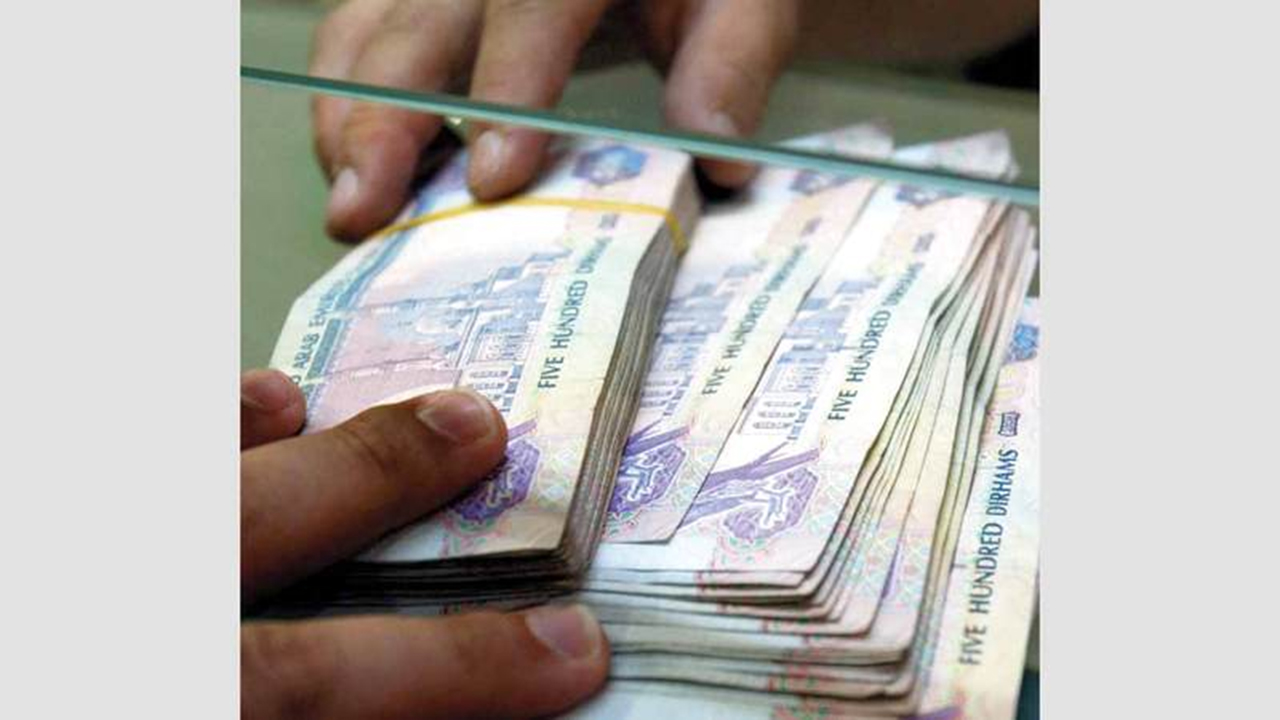
Concerns day and night, complete paralysis in life, closed roads in all directions, stumble after stumble that ends with imprisonment or fleeing from one place to another. This is the end of loans, debts and dues accumulating on citizens who may have misbehaved, or were victims of exploitation by employees of banks and various institutions. Or moneylenders who exploit their need and give them at a greater interest, making their lives more complicated, waiting for intervention from the state, which spares no effort to provide a helping hand, whether directly or Through initiatives implemented by understanding bodies such as the Dubai Courts or the Central Bank, and others, but the problem continues, in light of the weak culture of borrowing among citizens, and their rush to borrow for consumer purposes necessary for luxury and display, such as travel or purchasing luxury vehicles, or lack of familiarity with borrowing policies. And not leaving a financial margin for emergencies that impose burdens on their shoulders that they cannot bear, such as divorce, which imposes additional obligations on its owner such as alimony and children’s expenses. And others, or sudden retirement.
In this investigation, “Emirates Today” attempts to dive into this turbulent sea, and determine the reasons that lead to citizens’ financial distress, their inability to fulfill obligations imposed on themselves, exposing them to the risk of imprisonment, and dragging their families into great suffering. The investigation deals with interviews with a large number of distressed citizens. For various reasons, their fate ended up being taken to the Dubai Courts, and meetings with those directly involved, such as the enforcement judges in charge of one of the most important initiatives to help defaulters who deserve a helping hand, as well as banking experts and men. Law.
Distressed citizens, exhausted by debt, said that the phone calls they received from the Charity Courts Committee in Dubai Courts, informing them of their inclusion in the “You Help” initiative, which was launched in partnership between “Emirates Today”, Dubai Courts, and the Department of Islamic Affairs and Charitable Activities in Dubai, were a lifeline for them, so They could not control themselves and cried when they learned that their debts had been settled and paid for by the initiative.
“The banks do not help us,” with this phrase the citizen (M.A.) began his speech, saying: “When they offer us loans, their employees speak to us in a nice, seductive language, as if they are offering us gifts, not loans that we will return with interest, and when we stumble, we find another face that is strict and stubborn.” He does not accept any compromises or settlements.”
He added: “I obtained a loan of about 375 thousand dirhams, and I committed to repaying it until I had only about 55 thousand dirhams remaining. Then I was exposed to emergency circumstances that prevented me from being able to complete the amount. I requested a settlement with the bank, but I received a strict response, and I was surprised by the filing of a lawsuit against me, for an amount… 550 thousand dirhams, which is the original loan, along with arrears and fines. Had it not been for the understanding of the judge who took over the case, I would have suffered both, as he appointed an expert. He determined the amount owed to me, and awarded a ruling to the bank of only 55 thousand dirhams.
He points out that the problem does not lie in the bank’s intransigence, its exploitation of the situation, and its lying about the remaining amount, but in light of the defaulting citizen’s inability to confront the bank judicially, pointing out that he could not afford to hire a lawyer to defend him, and when he went to the bank to request documents proving his payment In the previous payments, he did not cooperate, and this is expected, in light of the dispute between them regarding the case, but the court obligated him to do so.
He explains that the case took time, and during all this period he was forced to confiscate his passport, which paralyzed his life, so he was unable to carry out any other transaction, whether related to his work or his children, stressing that he is well aware that there is no escape from paying the debt.
He points out that he tried to reach a settlement with the bank, but he was unable, and he moved from one bank to another to buy the loan he owed, and in the end he reached a dead end, as the settlements imposed on him exceed 65% of his salary, and if he signed them, he would remain in debt for 25 years, pointing out. By the way, this is the case for many people, as some remain indebted to banks throughout their lives, due to lack of awareness, weak culture, and lack of good ability to plan.
M.A. says: “I was unable to make the decision in the end, as the deductions will leave nothing of my salary for my family, housing, and the monthly bills owed to me,” pointing out that he was living in a real nightmare, until he was surprised by a call from those in charge of the “Charity Courts” initiative. In the Dubai Courts, he was informed that his due dues had been paid. He could not control himself and cried emotionally, as relief came in a moment of despair after all the episodes had taken hold.
He explains that he knows many people who obtain loans for consumer purposes, but he borrowed to renovate his home, and was subjected to fraud from the contractor, so he did not renovate the home, and lost all his money, stressing that it is impossible for him to apply for another loan, as for him and for many citizens, it is “death.”
Temptation and regret
The second case is of a young citizen working in a good profession in a large government department. All indications indicate that he has a promising future, in light of his obtaining a job that many others dream of. But his situation suddenly changed, when a person managing fake portfolios tempted him to invest with him, and because he was in his prime. During his professional life, and he had not yet saved, he decided to resort to banks, and first borrowed in his name, then the fraudulent investor convinced him – as he said – to obtain other loans, and asked him only for his documents, and he would apply in his name to the These loans are because he has relationships with employees of a bank branch, and he actually obtained two additional loans, two cars, and real estate financing for an apartment in the name of the young citizen, bringing the total accumulated receivables on him to two million and 300 thousand dirhams.
Many details and complex and intertwined threads completely complicated this young man’s life. A lawsuit was filed against him, and he was suspended from his job for about eight months, due to the nature of the department in which he worked. He did not find any flexibility on the part of the six banks to which his fate depended, except for only one bank, which accepted a settlement. He took into account his debt, took into account his circumstances, and tried – in vain – to prove that he had not personally signed the loan papers.
He told Emirates Today: “Banks are not strict with citizens in the procedures for obtaining loans, because the citizen will not flee the state, but they are very stubborn in the event of default, and do not agree to easy settlements,” pointing out that he knocked on all doors to accept an appropriate settlement. But some of them refused to even talk, the responses were rude, and lawsuits were brought against them quickly.
He added: “I spoke with the official at one of the banks to drop the lawsuit, pleading that my future is at stake, and if I lose my job, they will lose their money completely, because my salary is my only source of income, but there is no life for whomever you call, not even respect or acceptable language.”
He points out that he went through the worst eight months of his life. He had no work to do, debts were piling up on him, and he became like a drowning person taking his last breath, until he received a call from the Dubai Courts to return his soul to him. He cried uncontrollably, as they did not help him just pay off the debts. His debts, and the cancellation of the lawsuits filed against him, but rather contributed to his return to his work and the restoration of his life again, stressing that his job is everything to him now, and he will not borrow a single dirham from a bank or… person.
Debt accumulation
The default of citizens is not limited to borrowing from banks only, it is just one party or factor among many factors, which often accumulate on them, such as citizen (S.M.), who reports that he obtained a loan from a bank, and his life was going on normally, and he paid on time. Regularly, until the amount of rent accumulated on him, and his expenses exceeded his monthly income, he was unable to commit to paying the loan installments, and he later discovered that the interest increases whenever he postpones an installment, and in the end the real estate agency from which he rents sued him, and a judgment was issued against him, Matters became greatly complicated, until the Dubai Courts intervened, through the Charity Courts Committee, and helped him pay the dues he owed.
divorce
Things get worse for citizens when a sudden change occurs in their lives, such as a divorce, which entails additional expenses that burden them. There are more than 40 citizens who are in default in paying their legal dues, and enforcement judgments have been issued against them, and the value of the claims for a number of them has reached about 500. One thousand dirhams, and among them is the citizen (A.L.), who indicates that he was forced to divorce his wife after the difficulty of their relationship, and since he was actually in debt to one of the banks, he could not afford The cost of alimony for which judgments were issued in favor of his divorced woman, so those sums accumulated on him, until they reached 490 thousand dirhams, and he obtained an implementation ruling, and his life became greatly complicated, as what he had spent on one house before, became twice as demanding now, and he was almost imprisoned had it not been for the intervention. Dubai Courts to assist him.
Shock in court
Although many cases of default are similar to debt-shackled citizens, some of them are quite shocking, such as the case of a citizen who learned by pure coincidence that there was a case registered against him from one of the two telecommunications companies, with a phone bill worth only 1,800 dirhams.
Citizen (A.A) says that he was reviewing the court in another case, and he was surprised by that case, which shocked him greatly. The giant institution decided to drag a citizen to the courts with an amount like this, pointing out that it was possible that he would not know anything about that case, and a ruling was issued. against him, and his reputation is damaged, because the institution did not attempt to communicate with him and inform him of the necessity of paying the bill, so as not to take action against him.
He confirms that the expenses incurred by that institution on the case are undoubtedly more than the value of the invoice, and it would have been easier for them to talk to me and pay the amount in installments over two months.
• Banks use security checks to sue customers for total loans, even though most of them have been repaid.
• “Debts” from 6 banks pursue a young man and suspend him from his job for 8 months.
• 40 citizens defaulting on paying legal dues in Dubai.
The Central Bank takes corrective measures to protect borrowers
Two banking experts: Specific requirements for settling defaulters’ loans…and banks are not intentionally being strict
Two banking experts believe that the situation has changed greatly now, after a package of corrective measures taken by the Central Bank, and obligating banks, to limit the unjustified rush to grant citizens and others imaginary loans, without regard to the size of income or salary, pointing out that there is weakness. In the culture of borrowing, and the rush to borrow for showy and consumer purposes, such as traveling and buying luxury cars, and not preparing for emergencies.
Banking expert Sami Al-Awadhi told Emirates Al-Youm that there is no abuse by banks currently, unlike what was happening before approximately 2011, when banks were granting the customer loans that were not commensurate with his salary, and you would find someone receiving 10,000 dirhams and obtaining a loan. Its value is two or three million dirhams, so he remains under the fire of debt throughout his life, but the Central Bank issued a decision that the credit limit for any client should not exceed 50% of his salary, so that he can… To provide expenses to help him meet his living obligations.
He also set specific periods for repaying a personal loan, not to exceed 4 years, and 5 years for a car loan, so that the person can make the appropriate decision when the loan term expires, unlike before, when the customer died while still repaying the loan.
Regarding banks exploiting the guarantee check to sue customers for the total amount of the loan, even if the customer repaid a large part of it, Al-Awadhi explains that the guarantee check now is for the amount of the loan only, and there are even amendments to obtain monthly checks for the value of the installments, and the loan does not exceed 20 times the salary. Depending on the client’s income and the nature of the institution in which he works.
He continued: “If the bank files a lawsuit against the customer for the total amount of the loan, he can prove the installments that he paid,” stressing that these procedures implemented by the Central Bank contributed to eliminating many problems, especially since it launched an initiative to settle outstanding loans for distressed citizens. It studies each case separately, and takes settlement procedures in a way that is appropriate for both parties.
He points out that there is a system currently in place, which relies on studying the CV of each client, and on the basis of his commitment or lack thereof, loans, credit cards, or even checks are granted.
He confirms that the problem remains in the personal culture of the citizen, as some resort to other parties to borrow, or perhaps something sudden happens in their life, doubling their obligations, such as alimony after divorce, personal debts to individuals, or retirement. Unfortunately, the citizen does not take precautions in advance, so you find him getting… The maximum loan allowed by the Central Bank, without leaving a margin to help it face emergencies.
For her part, banking expert Awatif Al-Harmoudi says that the requirements of life have become difficult now, as responsibilities multiply with the birth of children and the increase in their obligations, in addition to the high prices, noting that this situation requires a kind of wisdom in borrowing, and stopping borrowing for recreational purposes.
She adds that banks do not give debts to minors, and the customer is supposed to read the contracts well and understand the terms and conditions, pointing out that some people encounter a difficult reality when they postpone an installment, or fail to pay, and when the bank tells him that he signed these terms, he says that he did not read, and this A grave mistake, and requires some kind of awareness.
She points out that the current generation of citizens is educated, and before someone buys shoes, he conducts research on the Internet to find out their advantages and disadvantages, so what if he applies for a huge loan?! But some people neglect this, pointing out that the Central Bank has placed many restrictions on granting loans, so that the citizen does not live in debt all his life, but some of them move from one bank to another to buy their loan, and even resort to borrowing from people with interest, and this always puts them at risk. Stumbling.
Al-Harmoudi confirms that borrowing for the sake of showmanship and luxury has become unnecessary. It is unfortunate that someone borrows to travel annually to expensive destinations, or buy luxury cars, noting that these are unjustified behaviors, especially in light of the provision of all the necessities of life, including land, housing, and education, for citizens. By the government.
She points out that the Central Bank has set a maximum limit for borrowing, or for obtaining credit cards, not to exceed 50% of the salary, but the client is supposed to have no more than 35% of his debts, so as not to put himself at risk, explaining that the citizen goes to the bank to obtain a loan, and requests… The maximum amount is immediately, as if this money is a gift that will not be returned.
Regarding the ambiguity of loan contracts, and their writing in small handwriting in huge notebooks, Al Harmoudi says that a person asks 100 times before buying a new mobile phone, so why doesn’t the customer ask before signing?! Confirming that there is negligence in this aspect on the part of the majority, and even they personally fall into this mistake, so this culture must change.
Regarding the banks’ intransigence and strictness when distressed citizens come to them for settlement, it confirms that it is not in the interest of any bank to obstruct settlement, but the customer must realize that there are matters beyond the bank’s control, including the absence of any change in the customer’s salary that is transferred to the bank, so why is this being done? Settle if he receives the same salary? Pointing out that banks understand if a citizen is affected by something, such as retirement or a decrease in salary due to him moving to another job.
It turns out that any other obligations that arise from the customer have no part in the bank, as there is a contract between the two parties, explaining that banks do not resort to the judiciary easily, because they are harmed by that, due to the long period of litigation and the cost of this procedure, but in the end they are concerned with recovering the money that they lent to customers. .
• Citizens owe the maximum amount… and some borrow for show and consumption purposes.
