
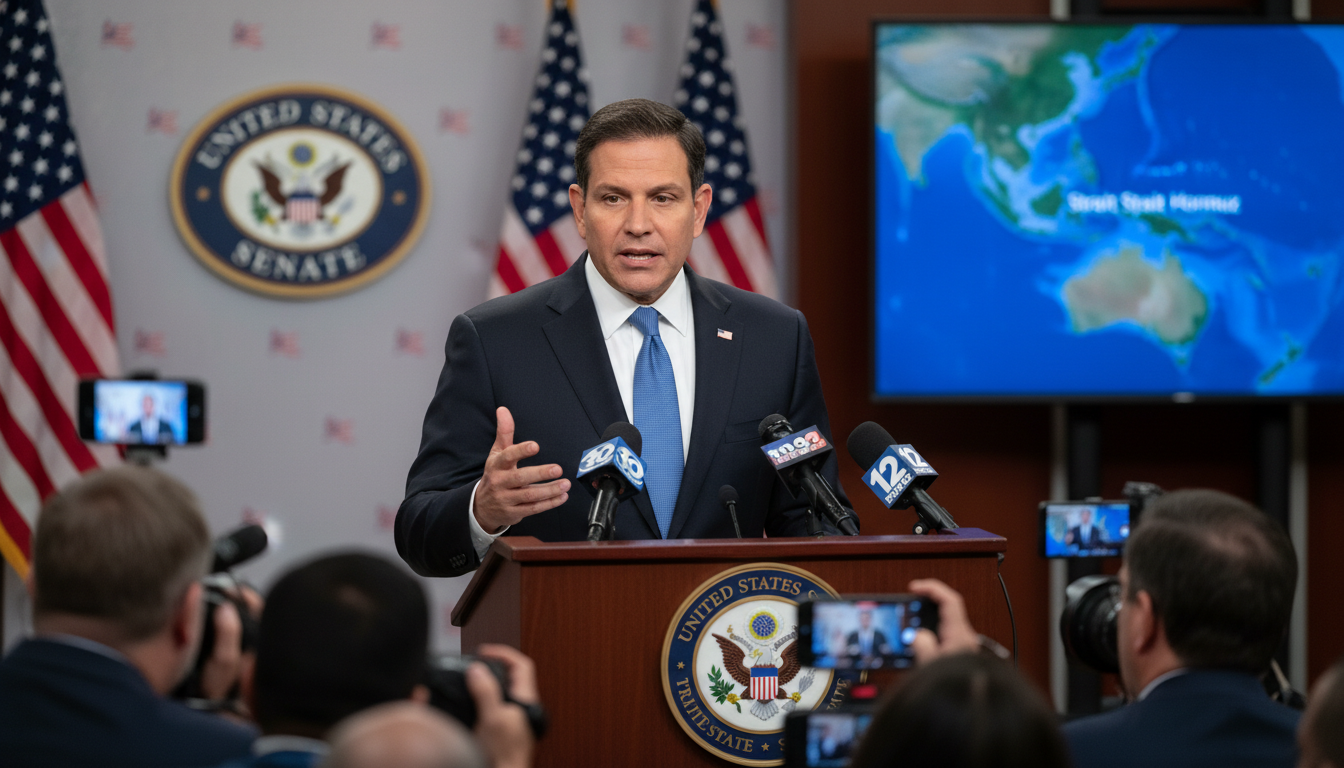
U.S. Secretary of State Marco Rubio Issues Firm Conditions to Iran on Uranium and Strait of Hormuz
U.S. Secretary of State Marco Rubio demanded Iran surrender its highly enriched uranium and keep the Strait of Hormuz fully open, warning against tolls or restrictions. (155 characters)
The United States has set clear, non-negotiable conditions for Tehran, U.S. Secretary of State Marco Rubio said in remarks that underlined Washington’s dual priorities: denying Iran a nuclear-weapons capability and preserving unhindered maritime navigation through the Strait of Hormuz. Rubio reiterated that Iran must surrender its stockpile of highly enriched uranium and that any attempt to impose fees or controls on shipping through the strait would be unacceptable. (apnews.com)
Rubio’s demands on Iran’s enriched uranium
Rubio framed the uranium issue as central to any credible security agreement with Tehran, telling interlocutors that the United States will not tolerate a pathway to a nuclear weapon.
He explicitly pressed for Iran to hand over its stockpile of highly enriched uranium, a demand Washington says is necessary to prevent any future breakout toward a bomb. (apnews.com)
Directive to keep the Strait of Hormuz open
Rubio stressed the strategic importance of the Strait of Hormuz and said it must remain fully open to global shipping without conditions imposed by Tehran.
He rejected proposals that would leave the waterway “open” only on Tehran’s terms or subject to a tolling system, saying such arrangements would be unacceptable and illegal under international norms. (business-standard.com)
Response to Tehran’s reopening proposal and ‘toll’ concerns
U.S. officials view some Iranian offers to reopen the strait as conditional and therefore insufficient, Rubio said, arguing that conditional reopening could amount to economic coercion.
The secretary labelled any plan tying passage to coordination with Tehran or payments a thinly veiled attempt to control maritime trade and warned that Washington would oppose such measures. (apnews.com)
Diplomatic backdrop and recent talks
Rubio’s remarks come amid intermittent diplomatic engagement and international mediation efforts aimed at de-escalating tensions between Washington and Tehran.
U.S. spokespeople have linked progress in talks to concrete steps on Iran’s nuclear program, while also pressing partners to coordinate on security measures for Gulf shipping lanes. (bworldonline.com)
Implications for Gulf navigation and energy markets
The Strait of Hormuz is a critical chokepoint for global energy shipments, and any instability or restrictions there could have immediate economic consequences.
Market observers warn that perceptions of restricted passage or threats of tolls could drive up insurance and freight costs and add volatility to oil and gas prices across global markets.
Potential next steps and international coordination
Washington is urging allied governments and commercial operators to support measures that guarantee unimpeded maritime transit and to press Tehran for verifiable limits on enrichment activities.
Rubio indicated the United States would continue diplomatic and, where necessary, coordinated security initiatives to ensure that the waterway remains open and that Iran’s nuclear capabilities are constrained.
The statements from Rubio were delivered as U.S. officials assess both diplomatic openings and the durability of Tehran’s positions on nuclear enrichment and maritime control.
Officials say the coming days will test whether diplomatic channels can translate into verifiable commitments or whether the dispute will harden, prompting further international action.
