
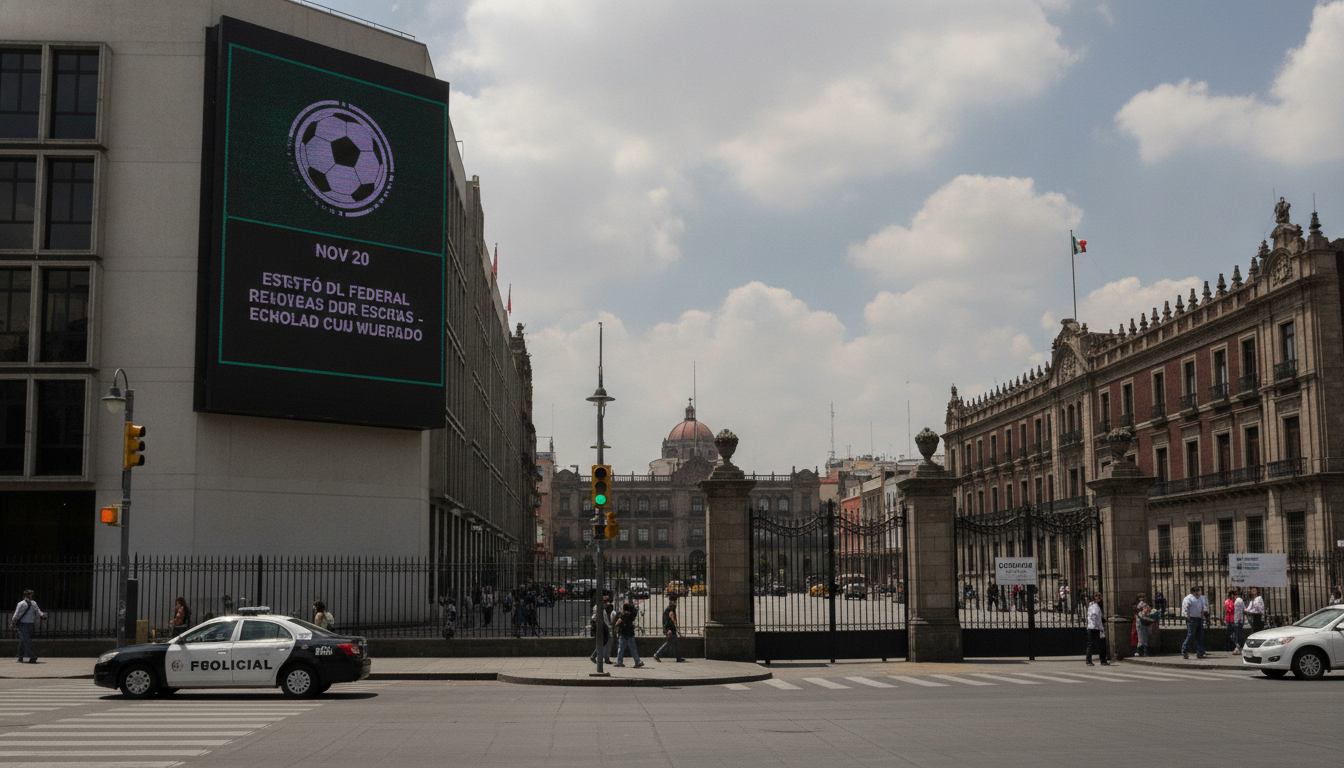
Mexico City World Cup opening: federal staff ordered to work from home and schools closed on June 11, 2026
Mexico City orders federal employees to work from home and shuts schools on June 11, 2026 to ease traffic and road safety during the World Cup opening, with private firms urged to follow.
Mexico City will shift many federal employees to remote work on June 11, 2026 as authorities prepare for the Mexico City World Cup opening, President Claudia Sheinbaum said in a formal decree.
The measure also calls for the suspension of classes in public and private schools and universities across the capital for the day.
Officials described the step as a temporary, targeted action to reduce congestion and improve road safety during the high-profile opening match and associated events.
Presidential decree mandates remote work on June 11, 2026
The presidential decree requires federal agencies to activate remote-work plans for staff who reside in Mexico City on the date of the tournament opener.
The instruction was issued to limit commuter traffic and facilitate the movement of fans, delegations and official convoys linked to the event.
Agencies are expected to coordinate internally to ensure continuity of services while lowering the number of people travelling into the city centre.
Schools and universities to remain closed across the capital
Under the decree, all educational institutions from kindergarten through university level—public and private—will be closed for the full day on June 11, 2026.
Ministry officials said the suspension applies to on-site instruction only and does not preclude distance learning activities where feasible.
Parents and students were advised to check communications from their schools for any specific arrangements or make-up schedules issued after the event.
Essential services and tournament operations exempted
The measure explicitly exempts essential services required to maintain public safety and critical infrastructure, including healthcare, security and utilities.
Staff involved directly in World Cup operations, stadium management, and transport services will likewise be excluded from the blanket remote-work order.
Authorities stressed that emergency response units and personnel delivering vital public services must remain available to respond to any incidents on the day.
Private sector urged to adopt remote arrangements
The federal government called on private companies in Mexico City to adopt similar remote-work arrangements on June 11, 2026 to reduce pressure on roads and public transit.
Chambers of commerce and major employers were asked to consider staggered schedules or telework options to limit congestion during the opening ceremonies and the match.
Officials said voluntary cooperation from the private sector would complement official measures and help ensure smoother traffic flow throughout the capital.
Authorities cite traffic and road safety concerns
Government sources said the decision was driven by projections of unusually heavy pedestrian and vehicle traffic tied to the World Cup opening.
Mexico City will host the tournament’s opening match and a series of related public events, drawing domestic and international visitors to the city centre.
Reducing commuter volumes, officials said, is intended to lower risk on major arteries and enable security and emergency services to operate with fewer impediments.
Public guidance and expected impact on mobility
Transport authorities advised commuters to anticipate altered schedules, possible lane restrictions near stadium precincts, and heightened security checks around key venues.
Residents were encouraged to plan essential trips outside peak hours on June 11, use official transit updates, and consider alternatives such as remote working where possible.
Tourism and event agencies said they would provide information points for visitors and coordinate with local police to manage crowd flows and public safety.
The decree represents a one-day, precautionary approach aimed at balancing the operational demands of a major international sporting event with everyday public safety and mobility needs in Mexico City.
Officials pledged to review outcomes after the opening and to adjust future event-day protocols based on experience and public feedback.
Citizens and businesses were asked to follow official advisories and to contact municipal hotlines for real-time information on services and movement on June 11, 2026.
