
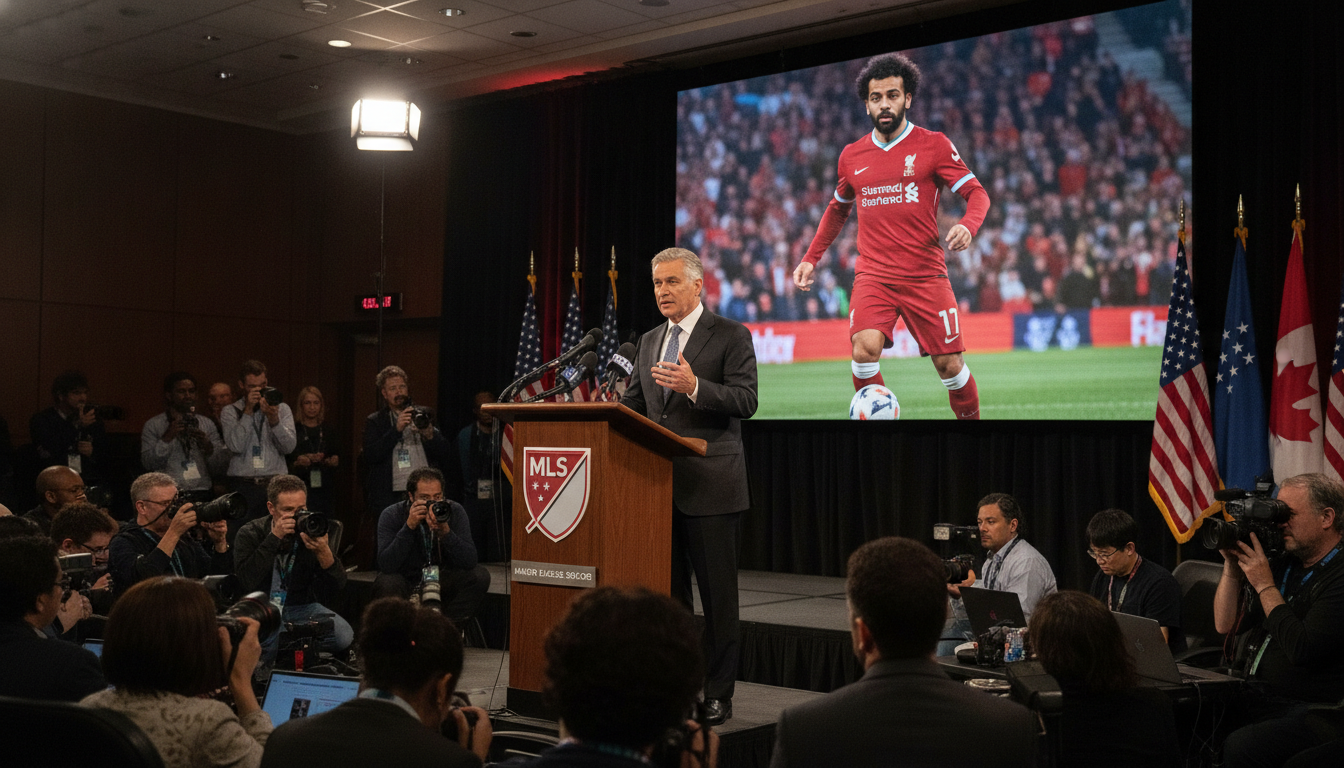
MLS Eyes Mohamed Salah After Liverpool Exit as Garber Signals Major Signings Ahead of 2026 World Cup
Don Garber says Major League Soccer is pursuing Mohamed Salah and will leverage the 2026 World Cup, expansion and star signings to drive lasting growth for the league.
Major League Soccer commissioner Don Garber told reporters the league is actively interested in signing Mohamed Salah after the Egyptian forward’s departure from Liverpool, saying the move would fit MLS’s strategy of attracting top internationals. Garber was quoted as saying, “We would like to sign Mohamed Salah. We’ll wait and see how these negotiations play out,” underscoring MLS’s willingness to engage for elite talent. The commissioner rejected the notion that MLS is merely a retirement destination and pointed to a league-average age of 26 as evidence of a younger, competitive competition. Garber framed potential big-name acquisitions as part of a broader plan to convert short-term attention into long-term fan growth ahead of the 2026 World Cup in North America.
Garber’s Statement on Mohamed Salah Interest
Garber confirmed MLS interest in Mohamed Salah during a wide-ranging interview about the league’s development and ambitions. He said the league will monitor transfer talks and pursue opportunities when they arise, while also recognizing the complexities of negotiating for a high-profile player. The commissioner emphasized the league’s desire to compete for top-tier talent rather than only signing stars at the tail end of their careers. His comments mark a public escalation of MLS’s recruitment posture as teams seek global players who can deliver on-field impact and commercial returns.
Messi’s Move to Inter Miami as a Turning Point
Garber cited Lionel Messi’s transfer to Inter Miami as a watershed moment that altered global perceptions of Major League Soccer. He argued that Messi’s arrival demonstrated the league could win head-to-head in the transfer market, noting Inter Miami prevailed over offers from traditional European rivals and Saudi clubs. Garber highlighted Messi’s sustained competitiveness, saying the Argentine plays full matches and remains intensely committed on the pitch. That example, he said, signals to players and agents that MLS offers a competitive sporting environment, not just a lifestyle or finish-line option.
2026 World Cup Presented as Strategic Catalyst
The commissioner framed the 2026 World Cup as more than a six-week showcase and described it as a strategic inflection point for domestic soccer growth. MLS began planning for the tournament soon after North America won hosting rights in 2018, using the event to drive expansion, infrastructure upgrades and global visibility. Garber said the league set concrete questions to guide change — essentially asking what it needed to look like by the World Cup’s kickoff. The goal, he said, is to translate the tournament’s global spotlight into sustainable increases in fan interest, club value and the league’s international reputation.
Expansion, Stadiums and Rule Changes Driving Growth
Since 2018, MLS has added seven clubs and opened nine soccer-specific stadiums, moves Garber pointed to as tangible proof of momentum. The league also revised roster rules to incentivize investment in younger players, reflecting a shift toward long-term sporting development. Average attendance has risen by roughly 35 percent in the period the commissioner cited, and MLS recently signed a global media partnership with Apple to broaden its international footprint. Garber noted that those infrastructure and commercial steps have contributed to a near tripling of combined club valuations to about $23 billion, according to league estimates.
Measuring Success Beyond Short-Term Buzz
Garber was explicit that MLS does not want World Cup-related attention to function as a one-off spike that fades after the final whistle. He used a metaphor to distinguish fleeting excitement from permanent change, insisting the league seeks to make fans feel as though they are entering a “new home,” not attending a temporary spectacle. To that end, the league plans to evaluate outcomes using multiple metrics including popularity, perceived importance, awareness, player valuation and fan engagement. Garber stressed that long-term indicators, not single-event attendance or headlines, will determine whether the World Cup catalyzed lasting gains.
Major League Soccer’s public pursuit of Mohamed Salah signals a bolder transfer strategy tied to broader commercial and sporting objectives ahead of 2026. The league’s combination of high-profile signings, targeted expansion, stadium investment and new media deals reflects a coordinated effort to raise standards and visibility. Whether negotiations for Salah or similar stars conclude successfully, Garber’s comments make clear MLS intends to pursue elite players as part of a sustained push to reposition North American soccer on the global stage.
