
Morocco ends daylight saving time and will return to Greenwich Mean Time
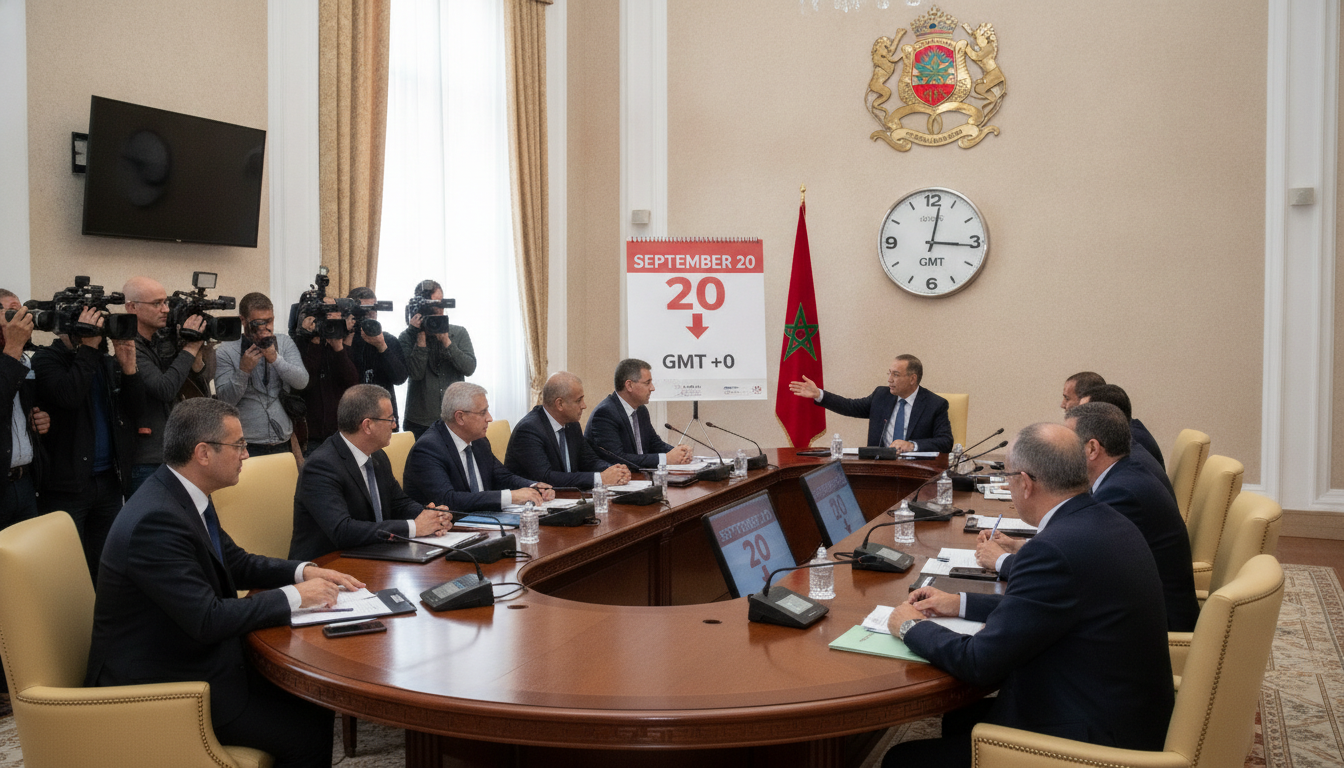
Morocco ends daylight saving time, returning to Greenwich Mean Time from 20 September 2026, the government announced; PM Akhannouch said the move aims to ease daily life.
Morocco ends daylight saving time, the government announced on Thursday, June 25, 2026, signaling a permanent return to Greenwich Mean Time for the country.
The decision was presented by Prime Minister Aziz Akhannouch as the outcome of consultations and cabinet discussions designed to align official time with public needs.
Government announces return to Greenwich Mean Time
Morocco’s cabinet confirmed the abolition of the year-round daylight saving arrangement and declared a return to GMT beginning 20 September 2026.
Officials said the shift is intended to harmonise schedules, reduce confusion and respond to citizens’ concerns about living conditions linked to the current time regime.
The move ends a policy that had kept clocks advanced by one hour for most of the year, with temporary adjustments during the month of Ramadan.
The government framed the change as administrative and practical, stressing that the transition will be implemented with advance notice to public institutions and private sectors.
Prime Minister Aziz Akhannouch cites consultations and livelihoods
Prime Minister Aziz Akhannouch told reporters the decision followed “consultations and government meetings” aimed at improving daily life for Moroccans.
He said authorities considered social, economic and religious practices when agreeing to end the daylight saving arrangement.
Akhannouch linked the measure to broader efforts to respond to public feedback and to simplify timekeeping for families, workers and businesses.
Officials indicated ministries will coordinate communications and technical steps to ensure a smooth adjustment when the change takes effect.
Effective date set for 20 September 2026
The government specified that the change will take effect on 20 September 2026, when clocks will be set back to Greenwich Mean Time.
By giving a clear calendar date, authorities said they aim to avoid last-minute uncertainty for travel, education and commerce.
Transport operators, international partners and multinational firms were advised to update schedules and systems in advance of the September deadline.
Public administrations are expected to issue further operational guidance to schools, health services and other essential services ahead of the switch.
Historical context: DST policy and Ramadan exception
Morocco had been operating on a permanent daylight saving arrangement that placed the country at GMT+1 for much of the year.
Under that system, the clock was returned to GMT during Ramadan to accommodate fasting hours and religious observances, an exception that had become routine.
That hybrid approach was introduced in recent years as authorities sought economic benefits and better alignment with trading partners, while retaining flexibility for religious needs.
Critics and supporters debated the merits of the arrangement, with discussions often citing impacts on sleep patterns, business hours and international coordination.
Implications for business, travel and daily life
Analysts say the decision to end daylight saving time will affect airline timetables, international meetings and digital systems that rely on time-zone settings.
Businesses with cross-border operations will need to update software, calendars and logistical plans to reflect the reversion to GMT on 20 September 2026.
For households, the change could alter morning and evening light patterns, with potential benefits for routines tied to sunrise and sunset times.
Education and health sectors will monitor effects on school schedules and worker shifts, and unions or professional groups may seek clarifications on implementation details.
Government communication and next steps
Authorities have promised a communication campaign to inform citizens and private entities of technical steps required prior to the September change.
Ministries will publish detailed guidance on timekeeping adjustments, and public services will coordinate to minimise disruption.
Observers expect follow-up statements to outline any transitional measures for electronic systems, public transport and cross-border coordination.
International partners and regional neighbours will be notified in line with established diplomatic and operational channels.
The reversion to Greenwich Mean Time marks a significant policy reversal aimed at simplifying the country’s official timekeeping and addressing social concerns tied to the previous arrangement.
Morocco’s decision to end daylight saving time will be watched by businesses and residents as they prepare for the September transition and its practical effects on daily life.
