
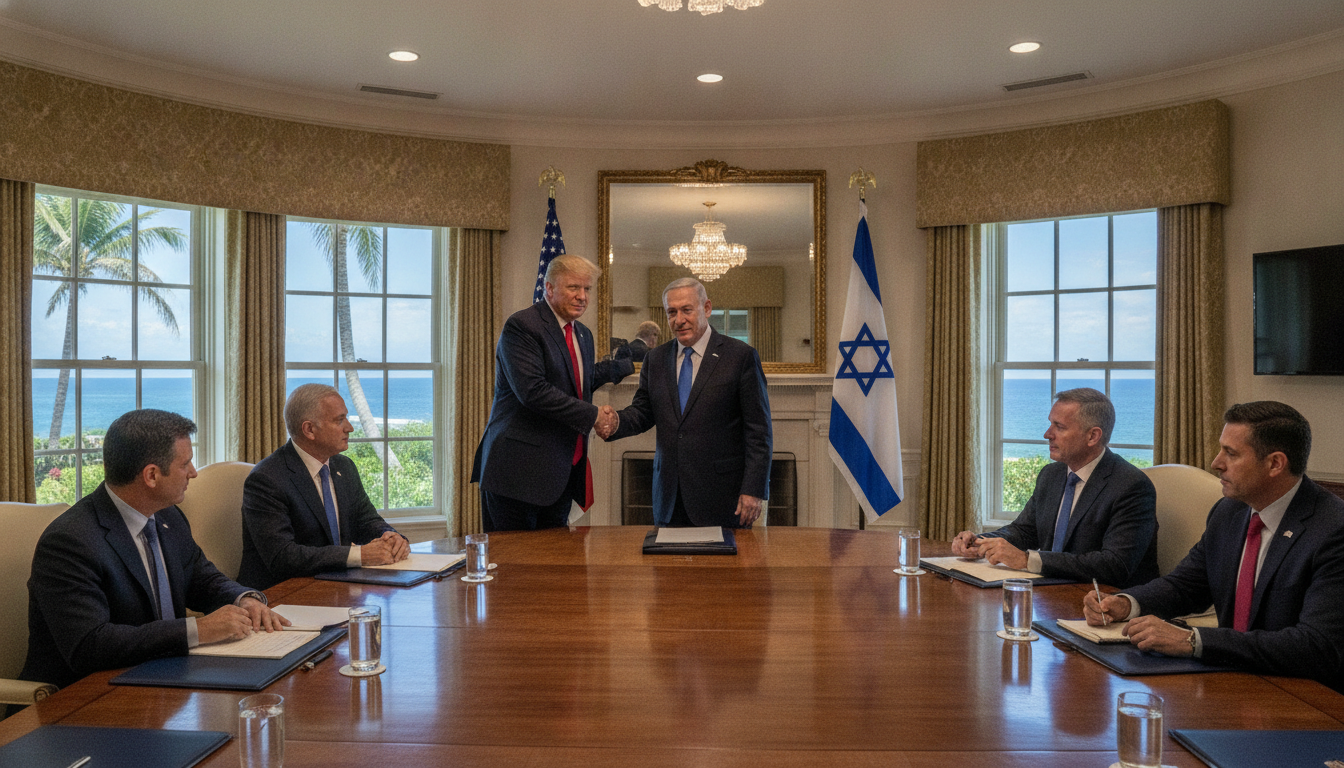
Netanyahu in Washington for White House Meeting with President Trump, Iran to Dominate Agenda
Netanyahu in Washington to meet President Trump, with Iran dominating the agenda; talks will also address the Israel-Lebanon framework and Gaza reconstruction.
Benjamin Netanyahu arrived in Washington on Tuesday for a high-stakes meeting with President Donald Trump that is expected to focus squarely on Iran and regional security. The visit, described by Israeli officials as both an honor and a heavy responsibility, comes amid continuing tensions and a U.S. push to preserve diplomatic options with Tehran. The leaders are also set to review the recent Israel‑Lebanon framework and the stalled efforts to rebuild Gaza.
Diplomatic Priority: The Iran Question
Washington and Jerusalem will place Iran at the top of their talks, with both sides seeking clarity on strategy and coordination. U.S. officials have signalled a desire to keep a diplomatic track open even as they and Israel face shared security concerns. For Israel, the discussion is likely to centre on limiting Tehran’s regional footprint and ensuring that any U.S. approach fully accounts for Israeli security needs.
Iran’s activities across the Levant and in the Gulf have been cited repeatedly as a central threat by Israeli leaders, and Netanyahu’s visit aims to secure continued American backing for pressure and deterrence. At the same time, the White House emphasis on negotiations suggests Washington will press for calibrated steps to avoid an uncontrollable escalation.
Implementation Challenges of the Israel‑Lebanon Framework
A principal item on the agenda is the implementation of the U.S.-brokered framework signed last month between Israel and Lebanon. Diplomats from the three parties acknowledge that turning the agreement into tangible outcomes on the ground has been complicated. Technical, political and security hurdles remain, particularly in maritime zones and energy exploration areas where competing claims persist.
Both capitals will seek to map practical steps to move the deal from signature to reality, including timelines for surveys, demarcation work and confidence-building measures. The White House is expected to push for mechanisms that reduce the risk of incidents while ensuring that any economic benefits can begin to flow to both sides.
Gaza Reconstruction and the Diplomatic Impasse
The Gaza Strip will figure in the talks as an acute humanitarian and political challenge, with reconstruction efforts described by officials as stalled. Diplomatic attempts to mobilise international donors and to secure safe conditions for rebuilding have yet to deliver the scale of assistance required. Israel and the United States will discuss approaches to accelerate reconstruction while addressing Israeli security concerns about militant rearmament.
Expectations in both capitals are cautious; officials well-placed to the talks acknowledge that progress on Gaza depends on coordinated regional and international contributions, as well as reliable monitoring and enforcement measures. The prospects for a comprehensive reconstruction plan hinge on resolving political disagreements and ensuring robust safeguards on the ground.
Security Cooperation and Public Messaging
The visit is Netanyahu’s eighth meeting with President Trump since the latter’s return to the White House last year, underscoring the close, if at times tense, security relationship between Jerusalem and Washington. The two leaders will seek to present a unified front, emphasising shared interests in deterrence and regional stability. Public messaging is likely to highlight common strategies while avoiding public airing of divisions.
Netanyahu told reporters before departure that the meeting was “a great honour” and “a great responsibility,” signalling his intent to project steadiness. For the White House, the encounter will be an opportunity to reaffirm strategic partnership and to showcase coordination on immediate threats and broader diplomatic initiatives.
Political and Regional Stakes
Beyond the immediate security matters, the talks carry broader political stakes for both leaders domestically and regionally. Netanyahu faces pressures at home over security and diplomatic outcomes, while the Trump administration must balance regional priorities amid competing international pressures. Both sides will be attentive to how any statements or joint steps are received by allies and adversaries across the Middle East.
Regional partners, including Lebanon and authorities in Gaza, will be watching for firm timelines and practical measures emerging from the meeting. The success of the White House‑mediated Israel‑Lebanon framework and any forward movement on Gaza reconstruction could shape the next phase of regional diplomacy.
A final communiqué or joint statement is possible, but officials caution that concrete operational plans will take longer to negotiate. Observers expect the two leaders to agree on follow-up work by their foreign and defence teams to translate strategic intent into measurable action.
The meeting in Washington will set the tone for the coming months of diplomacy and security cooperation between the United States and Israel, and both capitals say they are prepared to pursue a mix of deterrence, diplomacy and practical steps to address regional challenges.
