
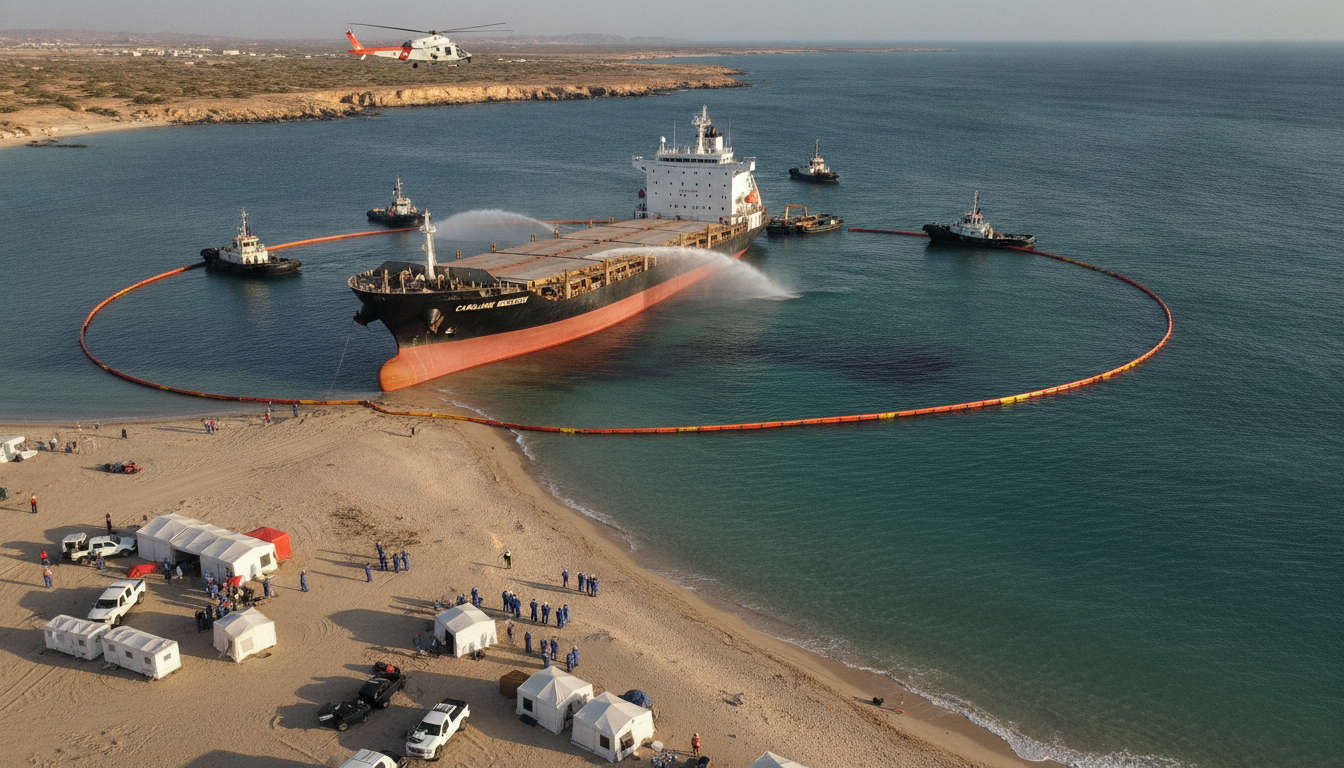
CAROLINE BEZENGI grounding: Omani teams deploy satellites and emergency response to limit environmental and navigation risks
Oman responds to the CAROLINE BEZENGI grounding at Halaniyat islands, deploying satellite monitoring, field surveys and emergency teams to limit marine risks.
Omani authorities mobilise after CAROLINE BEZENGI grounding
The Ministry of Transport and Communications together with the Environment Authority of Oman have mobilised technical teams following the grounding of the CAROLINE BEZENGI off the Halaniyat islands in Dhofar. Local agencies say response units are executing established emergency plans to contain any immediate danger to marine ecosystems and the safety of navigation. Officials emphasised that the priority is to assess risks rapidly and coordinate technical action under national contingency frameworks.
The two bodies confirmed continuous on-site coordination and oversight, with specialists assigned to evaluate hull integrity, potential fuel or cargo leakage, and immediate threats to sensitive coastal habitats. Incident management teams are drawing on pre-approved response checklists and liaising with harbour authorities to sequence interventions. All activity is intended to reduce the likelihood of pollution and to preserve access routes for commercial and local traffic.
Satellite imagery and field surveys track pollution risk
Authorities report routine use of satellite imagery alongside aerial and vessel-based field surveys to monitor any oil slicks, debris or anomalies around the grounded vessel. These remote-sensing assets feed into technical models that estimate drift patterns and probable impact zones, enabling prioritisation of shoreline protection efforts and allocation of response assets. Continuous comparisons between imagery, field observations and model outputs are being used to refine operational choices.
Survey teams are conducting water and shoreline inspections at strategic points around the Halaniyat group to detect early signs of contamination and to assess the status of marine life and habitats. Where necessary, samples are being taken for laboratory analysis to determine pollutant composition and concentrations. This combined approach is designed to provide decision-makers with timely, evidence-based inputs for containment, recovery or mitigation measures.
Technical teams implementing emergency response plans
Specialist salvage and pollution-control crews have been activated under the oversight of the ministry and environment authority, drawing on trained responders and approved contractors. These teams are described as executing staged operations that may include hull assessment, temporary containment, and preparation for salvage or lightering if technical surveys deem such measures necessary. Work is being coordinated to ensure safety of personnel and to limit further harm to the vessel and surrounding environment.
Logistical support and equipment — including booms, skimmers and response vessels — are being positioned where they can be rapidly deployed should an oil discharge be detected. Engineers and marine surveyors are conducting structural inspections to determine the safest method to stabilise or refloat the vessel, while environmental specialists advise on protective actions for nearby reefs and feeding grounds. The response follows internationally recognised practices and the sequence of actions prescribed in national contingency guidelines.
Navigation safety measures in Dhofar waters
Maritime authorities have emphasised the importance of navigation safety in the vicinity of the Halaniyat islands and are monitoring vessel traffic to prevent secondary incidents. Temporary navigational warnings and maritime safety advisories are being issued to inform commercial, fishing and recreational vessels of restricted zones and altered transit routes. Pilots and local skippers have been urged to observe official notices and to maintain safe distances from the scene while response operations continue.
Harbour and coastguard units remain on alert to coordinate traffic management, escort movements where required, and assist with any emergency evacuations or medical contingencies. The integrity of shipping lanes along the Dhofar coast is a standing concern, and authorities say contingency measures are in place to avert disruptions to trade and local livelihoods. Any longer-term closures would be communicated through the proper maritime channels as assessments progress.
Official communications and public guidance
The Ministry of Transport and Communications and the Environment Authority have stressed that all substantive updates will be published through official channels and authorised statements. Citizens, media outlets and social media users have been urged to rely on verified information and to refrain from sharing unconfirmed reports that could hamper response operations or create public confusion. Both bodies reiterated their commitment to transparency as assessments are completed and response measures are adjusted.
Authorities also reminded local communities and commercial operators of legal responsibilities under national regulations and international conventions governing pollution prevention and reporting. Anyone observing signs of pollution or affected wildlife is being asked to report details promptly to the designated hotlines or official contact points. This streamlined reporting supports rapid tasking of field teams and enhances situational awareness for decision-makers.
The situation remains under active technical evaluation, with ongoing satellite monitoring, field surveys and specialist assessments informing each step of the response. Officials say further updates will be provided as new information becomes available and as practical measures — including containment or salvage operations if required — are planned and executed. In the interim, authorities continue to prioritise environmental protection and maritime safety while urging the public to consult official sources for verified information.
