
Pedro Neto shoe alteration at FIFA World Cup 2026 raises medical questions
Pedro Neto shoe hole at FIFA World Cup 2026 prompts questions; experts say Haglund’s deformity may explain players cutting Nike Mercurial boots to ease heel pain.
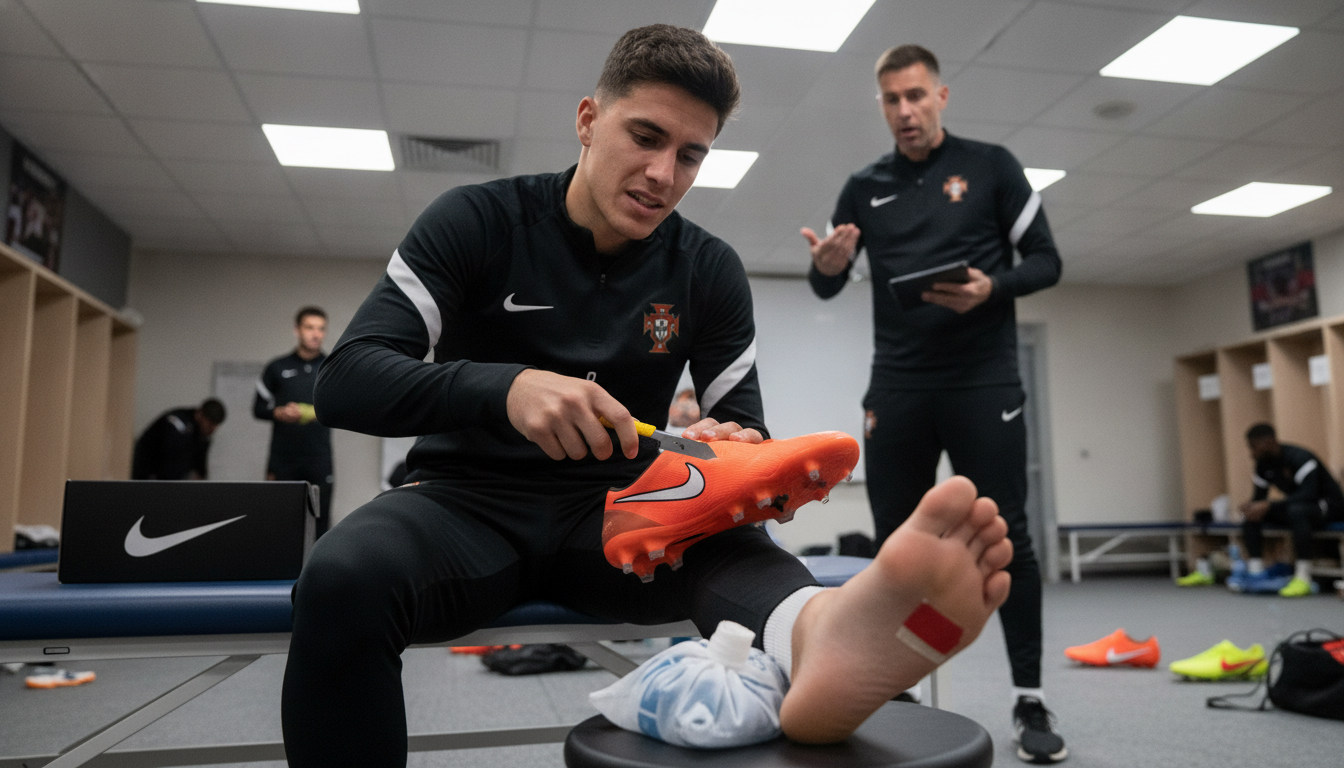
Pedro Neto shoe alteration captured global attention during a FIFA World Cup 2026 match when the Portuguese winger appeared wearing a Nike Mercurial with a deliberately cut, open heel. The visible modification — on a boot model retailing around $315 — prompted social media discussion and medical commentary suggesting the change may be linked to Haglund’s deformity or similar heel irritation. Neto did not publicly explain the alteration, leaving clubs, commentators and fans to weigh equipment choices against player welfare.
Neto’s boot came under immediate scrutiny
Television and fan footage showed the back of Neto’s Mercurial noticeably trimmed, a detail many observers found striking given the boot’s premium price and brand profile. Photographs circulated quickly across social platforms, drawing comparisons to earlier cases where players modified boots to manage pain. Club statements have not confirmed a specific diagnosis, and the player himself made no public comment explaining the cut.
Medical context: what is Haglund’s deformity
Haglund’s deformity describes a bony prominence on the upper part of the heel that can rub against rigid footwear and inflame the surrounding soft tissues and Achilles tendon. The resulting symptoms include pain, swelling and redness at the back of the heel, which can be exacerbated by tight or structured boot heels. Sports medicine clinicians say removing pressure at the point of contact is a common, non-surgical strategy to reduce irritation during training and competition.
How boot alterations are used to manage heel pain
When players experience focal heel irritation, teams frequently adjust footwear rather than immediately opting for invasive measures. Trimming the heel cup or cutting a small section from the back of a boot can reduce friction and allow the athlete to continue playing with less discomfort. Club podiatrists and medical staff generally perform or supervise such changes to maintain fit and stability while addressing the pain source.
Treatment options and when surgery is considered
Non-operative approaches typically include footwear modification, padding, custom orthotics, physiotherapy, and targeted strengthening of the calf and Achilles complex. Some players may receive shockwave therapy or corticosteroid injections when conservative measures do not fully control symptoms. Surgical intervention to remove the bony prominence is reserved for cases that fail sustained conservative treatment and where pain significantly limits performance or daily function.
Precedent: other professional players who cut boot heels
This is not an isolated practice among elite footballers; media reports and archival images show professional names such as Philippe Coutinho, Roberto Firmino, Mats Hummels and Daniele De Rossi with similar heel trims in past seasons. Such examples are frequently cited by equipment managers and medical teams as pragmatic, performance-preserving steps rather than cosmetic choices. The recurrence of the practice across leagues highlights how common heel irritation issues can be among players who demand both protective structure and close fit from their boots.
Club medical teams and equipment specialists’ role
Experts emphasize that successful boot modification balances pressure relief with retention of support and traction, a task usually handled by trained medical or performance staff. Hudson Gil and other podiatry specialists note clubs will often rely on professionals who understand where to cut and how to secure the altered heel to avoid undermining the boot’s integrity. That professional oversight seeks to prevent secondary problems such as blistering, instability, or altered biomechanics that could lead to injury elsewhere.
The visual of Pedro Neto’s altered Nike Mercurial at a global tournament renewed public interest in the intersection of elite footwear design and player health. While the cut boot has fueled speculation, medical commentary and past examples suggest heel bony prominences and related soft-tissue irritation are plausible explanations that typically prompt non-surgical management. Clubs and clinicians will continue to weigh short-term playing needs against long-term tendon health as athletes compete on the world stage.
