
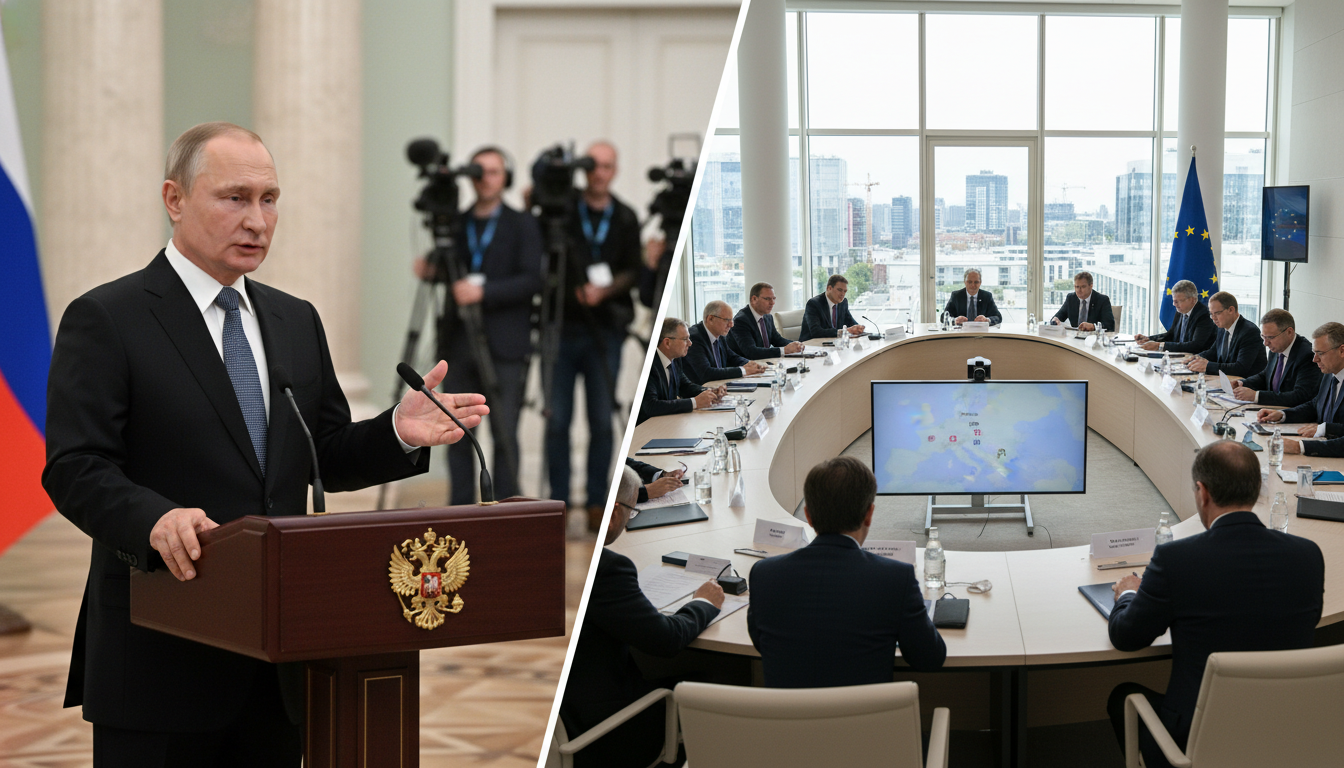
Putin Says Russia-Ukraine Conflict “Approaching Its End,” Raising Prospect of Talks
Putin says the Russia-Ukraine conflict is ‘approaching its end’ on May 9, 2026, prompting European leaders to prepare for possible talks amid Kremlin conditions.
Russian President Vladimir Putin told reporters on Saturday, May 9, 2026, that he believes the Russia-Ukraine conflict is “approaching its end,” a statement that has intensified diplomatic attention in Brussels and capitals across Europe. The remark, delivered during a briefing with journalists, was framed by the Kremlin as part of a continuing narrative that peace could follow political engagement, provided certain preconditions are met. European officials and analysts reacted cautiously, noting the gap between a public assertion and the practical, complex steps required to bring sustained negotiations about.
Putin Frames Endgame While Repeating Preconditions
Mr. Putin’s comments included a suggestion that an end to major hostilities may be near, but he also reiterated that the shape and timing of any de-escalation will depend on diplomatic moves by other states. The Kremlin has consistently maintained that some Western governments severed regular channels of communication after the 2022 invasion and that those ties must be restored before formal negotiations proceed. Analysts say the combination of a conciliatory tone with conditions is a familiar diplomatic posture, one that keeps leverage while signalling openness to engagement.
Kremlin Says Europe Must Take the First Step
Officials in Moscow made clear last week that the onus for initiating talks lies with European governments, arguing those states cut official contact with Russia after the start of the war in 2022. The message shifts responsibility for reopening dialogue onto Western capitals, a stance that complicates immediate prospects for multilateral negotiation. Western diplomats say confidence-building measures, verification mechanisms and ceasefire guarantees would be prerequisites for meaningful talks, and those conditions have not yet been mutually agreed.
European Union Leaders Reportedly Preparing for Possible Talks
The Financial Times reported that European Union leaders are preparing for the possibility of talks following Moscow’s recent signals, prompting internal planning at ambassadorial and ministerial levels. EU officials are said to be weighing how to engage collectively while maintaining a coherent sanctions policy and security assistance to Ukraine. Any formal discussions would require careful coordination among member states, as well as clarity from Kyiv about non-negotiable issues and the role international mediators might play.
Putin Names Former Chancellor Schröder as Preferred Interlocutor
When asked whether he would be open to direct talks with European leaders, Mr. Putin named former German chancellor Gerhard Schröder as a preferred figure, invoking a long-standing personal and political connection. Schröder, who has maintained relations with Moscow since leaving office, is seen by the Kremlin as a broker of sorts, though many EU capitals view his links to Russia with suspicion. The invocation of private intermediaries underscores the Kremlin’s interest in unconventional back-channels alongside public diplomacy.
The 2022 Invasion Remains Central to Any Negotiation Framework
Russia’s 2022 invasion of Ukraine created the most acute rupture in relations between Moscow and the West since the Cuban Missile Crisis, reshaping European security and prompting sweeping economic sanctions. Any credible negotiation will need to confront the war’s major consequences: territorial control, security guarantees, reparations, and the rights of displaced civilians. Experts caution that rhetoric about an “end” does not substitute for the technical, legal and political work required to translate ceasefire talk into a durable settlement.
Regional and Global Implications of Renewed Diplomacy
A shift toward talks would carry implications beyond Europe, affecting energy markets, global grain supplies, and diplomatic alignments across the Middle East, Asia and Africa. Gulf states and other regional partners have been monitoring the conflict for its economic and security ripple effects, and they could play roles as venues or facilitators for dialogue. Observers say any move toward negotiations will be judged against whether it stabilizes frontlines and secures humanitarian access, rather than solely by public statements.
The coming days and weeks are likely to test whether Moscow’s statement reflects a genuine opening or a tactical signal aimed at reshaping international pressure and domestic opinion. EU capitals will need to reconcile their security commitments to Ukraine with any appetite for direct engagement with Russia, while Kyiv’s stance will remain decisive for the shape and legitimacy of talks. For now, Mr. Putin’s declaration has prompted planning and debate rather than immediate diplomatic breakthroughs, leaving the future course of the Russia-Ukraine conflict dependent on a complex mix of political will, security guarantees and international mediation.
