
Bangladesh floods kill 44 and strand over 1 million as monsoon inundates seven districts
44 killed and over 1 million stranded as seasonal monsoon floods hit seven districts in southeastern Bangladesh; authorities and military deliver urgent aid.
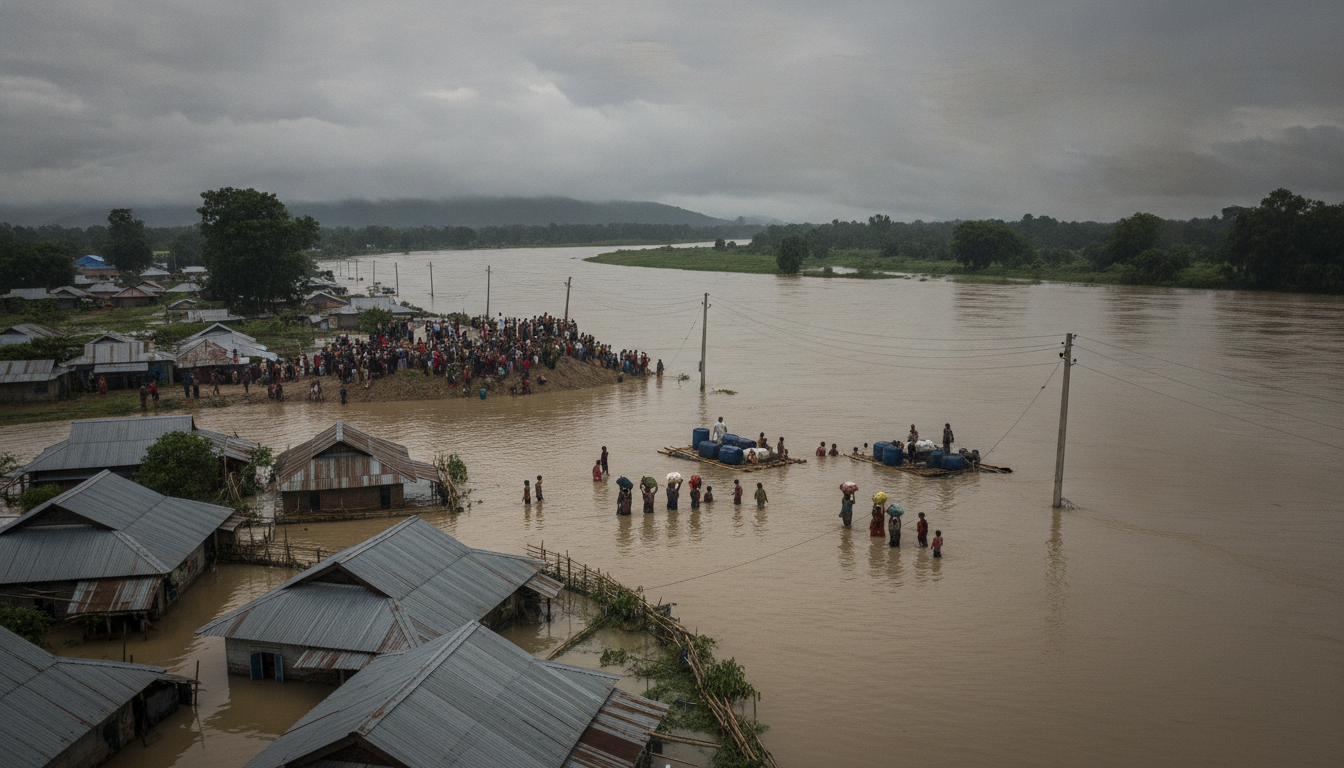
The Bangladesh floods have left at least 44 people dead and more than one million residents stranded after several days of intense seasonal monsoon downpours, authorities said. Heavy rain swept across seven southeastern districts, inundating towns and villages and isolating communities as roads, bridges and power lines failed. Rescue teams, supported by the military and navy, are delivering food, potable water and medicines by boat to reach the hardest-hit areas. Government officials urged affected families to move to designated shelters while relief operations accelerate.
Deaths and displacement reported across the region
Rescue and disaster officials reported a rising death toll as crews reached previously inaccessible settlements. At least 44 fatalities have been confirmed so far, with many victims trapped by sudden flash floods and landslides that followed the heavy rains. Authorities estimate that more than one million people have been cut off from regular services and face displacement, either staying in flooded homes or relocating to temporary shelters. Local officials warned that numbers may increase as search teams continue to survey remote hamlets.
Districts most severely affected
The flooding struck seven districts in southeastern Bangladesh: Chattogram, Cox’s Bazar, Bandarban, Rangamati, Khagrachhari, Moulvibazar and Habiganj. These areas include low-lying plains as well as hilly terrain where landslides compounded the impact of overflowing rivers. Cox’s Bazar and the hill districts of Bandarban and Rangamati were among the hardest hit, with entire villages reported submerged and access routes severed. Municipal authorities in Chattogram have prioritized evacuations in neighbourhoods where water levels rose rapidly.
Infrastructure damage and service disruptions
Power outages, damaged roads and broken communication lines have hampered relief and recovery work across the region. Floodwaters have swept away sections of critical roads and bridges, leaving some communities reachable only by boat. Many households reported an inability to cook after kitchens were flooded or buried under thick layers of mud, forcing families to rely on packaged dry food. Telecommunications interruptions also slowed coordination between district officials and central relief agencies.
Relief operations led by military and navy
Bangladesh’s army and navy are actively involved in distributing essential supplies, with boats transporting food, clean water and medical kits to isolated settlements. Relief convoys are attempting to restore access to cut-off towns while local charities and government teams set up temporary shelters. Military engineers are prioritizing clearance of key routes to enable further deliveries, and medical units are screening displaced populations for waterborne illnesses. Officials stressed that reaching some remote communities remains difficult until floodwaters recede.
Government response and official appeals
The Ministry of Disaster Management and Relief has mobilised emergency resources and coordinated with district administrations to scale up assistance. Minister Iqbal Hossain, who visited affected areas in Chattogram, said the government was doing its utmost to support victims and urged residents whose homes are flooded to move to the nearest shelters. Authorities confirmed distribution of safe drinking water and medical supplies while calling for calm as rescue teams work round the clock. Local officials have also appealed for additional humanitarian support to address urgent needs.
Humanitarian groups and district authorities reported that thousands of families are currently relying on emergency rations, with sanitation and shelter emerging as immediate priorities. The combination of standing floodwater and mud raises the risk of disease outbreaks, and health teams are focusing on vaccination and treatment where accessible. Relief coordinators emphasised the need for coordinated logistics to transport supplies once key crossings are repaired.
The full extent of agricultural and economic damage is not yet known, but officials warned that prolonged inundation could affect crops and livelihoods across the region. As waters begin to subside in lower-lying areas, assessments of homes, roads and public infrastructure will be needed to plan repairs and longer-term recovery. For now, immediate priorities remain the safe evacuation of vulnerable families, the delivery of life-saving assistance and the restoration of basic services to the isolated districts.
