
US strikes on Iran after attack on Cypriot‑flagged ship; CENTCOM says Strait of Hormuz remains open
US strikes on Iran hit 140 targets after an assault on the Cypriot‑flagged M/V GFS Galaxy; CENTCOM affirmed the Strait of Hormuz is open and navigation will be protected.
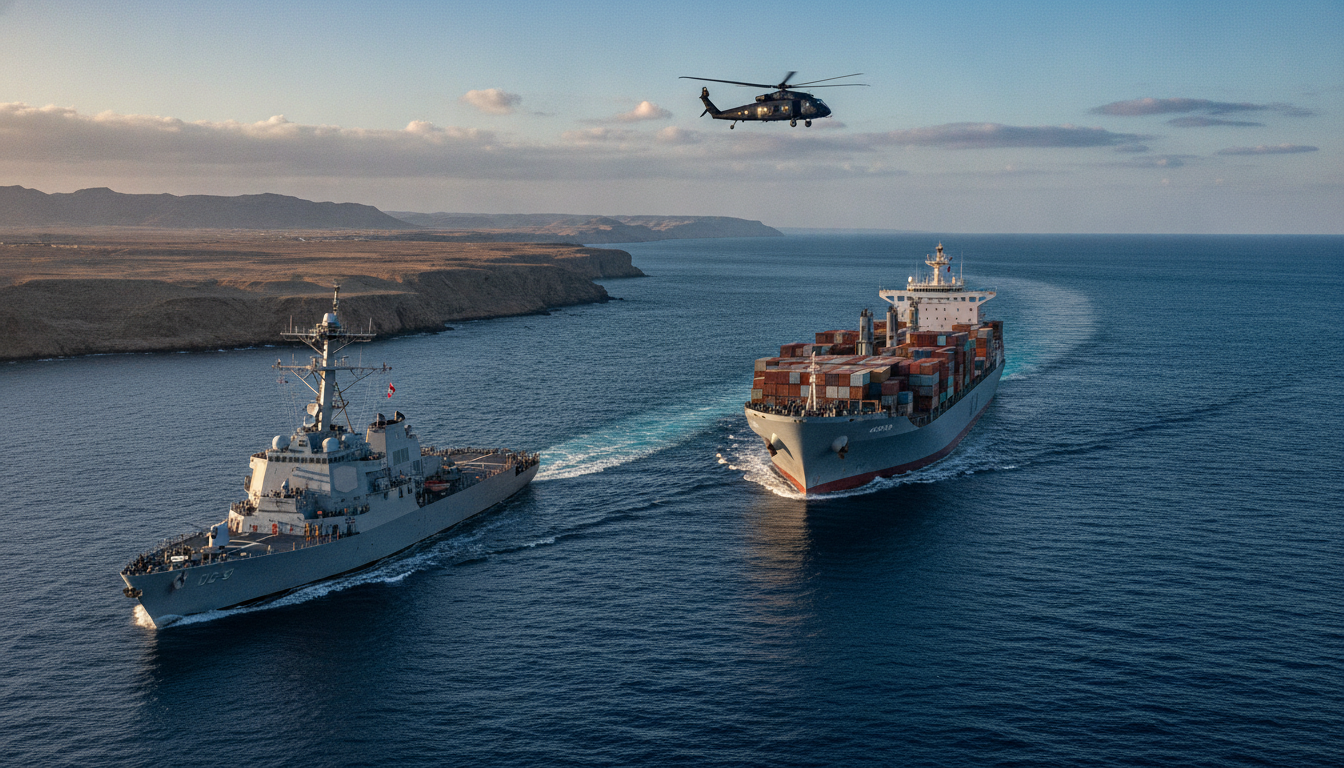
The United States launched a fresh round of military strikes against Iranian targets early Sunday in response to an attack on a Cypriot‑flagged container vessel, part of what CENTCOM described as “US strikes on Iran” to deter further threats to commercial shipping. CENTCOM said the operation, ordered by the President, struck scores of military sites linked to Iran’s missile, drone and naval capabilities. The command also moved quickly to reassure commercial mariners that the Strait of Hormuz remains open to lawful transit despite Iranian claims of closure.
CENTCOM announces scope and purpose of strikes
CENTCOM released a statement saying American forces targeted 140 Iranian military sites in the operation, which it characterized as a measured response to an earlier assault on a merchant vessel. The strikes reportedly included missile batteries, unmanned aerial systems, coastal surveillance installations and naval assets that CENTCOM attributed to the Islamic Republic of Iran. Military officials framed the action as aimed at degrading Iran’s ability to attack civilian mariners and commercial shipping lanes.
The command emphasized that the operation was intended to impose a significant cost on Tehran for what it called unprovoked attacks and harassment. CENTCOM also highlighted a continued US commitment to ensuring freedom of navigation through critical waterways, particularly the Strait of Hormuz.
Incident involving M/V GFS Galaxy and casualties reported
The vessel at the center of the confrontation was identified as the M/V GFS Galaxy, a container ship flying the flag of Cyprus, which CENTCOM said sustained damage that rendered it unable to complete its voyage. According to the US military, the ship suffered an engine-room fire and other damage after being struck, and one crew member was reported missing or lost during the incident. Details about the exact cause and the condition of other crew members were not immediately disclosed.
Ship tracking and maritime authorities are typically involved in assessing damage and arranging salvage or tow operations when a vessel is disabled in the Strait of Hormuz or adjacent waters. The attack on the GFS Galaxy heightened regional concern because the Strait is a major global chokepoint for energy and trade.
Iranian Revolutionary Guard announced closure and engagement
Before the US strikes, Iran’s Islamic Revolutionary Guard Corps naval force announced it had closed the Strait of Hormuz, citing foreign interference and alleged unauthorized transits through the waterway. The IRGC said it had targeted one passing vessel in what it described as enforcement actions, and it framed the closure as a response to external meddling in the region. State-affiliated Iranian channels circulated the announcement, underscoring Tehran’s intent to assert control over local maritime approaches.
The IRGC closure declaration prompted alarms among nearby states and commercial operators because any restriction or shutdown of the Strait would carry significant implications for global energy shipments. Regional naval presences and international stakeholders have repeatedly underscored that no single state has exclusive control over the international waterway.
Reassurances on freedom of navigation and US posture
CENTCOM’s later statement explicitly countered Tehran’s closure claim, affirming that the Strait of Hormuz was open to all vessels conducting lawful passage. The US military said its maritime and coalition forces were positioned and prepared to maintain freedom of navigation and to deter further Iranian harassment or threats. Officials framed the posture as defensive and focused on keeping international shipping lanes accessible.
The announcement sought to balance a demonstration of military capability with assurances to commercial operators and regional governments. Maintaining unimpeded maritime trade through the Strait of Hormuz remains a priority for energy markets and national security planners across the Gulf.
Regional and international implications of the strikes
The exchange of strikes and maritime claims risks increasing tensions in an already volatile region where miscalculation can rapidly escalate incidents. The US action to target Iranian military infrastructure is likely to draw reactions from Tehran and could prompt diplomatic activity among Gulf states, European partners and other stakeholders. Countries dependent on uninterrupted oil and cargo transit through the Gulf will be monitoring developments closely.
International law and maritime conventions govern passage through choke points such as the Strait of Hormuz, and many nations maintain naval assets in the region to ensure adherence to those rules. Any sustained disruption would carry economic and security consequences well beyond the immediate area.
Next steps and possible diplomatic fallout
Following the strikes, military and diplomatic channels are expected to be active as capitals assess the situation and chart responses to prevent further escalation. Investigations into the attack on the M/V GFS Galaxy, including independent verification of the vessel’s flag, cargo and movements, will inform legal and policy replies. Regional forums and allies may press for de‑escalation and mechanisms to safeguard commercial shipping.
For mariners and shipping companies, immediate priorities include accounting for crew, securing damaged vessels and coordinating with authorities for safe passage. For governments, the focus will be on limiting further kinetic exchanges while preserving the right of transit through international waterways.
The rapid sequence of events underscores the strategic sensitivity of the Strait of Hormuz and the potential for localized incidents to produce wider diplomatic and economic ripple effects.
