
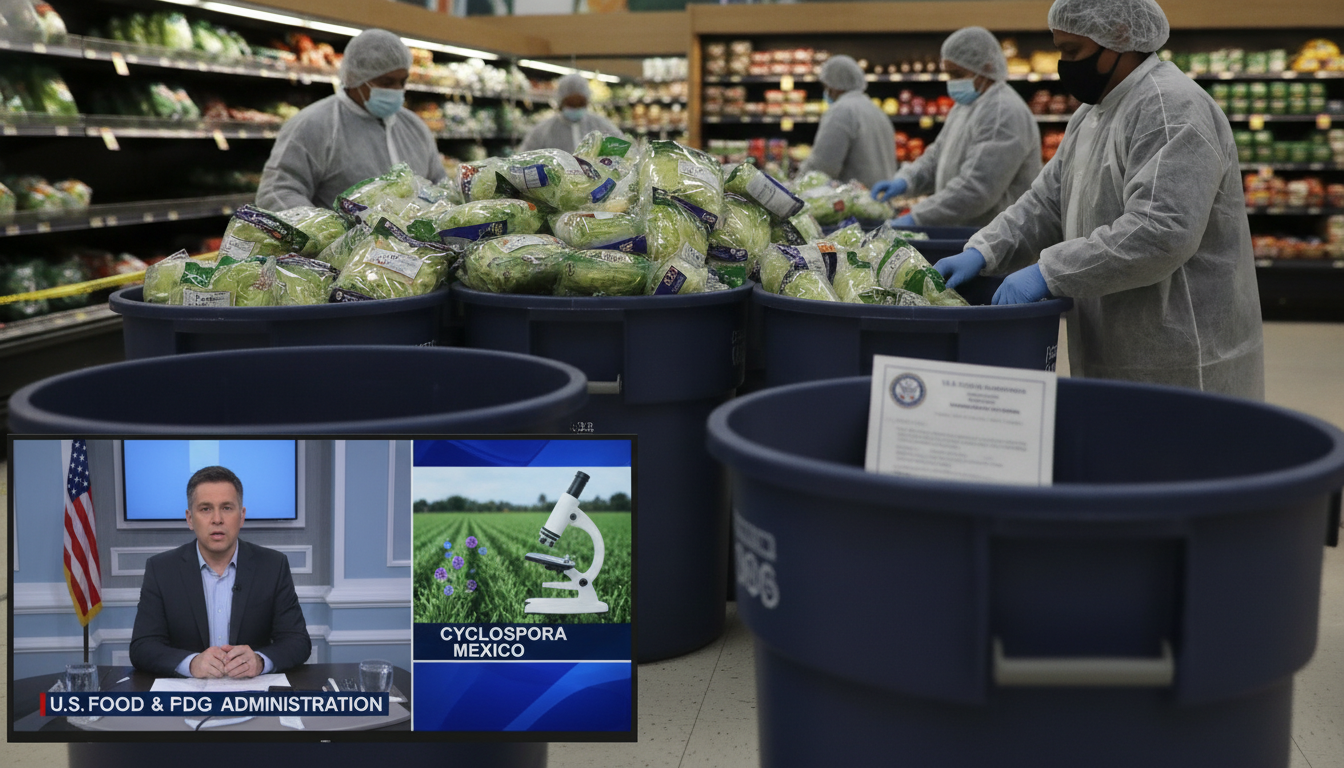
Taylor Farms cyclospora outbreak inquiry puts Guanajuato lettuce industry under threat
Taylor Farms cyclospora outbreak inquiry puts Guanajuato lettuce suppliers and workers at risk as US cases rise and Mexican towns brace for economic fallout.
When U.S. health authorities linked a surge of cyclospora cases to shredded iceberg lettuce traced to central Mexico, communities in Guanajuato found themselves suddenly in the spotlight. The Taylor Farms cyclospora outbreak inquiry has prompted retailers to pull product lines and a wave of local concern about jobs, livelihoods and cross‑border trade. Officials on both sides of the border have described differing results from tests, leaving growers and workers uncertain about the scope and origin of contamination.
Traceback Points to Taylor Farms Processing in Guanajuato
Federal investigators in the United States said epidemiological evidence and traceback efforts point to shredded iceberg lettuce processed at Taylor Farms facilities in Guanajuato. That linkage prompted retailers to remove affected products and the company to withdraw iceberg lettuce sourced from the state. U.S. officials say the traceback and case data are converging, even as some laboratory results have been disputed.
Local residents and municipal leaders said the association of the plant with the outbreak produced an immediate reputational hit for the region. Taylor Farms is widely regarded as a major employer in the area, and any sustained market disruption could leave fields unharvested and lines idle. The company has not provided a detailed public account addressing every question raised by investigators.
Conflicting Test Results and Agency Statements
A laboratory test tied to the ongoing probe produced a result that the company described as a false positive, and Taylor Farms said the U.S. Food and Drug Administration had apologized. The FDA subsequently denied issuing an apology and reiterated that its epidemiological analysis continues to support its inquiry. Officials emphasized that a single test result did not alter the broader pattern of cases that prompted the investigation.
Mexican authorities reported a very limited number of confirmed cases domestically and have declined to declare an outbreak inside Mexico. Health ministry officials said they were conducting targeted sampling at farms and processing sites in Guanajuato to evaluate potential contamination pathways. The differing public statements have heightened uncertainty for consumers and workers alike.
Symptoms and Public‑Health Context
Cyclosporiasis, caused by the parasite Cyclospora cayetanensis, typically produces severe abdominal cramps, persistent nausea and urgent, watery diarrhea that can be protracted without treatment. Medical experts stress that the illness is generally treatable but can be debilitating and may require antibiotics prescribed by clinicians. No fatalities tied to the current cluster have been reported in either country, according to officials cited by investigators.
Epidemiologists note cyclospora is not always routinely monitored in all jurisdictions, which can complicate detection and comparisons across borders. Health authorities in Guanajuato have said they are screening samples and coordinating with federal regulators to determine whether local instances are being undercounted.
Economic Risks for Growers and Workers
The potential fallout extends beyond the processing plant to growers, market vendors and seasonal laborers who depend on the lettuce supply chain. Local mayors and agricultural representatives warned that prolonged product recalls or trade restrictions would leave produce unmarketable and workers without pay. In towns where Taylor Farms and its associated suppliers are central to economic life, officials described the stakes as existential for small businesses.
Vendors at open‑air markets and small grocery owners reported a sudden decline in consumer confidence, with shoppers increasingly cautious about ready‑to‑eat salads and shredded products. Some residents expressed skepticism about external assessments, while others voiced anxiety about lost income and the prospect of stricter trade controls that could follow a confirmed link.
Local Reaction and Historical Context
In communities near the Taylor Farms plant, responses ranged from dark humour to frustration and indignation. Several residents said they had not fallen ill and questioned whether American consumers were prone to overreacting. Others recalled a similar episode more than a decade ago when a cyclospora cluster in the United States was traced to a bagged salad packed at a Mexican processing facility, and regulators were unable to identify the exact contamination point.
That 2013 investigation led to temporary disruption, but operations resumed and the region remained a major supplier to U.S. markets. The memory of past probes has left local leaders wary of long‑term damage from renewed scrutiny, especially amid ongoing bilateral trade negotiations and tariff disputes that could amplify the economic consequences.
Authorities Increase Testing and Oversight
Mexican federal health regulators and local officials said they were collecting samples from farms and processing areas in Guanajuato and said they would take precautions if evidence warranted. Inspectors were seen touring the processing complex as part of a regulatory review, according to municipal authorities. Mexican officials reiterated that their testing had, so far, not identified evidence confirming the outbreak originated in the state.
U.S. agencies continue their own epidemiological work while urging consumers to follow public‑health guidance on handling fresh produce. Industry groups and supermarket chains have stepped in to remove implicated lots from shelves to limit further exposures while the inquiry proceeds.
The evolving investigation underscores how a foodborne illness can rapidly become an international trade and public‑health concern, with local communities bearing immediate social and economic impacts. The outcome of laboratory testing and regulatory reviews in the coming days will be decisive for growers, processors and cross‑border commerce.
