
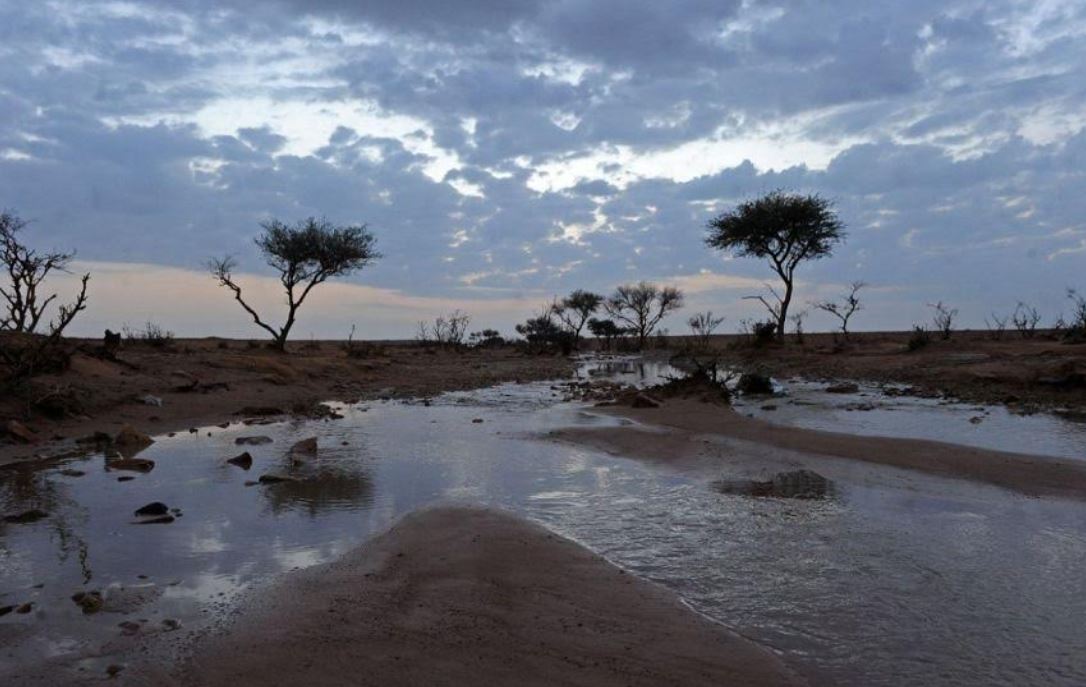
Chairman of the Board of Directors of the Emirates Astronomy Society, and member of the Arab Union for Space and Astronomy, Ibrahim Al-Jarwan, stated that the period between January 12 and 24 is the coldest according to natural rates and is called “the cold of the sixties,” indicating that the peak of cold in the Gulf heritage calendar occurs during “ Durr al-Sittin” from “The Hundred of Winters” from the Durr calendar, where Durr begins on January 12, and the Durr period lasts for ten days and is described by the severity of the cold and its peak.
Chairman of the Board of Directors of the Emirates Astronomy Society, and member of the Arab Union for Astronomy and Space Sciences, Ibrahim Al-Jarwan, said: “The cold of sixty days is like slaughtering a knife” is one of the famous proverbs in the Emirates and the Arabian Gulf, which expresses the severity of the cold in this period during the sixty days of winter, which is ten days. It occurs between January 12 and 24 of each year, and this corresponds to the normal average temperatures during this period.”
Al-Jarwan added: “In the traditional calendar and the cycle calculation in the Emirates, it indicates that the peak of the cold occurs during the “Sixtieth Day” of the “Hundred Winters” of the cycle calendar, as the Winter Hundred in the cycle calculation begins on November 28 and continues until February 25. As for the time of the peak cold It will be with the sixtieth year, which takes place between January 12 and 24.
He pointed out that the cold in the sixtieth day is described as bleeding like a knife, as a metaphor for the severity of the cold. It is said, “The cold of the sixty days is like cutting a knife.” It is the middle of winter when temperatures drop to their lowest values, reaching less than 5 degrees Celsius in the deep desert, but in the mountainous areas. At high altitudes and in the desert of northern Arabia, it reaches below zero degrees Celsius and frost forms in the morning.
Al-Jarwan continued: “In the winter season among the people of the Gulf, there are also two distinct periods, which are “Arba’in Al-Marai” and “Arba’in Al-Aqrabi”, each lasting 40 days. It begins with the beginning of Dar Al-Arba’in, that is, around December 23, and its cold is more severe. It is also characterized by extreme cold and rainfall. Its rain is “constant”, meaning it continues for several days, and the cold wind intensifies, especially the north and north winds, and howling like the sound of wolves is heard from the wind, to the point that it is called Locally, it is called “howling,” and it is described as intense cold that penetrates the ground and inside homes, and frost forms in the morning.
He pointed out that the “Scorpion Arbaeen” begins on February 1 and ends on March 12 and is characterized by its abundance, abundance, and comprehensiveness of rain, to the point that it is described as “the Scorpio watering land and sea.” Then the “decisive days” will be indeterminable between cold and warmth, until the winds of “winter mourning” blow. The last cold winds mourn the departure of cold and winter.
The Durur calculation is an ancient calendar used by the people of the Arabian Gulf. It begins with the rise of Suhail during the second half of August, and is divided into four seasons: the zero season, the winter, the summer, each of which has ten periods, each lasting 10 days, and the hot season, which has six periods, followed by the “mesariq,” which are Five days complete the 365 days of the year.
Follow our latest local and sports news and the latest political and economic developments via Google news
