
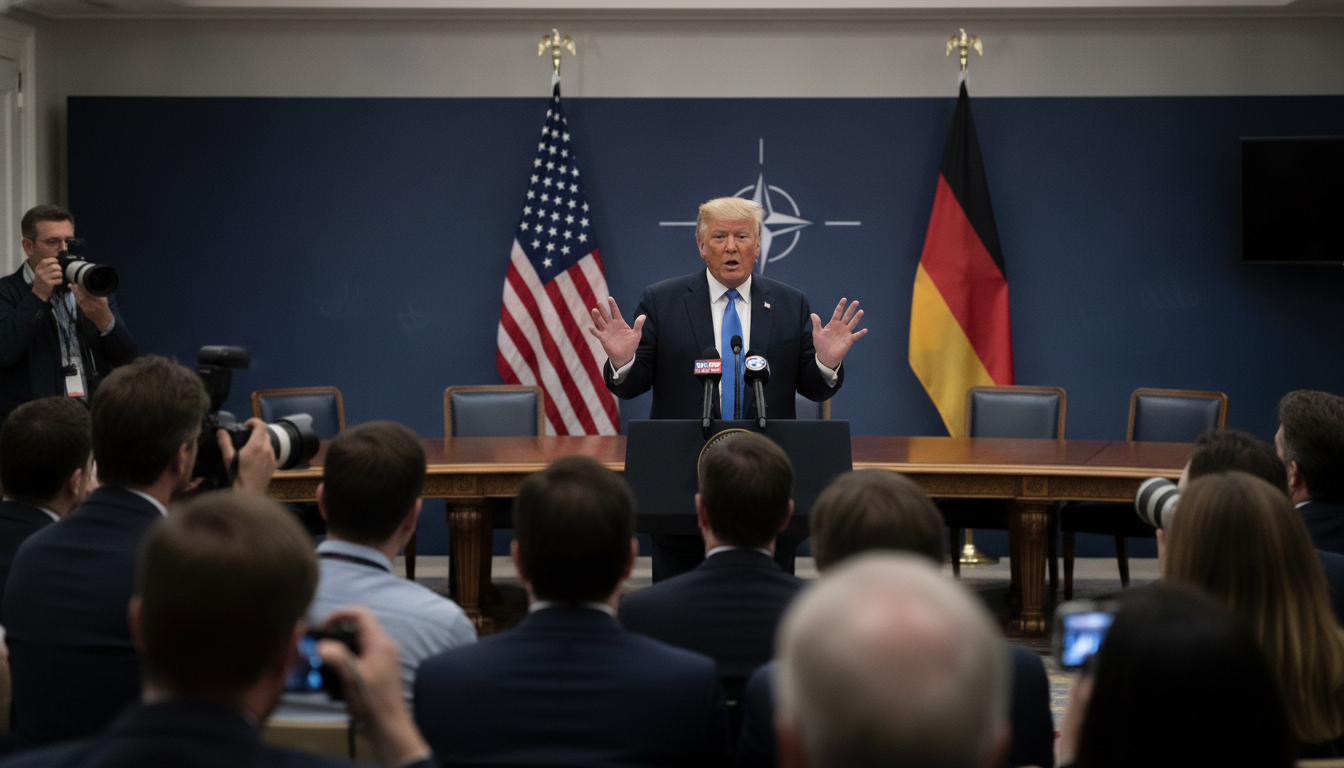
Trump Intensifies Criticism of Germany and Allies Ahead of Ankara NATO Summit
Trump renews attacks on Germany and other NATO allies ahead of the Ankara NATO summit on July 7–8, 2026, intensifying debate over defence spending and figures.
Days before the Ankara NATO summit on July 7–8, 2026, former U.S. President Donald Trump renewed a blistering public attack on Germany and other alliance partners, saying their financial contributions to NATO were “laughable.” Trump posted his comments on Truth Social and singled out Britain and Italy while referring to figures that resemble the NATO 2025 defence-spending report, but he did not cite a source for the numbers. His post ramps up pressure on allies in the run-up to the Ankara meeting, where leaders will review burden-sharing and collective defence commitments.
Trump’s Truth Social Post
In his Truth Social message, Trump accused several NATO members of failing to pull their weight and framed U.S. spending as disproportionately large compared with its allies. He listed specific countries and numbers that observers noted were similar to published NATO 2025 statistics, but he did not provide attribution for the data. The post renewed familiar complaints by Trump that the United States “pays far more” to protect the alliance while receiving limited benefit in return.
Discrepancies Over Public Figures
Analysts and officials pointed out that while Trump’s figures resembled NATO’s 2025 report, the former president did not clarify whether he referred to total defence budgets or the forces committed directly to NATO plans. That distinction matters because NATO reports typically present total national defence spending, not only the portions earmarked for alliance operations. Without an identified source, the post raised questions about whether Trump intended to critique overall national budgets or to challenge how nations report their contributions to NATO.
Germany’s Reported Defence Buildup in 2025
Contrary to Trump’s broad-brush criticism of Germany, NATO’s annual account for 2025 recorded a significant rise in German defence spending. According to the figures referenced in reporting, Germany increased its defence outlays by more than 20 percent in real terms compared with 2024, reaching roughly €88.8 billion and earning the country the second-largest defence budget in the alliance that year. The German increases formed part of a wider trend across Europe and Canada of elevated military spending after sustained calls for greater burden-sharing.
Alliance-Wide Spending Trends
NATO reported a record jump in European and Canadian defence expenditure for 2025, with allied countries outside the United States raising spending by about 19.6 percent to a combined $574 billion. Those gains reflected political decisions taken since the late 2010s to bolster deterrence and modernize forces, with several governments moving to allocate a higher share of national income to defence. The alliance has further clarified that its published numbers cover total national spending on defence and security, which can include procurement, personnel, infrastructure and other budget lines beyond NATO-specific deployments.
Commitments from the Hague to Ankara
Allies agreed during the previous NATO summit in The Hague to a stepped-up investment pledging at least 5 percent of GDP annually in defence and security by 2035, a commitment that was negotiated under pressure from Washington. That target represents the highest collective aspiration for allied defence investment since the Cold War era, and it aims to narrow capacity gaps that have long concerned U.S. officials. The pledge will be a central reference point at the Ankara NATO summit, where leaders are expected to discuss timelines, verification and how national spending plans translate into capabilities for deterrence and collective defence.
The Ankara NATO summit on July 7–8, 2026, will therefore open under the shadow of public disagreements over numbers and political rhetoric, with allies needing to reconcile headline-grabbing criticism and the technical details of defence accounting. Delegations face the task of translating national spending increases into interoperable capabilities while managing bilateral tensions amplified on social media platforms. The summit’s outcomes will be watched closely in Washington, European capitals and across the Middle East, where NATO’s cohesion and readiness remain strategically significant.
