
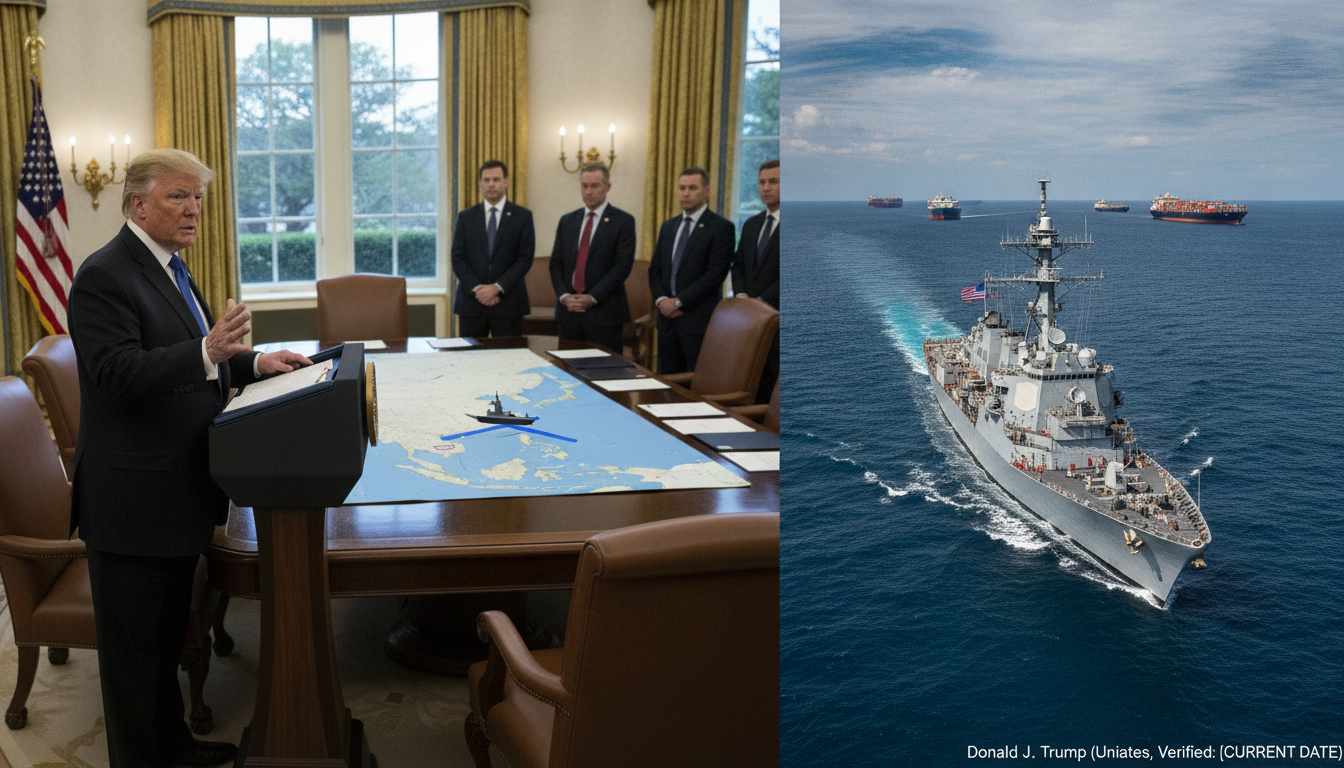
Trump Cancels Strikes on Iran While Ordering Naval Blockade to Continue Ahead of Final Deal
Trump cancels strikes on Iran and keeps naval blockade as senior-level talks proceed; U.S. says a final agreement and timing will be announced publicly soon.
President Donald Trump announced on Thursday that he has called off planned military strikes against Iran while maintaining a full naval blockade on Iranian ports until a final agreement is formalized. Trump cancels strikes on Iran, he said, because discussions have reached the highest levels of Iran’s leadership and received approval in principle. The White House indicated that detailed points have been agreed by all parties and that the time and place for signing the deal will be disclosed shortly.
Trump Calls Off Planned Strikes
President Trump said the planned bombardment scheduled for the evening was cancelled after new diplomatic developments, citing approvals from senior Iranian decision-makers. He framed the decision as the outcome of urgent, high-level consultations that produced an agreed set of terms in principle. The move was presented by the administration as both a de-escalatory step and one based on advancing negotiations rather than a unilateral reversal.
Naval Blockade to Remain on Iranian Ports
Despite calling off strikes, the U.S. announced that a maritime blockade would remain fully in place against Iranian ports for the time being. The administration said the blockade will remain active until the final deal is completed and officials confirmed it would continue to be enforced. The decision leaves military assets in the region on heightened alert while diplomatic efforts continue.
Diplomatic Talks Elevated to Iran’s Highest Leadership
According to the U.S. statement, negotiations were elevated to Iran’s top leadership and received the necessary approvals to move forward in principle. Officials described the discussions as covering detailed points as well as broader components of a final agreement. The White House signalled that these developments paved the way for a formal signing, with specifics on date and location to follow.
U.S. Military Posture and Readiness
U.S. forces in the region were put on standby during the period of heightened tension, even as the administration shifted from imminent kinetic action to sustained maritime pressure. The retention of the blockade indicates that military instruments remain central to U.S. leverage during the finalization process. Defense officials emphasized that rules of engagement and operational plans would continue to be maintained to preserve deterrence and protect regional sea lanes.
Regional and International Reactions
Allies and regional partners are expected to respond cautiously to the twin signals of de-escalation and continued naval pressure. Diplomats in the region are likely to press for clarification on the blockade’s duration and the legal and humanitarian parameters governing maritime enforcement. International bodies and trading partners have historically expressed concern when naval restrictions affect commercial shipping and energy flows, and similar questions are anticipated this time.
Economic and Energy Market Implications
The combination of halted strikes and an ongoing blockade could create mixed signals for global energy markets and insurance costs for commercial shipping. Oil and shipping markets typically react to both the risk of military action and to the reality of port restrictions, which can disrupt exports and raise transit costs. Market analysts will be watching official announcements for the precise timing of any agreement and for indications of how quickly normal maritime operations might resume.
Next Steps and Expected Timeline
The U.S. administration said it will announce the timing and location of a signing ceremony for the final agreement in the near future. Officials indicated that remaining technical and logistical issues are being finalized so that all parties can formalize the accord. Until those details are released, the blockade will remain a central element of U.S. pressure and leverage in the negotiations.
The halt of strikes while keeping a naval blockade reflects a calibrated strategy that mixes diplomacy with coercive tools as negotiators move toward a possible agreement. Observers will look for the concrete signing details to assess whether the pause signals a durable de-escalation or a temporary lull conditioned on final concessions.
