
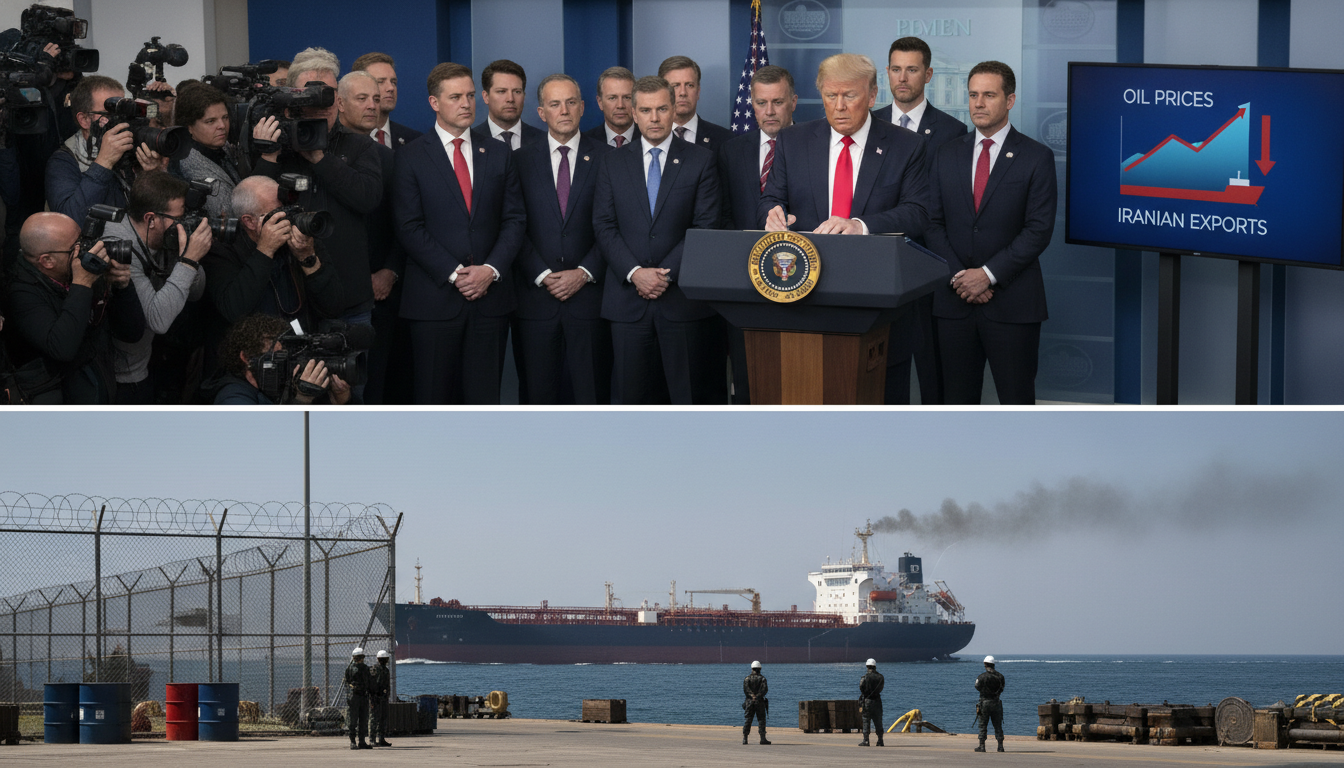
Strait of Hormuz blockade sends crude prices higher, strains global supplies
Strait of Hormuz blockade by the US lifts oil prices, slashes Iran’s exports and raises supply concerns as strategic reserves fall and shipping routes shift.
President Trump’s decision to reinstate a blockade on Iranian ports and restrict traffic through the Strait of Hormuz has driven a fresh spike in global crude prices and tightened supplies, officials and analysts say. The Strait of Hormuz blockade triggered a sharp drop in Iran’s oil exports and prompted market fears as U.S. strategic reserves and commercial inventories have been drawn down. Policymakers and energy companies are now weighing whether a repeat of the tactic is feasible without wider disruption to trade and the region’s energy security.
Market reaction to the Strait of Hormuz blockade
Oil benchmarks climbed immediately after the blockade was announced, with Brent crude rising to its highest levels in weeks as traders priced in elevated delivery risk. Market participants pointed to the sudden removal of Iranian barrels and the uncertain ability of other Gulf producers to compensate when assessing near-term supply gaps. Research firms warned that, absent new buffers, price volatility could intensify if attacks or interdictions continue in and around the strait.
Clearview Energy Partners and other analysts have cautioned that keeping a lid on prices may become increasingly difficult, noting how limited spare capacity and lower inventories reduce the market’s tolerance for supply shocks. The resurgence in volatility has also heightened premiums charged by insurers and shippers for Gulf transits, adding to the effective cost of moving crude from the region.
U.S. strategic and commercial reserves at historic lows
U.S. government figures and industry reporting show that strategic petroleum reserves and commercial stocks have been steadily drawn down since hostilities began, with the official emergency stockpile now at levels not seen in decades. Officials who authorized sales and releases argued that those measures were necessary to stabilize global markets in the early weeks of the conflict. But the diminished buffer constrains policymakers’ ability to offset another major supply squeeze without coordinating largescale releases with partners.
That depletion also complicates any attempt to sustain a long-term blockade while limiting damage to consumer economies, since buyers have fewer sources of surge barrels to plug gaps quickly. Analysts say the loss of buffers increases the price sensitivity of markets to geopolitical events in the Gulf.
China’s import behaviour and its influence on prices
China, typically the world’s largest oil importer, has materially reduced crude purchases in recent months, a trend that helped temper prices even as regional risks rose. Trade data through June indicated that lower Chinese imports provided an important dampener on global demand, helping to bring prices down after the initial wartime spike. However, analysts caution that China’s buying patterns are a key wild card — a rebound in demand from Beijing could remove a major cap on prices.
Market strategists say Beijing’s choices will play a decisive role in near-term price trajectories, as extra Chinese demand could quickly absorb available surplus and push benchmarks higher. For now, Chinese restraint has been one of the few stabilising forces for oil markets amid the Gulf’s instability.
Economic toll and adaptations in Iran’s oil trade
The blockade inflicted severe damage on Tehran’s hydrocarbon revenues, advisers and oil-sector data show, with an estimated daily shortfall in exports equivalent to more than a million barrels at the height of the interdiction. U.S. measures cut off roughly 1.5 million barrels per day from the market during the first blockade, costing Tehran billions in income and contributing to the pressure that produced a temporary truce. When the first blockade was lifted, Iran was able to move tens of millions of barrels that had been stored or held in idle tankers, providing a temporary fiscal reprieve.
Observers warn that Iran has also adapted tactics, using floating storage and more opaque shipping patterns to blunt the impact of future interdictions. Those adaptations complicate enforcement and mean that a second blockade would face different operational and legal challenges than the first.
Regional infrastructure and efforts to bypass the strait
Gulf producers have accelerated plans to reduce reliance on the Strait of Hormuz by expanding pipelines and alternative export routes, officials and engineers say. Countries such as Saudi Arabia, the United Arab Emirates and Kuwait are evaluating costly projects to divert flows around the strait or boost capacity on existing overland and coastal systems. While such infrastructure can reduce vulnerability over time, it requires major investment and cannot be deployed quickly enough to address immediate market pressures.
In the near term, firms are also rerouting shipments, chartering longer voyages that avoid the most contested waters and paying higher freight and insurance premiums. Those measures increase the delivered cost of fuel and add a structural geopolitical premium to hydrocarbon prices, analysts indicate.
Political calculations behind the blockade decision
U.S. leaders have signalled that the blockade serves both strategic and political aims, seeking to demonstrate leverage over Tehran while attempting to influence domestic energy prices ahead of electoral deadlines. Critics argue that the tactic risks provoking a broader escalation that would be costly for consumers and shipping nations alike. Supporters counter that restricting Iran’s main revenue source is an effective nonkinetic pressure point that can compel bargaining.
Former diplomats and energy officials say the core question is sustainability: Tehran may be prepared to endure prolonged economic pain, while Washington’s ability to maintain tight control over the strait and absorb market fallout is less certain. That asymmetry will shape both the duration of the blockade and its ultimate impact on world oil markets.
The renewed blockade of the Strait of Hormuz has already reshaped trading behaviour and forced governments and companies to weigh expensive alternatives to traditional Gulf routes. As inventories shrink and insurers raise rates, the oil market faces a period of elevated risk that could persist until a durable political solution reduces tensions around the waterway.
