
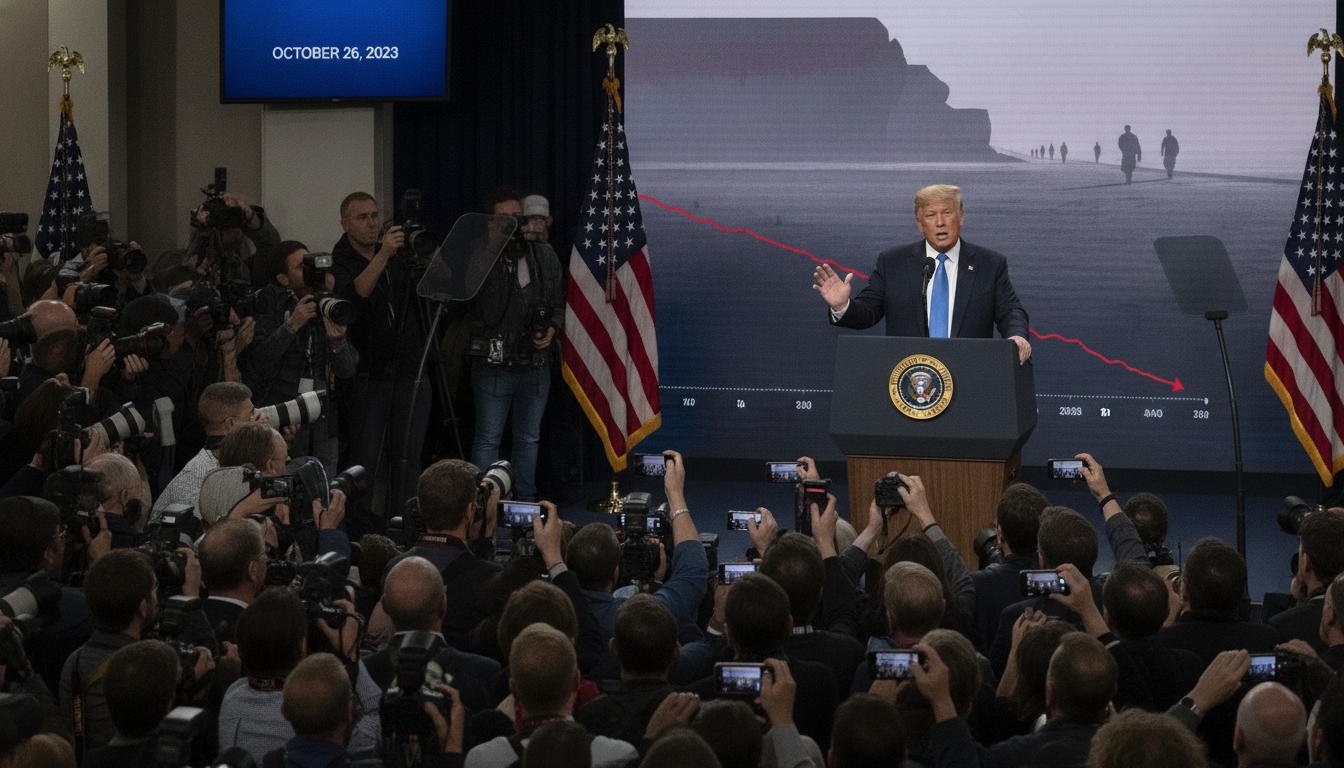
Trump on Iran: ‘They Must Pay the Price’ After Missed Deal, Says on Truth Social
Former President Donald Trump said Iran delayed a favourable deal and must “pay the price,” calling Tehran’s military “all talk” in a Truth Social post.
Trump’s Truth Social Post
Donald Trump posted on Truth Social that Iran “took far too long to negotiate a deal that would have been great for them, and now they must pay the price.”
He framed the missed agreement as a self-inflicted setback for Tehran and presented the outcome as a direct consequence of Iranian choices.
The post also accused Iran’s naval and air forces of having been humiliated and defeated, language that escalates rhetoric without offering independent verification.
Trump’s remarks come as part of a pattern of forceful commentary on U.S.-Iran relations that resurfaced during recent public communications.
Claims About Iran’s Navy and Air Force
In his message, Trump said the Iranian navy and air force had been “destroyed” and “defeated disgracefully,” and called Tehran “all talk and no action.”
Those sharp assertions were presented without accompanying evidence in the post, leaving them as political claims rather than substantiated military assessments.
Analysts note that such statements can be intended to signal strength or influence negotiations, rather than to document verified battlefield outcomes.
Military developments in the Middle East often involve competing narratives, and verification typically requires corroboration from independent sources.
Negotiations and the Missed Deal
Trump’s reference to negotiations echoed long-standing disputes over Iran’s nuclear programme and regional conduct, which have repeatedly affected diplomacy.
Talks on a restored nuclear accord have ebbed and flowed since the 2015 Joint Comprehensive Plan of Action and the U.S. withdrawal from that deal in 2018.
By framing the stalled or delayed diplomacy as Tehran’s error, Trump sought to assign political responsibility for lost opportunities.
Observers say such framing can influence public opinion and the positions of other governments involved in mediating or facilitating talks.
Regional Security Implications
Escalatory rhetoric about Iran’s military capabilities reverberates across the Gulf, where governments remain sensitive to shifts in Tehran’s posture.
UAE and other Gulf states have balanced economic and security ties with concerns about instability, making statements from major international figures consequential.
Heightened language can affect energy markets, maritime security, and diplomatic engagements in the region even when it does not reflect immediate operational changes.
Local leaders and international partners typically call for careful diplomacy to avoid miscalculation amid competing strategic interests.
Immediate Reactions and International Signals
As of the post, there were no widely circulated, independently confirmed reports supporting Trump’s military claims, and responses from Tehran were not prominent in international outlets.
Governments and international organisations often respond cautiously to unverified military assertions, seeking clarification before altering policy or posture.
Diplomatic channels, including European and regional actors, have previously urged restraint and verification in the face of incendiary statements.
Analysts say the pattern of rapid public messaging followed by slower diplomatic responses is familiar in contemporary geopolitical disputes.
Potential Next Steps in U.S.-Iran Relations
Trump’s comments are likely to factor into political debate over the proper U.S. approach to Iran, including the roles of sanctions, diplomacy, and military preparedness.
Whether the rhetoric leads to concrete policy shifts will depend on actions by Washington, Tehran, and intermediary states in the coming weeks.
Policymakers and regional leaders may use this moment to press for renewed negotiations or to reinforce deterrence measures, depending on their strategic calculations.
For now, the public exchange underscores the fragility of talks and the ease with which verbal escalations can complicate complex diplomatic efforts.
The Trump Iran message highlights how public statements can shape perceptions and diplomatic momentum, even when factual corroboration is limited.
