
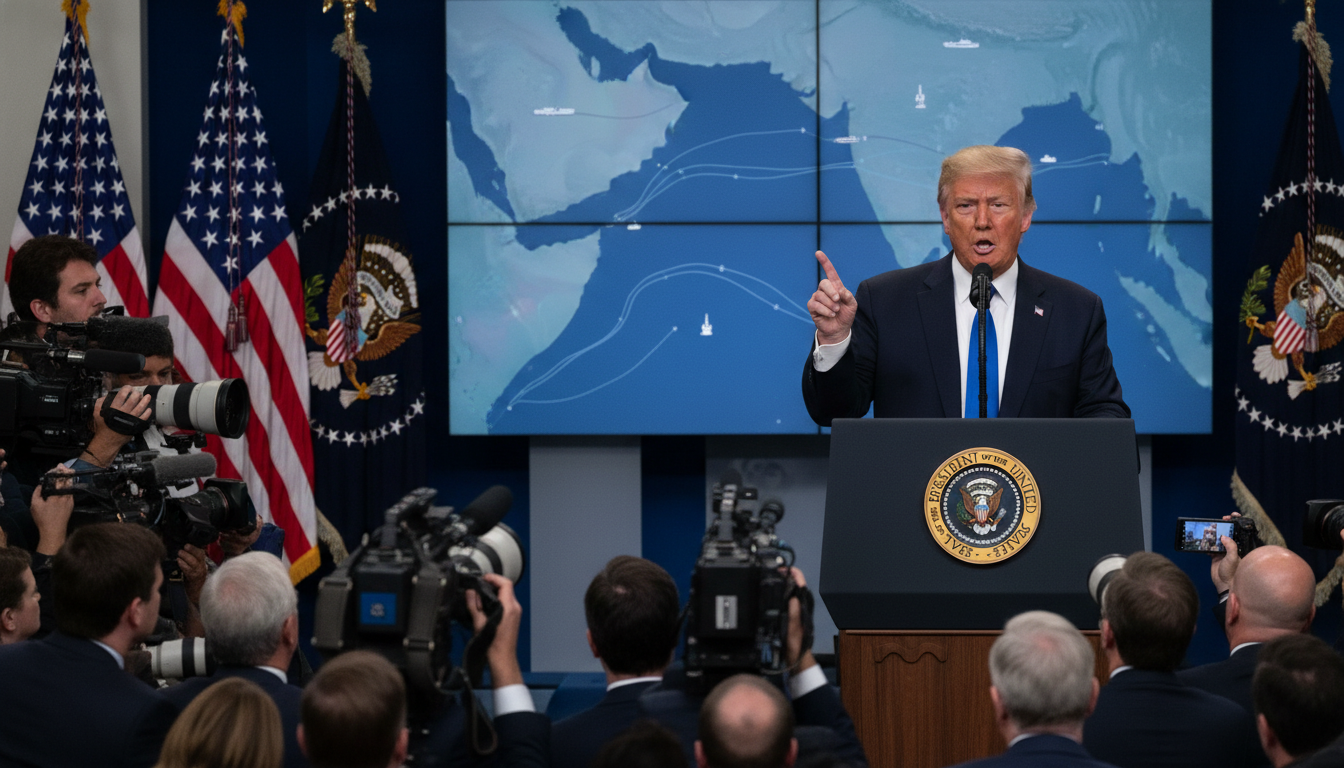
Trump warns Iran over attacks on US ‘Project Liberty’ ships in the Strait of Hormuz
Trump warns Iran over attacks on US ships in the Strait of Hormuz; vessels on ‘Project Liberty’ would prompt a decisive US response, Fox News reports today.
Donald Trump warned Iran on Monday, May 4, 2026, that attacks on American vessels operating under “Project Liberty” in the Strait of Hormuz would provoke a severe U.S. response. The remark, made in an interview with Fox News, said Iran would face catastrophic consequences if it targeted the patrolling ships. The comments immediately heightened tensions in an already sensitive maritime corridor and drew swift attention from Gulf capitals and international shipping interests.
Trump’s comments on Fox News
In the Fox News interview, Trump framed the statement as a deterrent against any aggression toward U.S. naval and escort vessels in the Strait of Hormuz. He said that ships assigned to Project Liberty — a U.S.-led maritime security effort — must not be attacked and that the U.S. would respond forcefully if they were. The remark was delivered in blunt language, underscoring the administration’s insistence on protecting maritime freedom of navigation.
Project Liberty and U.S. maritime presence
Project Liberty refers to a U.S.-led initiative to escort commercial and allied vessels through high-risk waters and to deter hostile actions at sea. The effort has involved surface ships, aerial surveillance and, at times, coalition partners providing logistical support for transits in the Gulf region. U.S. officials have described such patrols as necessary to safeguard global trade routes and to respond quickly to incidents that threaten shipping or personnel.
Strait of Hormuz strategic context
The Strait of Hormuz is a narrow chokepoint through which a significant portion of global oil and liquefied natural gas shipments pass, making it strategically vital. Any military escalation there risks disrupting energy markets and maritime traffic far beyond the Gulf. Previous incidents involving harassment of commercial vessels and confrontations between Iranian forces and Western navies have demonstrated how quickly tensions can spike in the strait.
Reactions from Tehran and regional governments
There was no immediate official response from Tehran to the remarks, and Iranian state media had not issued a formal statement at the time of reporting. Regional governments and Gulf Cooperation Council capitals were reported to be monitoring developments closely, emphasizing the importance of de-escalation. Diplomatic channels in the region routinely seek to balance security assurances with efforts to avoid incidents that could ignite wider conflict.
U.S. military posture and Pentagon response
The Pentagon did not immediately issue a detailed comment on the interview, but U.S. military statements in recent months have emphasized readiness to protect maritime routes and personnel. Military planners maintain that rules of engagement are structured to protect forces while attempting to avoid unnecessary escalation. Officials overseeing maritime operations have repeatedly highlighted surveillance, rapid-reaction capabilities and coalition coordination as tools for crisis management.
Implications for Gulf trade and international shipping
Commercial shipping operators and insurers watch statements like these closely because any sign of increased risk in the Strait of Hormuz can drive up insurance premiums and reroute vessels. Shippers may seek alternative transit arrangements or additional escorts if tensions persist, with knock-on effects for freight costs and delivery schedules. Energy market observers warned that heightened uncertainty could spur short-term volatility in crude and gas prices if supply routes are perceived as threatened.
The interview and the language used underscore the fragility of security dynamics in the Gulf and the difficulty of deterring hostile actions without raising the prospect of confrontation. Naval patrols under Project Liberty are intended to reassure commercial operators, but they also place military forces on the front line of any escalation. Diplomats and military officials in the region are likely to push for measured responses and back-channel communication to prevent incidents that could rapidly widen into a broader clash.
