
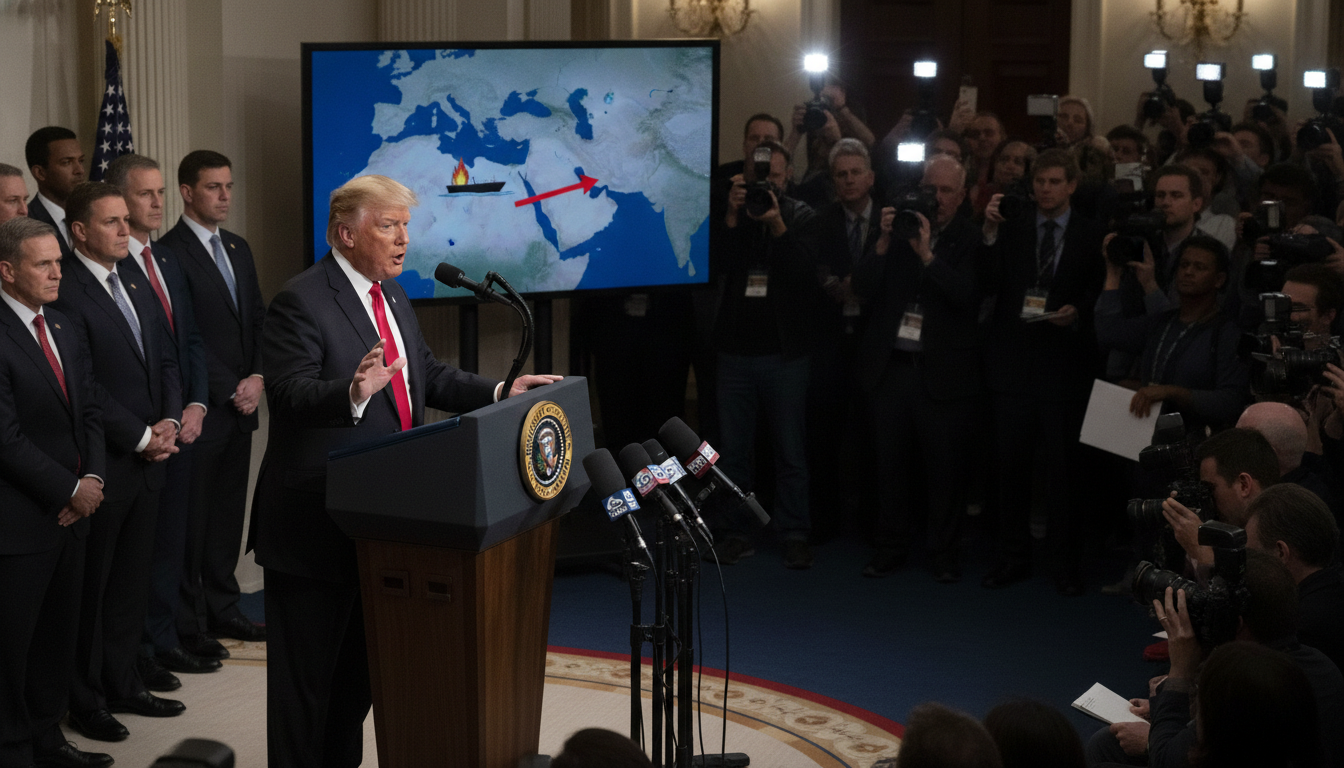
Trump warns Iran over Houthi attacks on Red Sea tankers
Former President Donald Trump warned Iran on Thursday that Tehran would face direct responsibility and “significant military punishment” if Houthi militants stage further attacks on commercial shipping, escalating tensions after recent strikes on tankers in the Red Sea.
Trump’s Warning to Tehran
President Trump posted the warning on his Truth Social account, saying the United States views the Houthi movement as acting on behalf of Iran when it targets commercial vessels.
He said Washington will hold Tehran directly accountable for future incidents and promised a strong military response if attacks continue, framing the message as a deterrent to further escalation.
U.S. Characterization of the Houthis
The Trump statement reiterated a long-standing U.S. position that Houthi operations in the Red Sea reflect Tehran’s strategic influence in the region.
By labeling the movement a proxy for Iran, the message seeks to draw a direct line between Iranian policy and disruptive maritime actions that threaten international shipping.
Recent Attacks on Red Sea Shipping
Houthi forces recently claimed responsibility for strikes that targeted oil tankers and two Saudi-flagged vessels operating in the Red Sea, raising alarm among regional capitals and shipping companies.
Those incidents prompted international concern because the Red Sea is a critical corridor for global trade and energy shipments, and attacks there can quickly ripple through markets and maritime insurance costs.
U.S. Military Options and Deterrence
Trump’s reference to “significant military punishment” signals the potential for kinetic responses if the United States deems further attacks to be attributable to Iran-backed forces.
Military planners and diplomats typically weigh a range of options, from targeted strikes against missile and drone launch sites to convoy escorts and increased naval patrols, balancing deterrence with the risk of wider confrontation.
Regional Reactions and Diplomatic Pressure
Gulf governments have condemned the attacks and emphasized the need for maritime security along key shipping lanes, while calling for measured international responses that protect commerce without provoking broader conflict.
Regional partners and Western allies have repeatedly urged restraint and pushed for diplomatic channels to reduce tensions, even as military preparations and contingency planning continue in the background.
Impact on International Shipping and Trade
Industry officials warn that repeated strikes on tankers in the Red Sea would force rerouting, higher freight costs, and increased insurance premiums that would affect global supply chains.
Longer transit times and diverted voyages could raise the cost of energy and goods in markets dependent on timely deliveries through Suez and adjacent routes.
The escalation also risks prompting private shipping firms to suspend transit through vulnerable corridors, compounding economic and logistic challenges for importers and exporters alike.
Domestic and Strategic Calculations
Trump’s messaging addresses domestic political audiences as well as international actors, underscoring a posture of toughness toward Iran and its regional affiliates.
Analysts note that strong public threats can serve as a bargaining posture while also constraining diplomatic flexibility, since escalatory rhetoric may necessitate follow-through to maintain credibility.
The renewed focus on the Red Sea comes amid broader regional tensions, including rivalries over influence in Yemen, Syria, and Lebanon, where Iran and Gulf states compete through proxies and diplomatic pressure.
The United States and its partners face the task of deterring attacks that threaten commercial navigation while limiting the conflict’s spread beyond localized incidents.
International efforts to secure merchant vessels have included coordinated naval patrols and advisories for shipping lines, aiming to reduce the immediate risk to crews and cargo.
At the same time, diplomats continue to search for longer-term solutions that address the root drivers of maritime insecurity, including the Yemeni conflict and Iran’s regional policies.
Heightened alert levels and military readiness across multiple navies suggest policymakers are preparing for a range of contingencies if attacks persist.
Commercial actors are closely monitoring developments to adjust routing, schedules, and insurance arrangements as needed, while stakeholders call for clear, actionable steps to restore stability to the corridor.
Measures such as shared escorts, intelligence sharing, and port security enhancements are among the options being discussed in regional and international forums.
Whether these measures will be sufficient to prevent further incidents remains uncertain, and much will depend on the decisions taken in capitals from Washington to Riyadh to Tehran.
The coming days will test whether direct warnings like President Trump’s reduce hostilities or contribute to a cycle of retaliation that imperils maritime safety and regional stability.
