
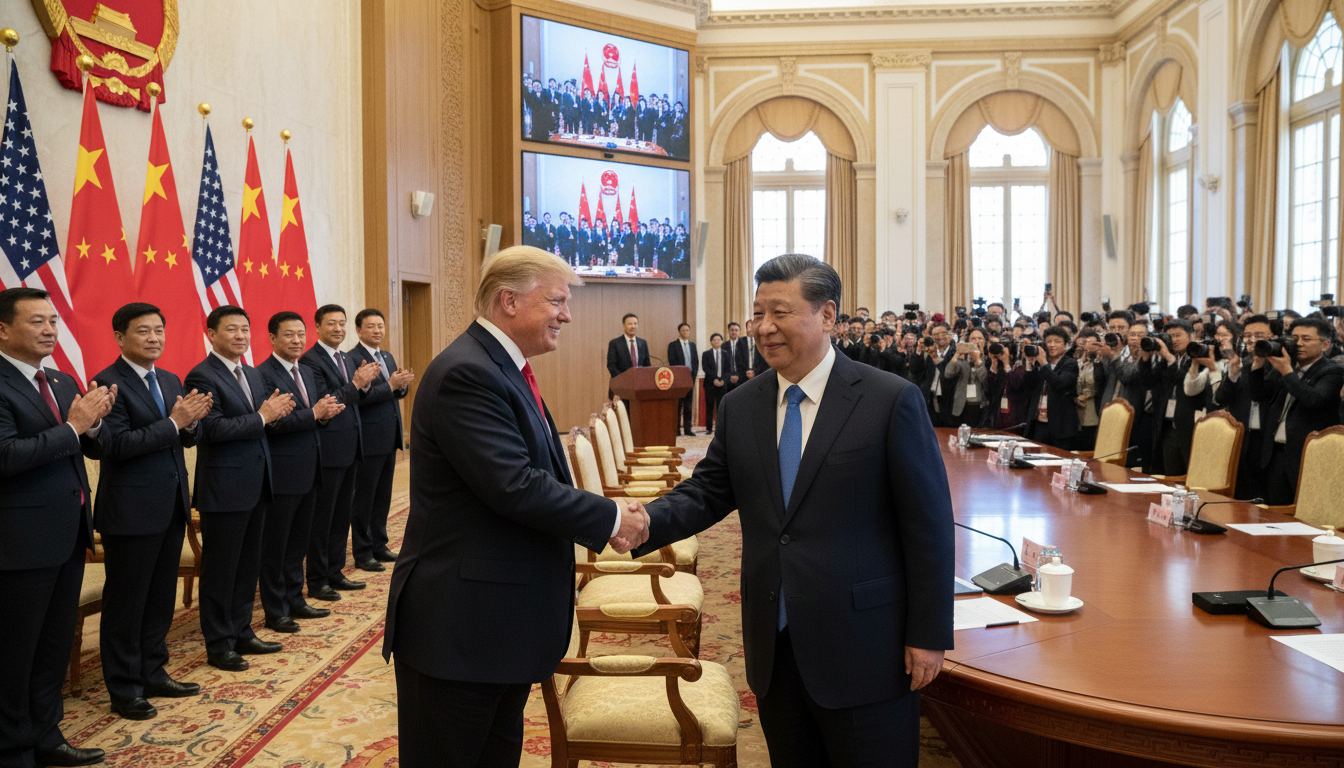
Trump visit to Beijing cast as diplomatic win by Chinese state media
Chinese state media portray Trump visit to Beijing as a diplomatic victory, citing economic leverage, head-of-state diplomacy and appeals for a long-term truce.
President Trump’s visit to Beijing has been presented by Chinese state media as a significant diplomatic success for China and a marker of growing parity between Beijing and Washington. The Trump visit to Beijing dominated official commentary, which emphasized dialogue, economic ties and a recalibrated bilateral relationship led by top leaders. State-run outlets framed the talks as an opportunity for the United States to accept a new balance in which economic engagement underpins stable ties.
State media frames visit as diplomatic victory
The Global Times and People’s Daily led coverage that described the visit as evidence of China’s resilience and rising international standing. Editorials argued the talks reflected a shift away from unilateral confrontation toward managed competition and stronger head-of-state diplomacy.
Commentators in state outlets avoided direct personal attacks on Mr. Trump, instead stressing the strategic importance of leader-to-leader engagement. That framing served both to underline Xi Jinping’s central role and to present the summit as a platform for stabilizing relations after a bruising trade dispute.
Economic leverage and trade anxieties highlighted
Chinese coverage repeatedly linked the visit to economic priorities, portraying trade and commerce as the ballast of bilateral relations. Analysts cited in state media suggested Beijing’s export capacity and control over critical supply chains gave it leverage in negotiations.
Reports and commentaries also hinted at domestic economic concerns in China, where slowing growth has increased the urgency of securing foreign demand. Coverage emphasized potential commercial wins — from agricultural purchases to aircraft sales — as politically valuable outcomes for both capitals.
Narrative of resilience and parity with the United States
Official commentary framed recent tensions as a test China survived, pointing to its ability to withstand pressure and maintain strategic autonomy. The People’s Daily editorial argued that while relations cannot return to a previous era, they can advance on a more equal footing.
This narrative of parity was paired with reminders of China’s economic and diplomatic weight, a message intended for both domestic and international audiences. By highlighting resilience, state media sought to project confidence without escalating rhetoric that might undermine the summit’s de‑escalatory aims.
Nationalist voices and political timing in China
Alongside official outlets, nationalist commentators offered a more triumphalist take, interpreting the visit as evidence of a weakened U.S. position. Some voices suggested that President Trump’s domestic and foreign challenges increased Washington’s appetite for a deal, a theme pushed by well‑known public intellectuals and state-affiliated publications.
At the same time, Beijing’s controlled media environment shaped which nationalist strains were amplified and which were muted. The selective promotion of certain narratives allowed authorities to benefit from public pride while maintaining diplomatic flexibility.
Calls for a managed bilateral truce
Several state-linked analysts urged that the summit should lead to a durable, managed truce to allow China to focus on development without external interference. Think tanks and editorials recommended sustained top‑level engagement to prevent other branches of government from derailing progress made at the summit.
Such calls implicitly asked for the United States to align domestic actors with executive-level agreements, a point Chinese commentators stressed as necessary for long-term stability. The emphasis on institutionalizing agreements reflected Beijing’s desire for predictability in a relationship marked by episodic crises.
Implications for U.S. domestic politics and global diplomacy
Chinese media also framed potential commercial outcomes as politically expedient for Mr. Trump, suggesting large trade purchases could bolster his position at home ahead of key elections. Commentators linked economic concessions to electoral calculations, underlining how bilateral deals might serve both diplomatic and domestic agendas.
Observers noted that the summit’s immediate effect may be more symbolic than structural, with long-term change contingent on follow-through by ministries, businesses and legislatures on both sides. Beijing’s messaging appeared aimed at converting a high-profile visit into tangible economic and political advantages without provoking renewed confrontation.
The summit showcased how Beijing uses tightly managed media narratives to advance strategic goals, balancing assertive themes with pragmatic appeals for cooperation. As officials in both capitals move from ceremonial engagements to technical talks, the durability of any gains will hinge on concrete agreements, oversight by domestic institutions, and the capacity to manage competing interests across governments and industries.
