
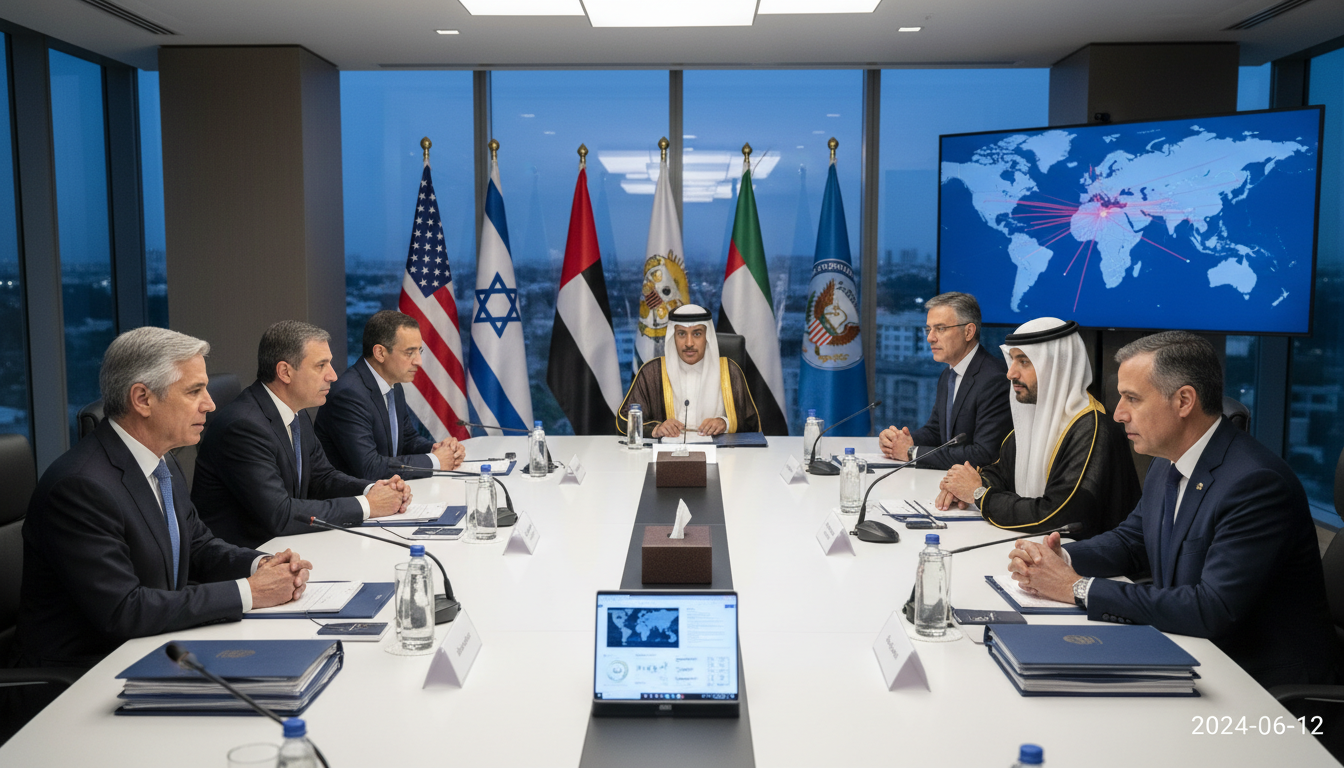
U.S. approves $8.6bn emergency arms sales to Gulf partners amid stalled Iran cease-fire talks
US authorizes $8.6bn in emergency arms sales to Gulf partners, sending rockets, Patriot interceptors and air-defence systems amid stalled Iran cease-fire talks.
The United States has approved more than $8.6 billion in emergency arms sales to partners in the Middle East as a fragile pause in the U.S.-Israeli war with Iran remains unsettled. The emergency arms sales package, announced by the State Department, includes rockets and air-defence equipment destined for Israel, Qatar, the United Arab Emirates and Kuwait. The moves come as Gulf states continue to contend with repeated barrages of drones and ballistic missiles traced to Iran during the recent conflict.
U.S. package and recipients
The State Department issued a series of notifications late Friday detailing the transfers and said the sales serve U.S. national security interests. Israel, the UAE and Qatar are slated to receive an Advanced Precision Kill Weapon System — a laser-guided rocket capability — while Qatar and Kuwait will obtain significant air-defence assets. Officials framed the authorizations as urgent replenishments after heavy munitions use in the recent fighting.
Major items and price tags
Under the announced terms, Qatar would purchase more than $4 billion worth of American-made Patriot missile interceptors, addressing dwindling global stocks of those interceptors. Kuwait’s acquisition was described as an advanced aerial-defence system valued at roughly $2.5 billion. The full package totals over $8.6 billion and combines interceptors, precision rockets and other defensive munitions needed by regional partners.
Emergency authorization and congressional bypass
Secretary of State Marco Rubio used an emergency provision permitting an “immediate sale” to expedite the transfers, bypassing the usual congressional review process. The administration invoked the emergency authority for the third time since the Iran war began to speed arms deliveries, a step that drew sharp criticism from Democratic lawmakers. Representative Gregory W. Meeks, the top Democrat on the House Foreign Affairs Committee, said the move reflected a pattern of evading statutory oversight and called for greater transparency.
Production constraints and U.S. stockpile concerns
Pentagon and industry officials have warned that producing large quantities of interceptors and similar munitions can take years, prolonging delivery timelines for recipient countries. The demand for Patriot interceptors and other defensive systems has strained global inventories, raising concern in Washington that supplying allies could further diminish U.S. stockpiles. Some Pentagon voices have expressed unease that diverted production capacity for exports could leave American forces with fewer reserves.
Cease-fire, stalled negotiations and security risks
A cease-fire that paused direct hostilities took effect last month, but diplomatic talks have failed to produce a durable settlement, with negotiators at odds over key nuclear and security conditions. Tensions have remained elevated in the Strait of Hormuz, where Iranian actions restricting Western shipping and U.S. measures such as a blockade of Iranian ports have heightened the risk of renewed confrontation. Iranian officials signalled the possibility of a return to hostilities, underscoring the fragile nature of the current pause.
Regional damage and operational impact
As the conflict unfolded after late February, Iranian missile and drone strikes struck military bases hosting U.S. forces and civilian infrastructure across the Gulf and in Israel. Local authorities reported at least 20 civilian deaths and several military fatalities across Gulf Arab countries during the period of hostilities. The United Arab Emirates reported being targeted by more than 500 ballistic missiles and some 2,500 drones, and Israel provided some of its missile-defence capabilities to Gulf partners during the fighting.
The emergency authorizations reopen familiar debates in Washington about executive reach in arms transfers and the balance between rapid support for allies and congressional oversight. With production lead times lengthy and regional tensions unresolved, recipient states may face substantial waits for full deliveries even as their immediate defence needs persist.
