
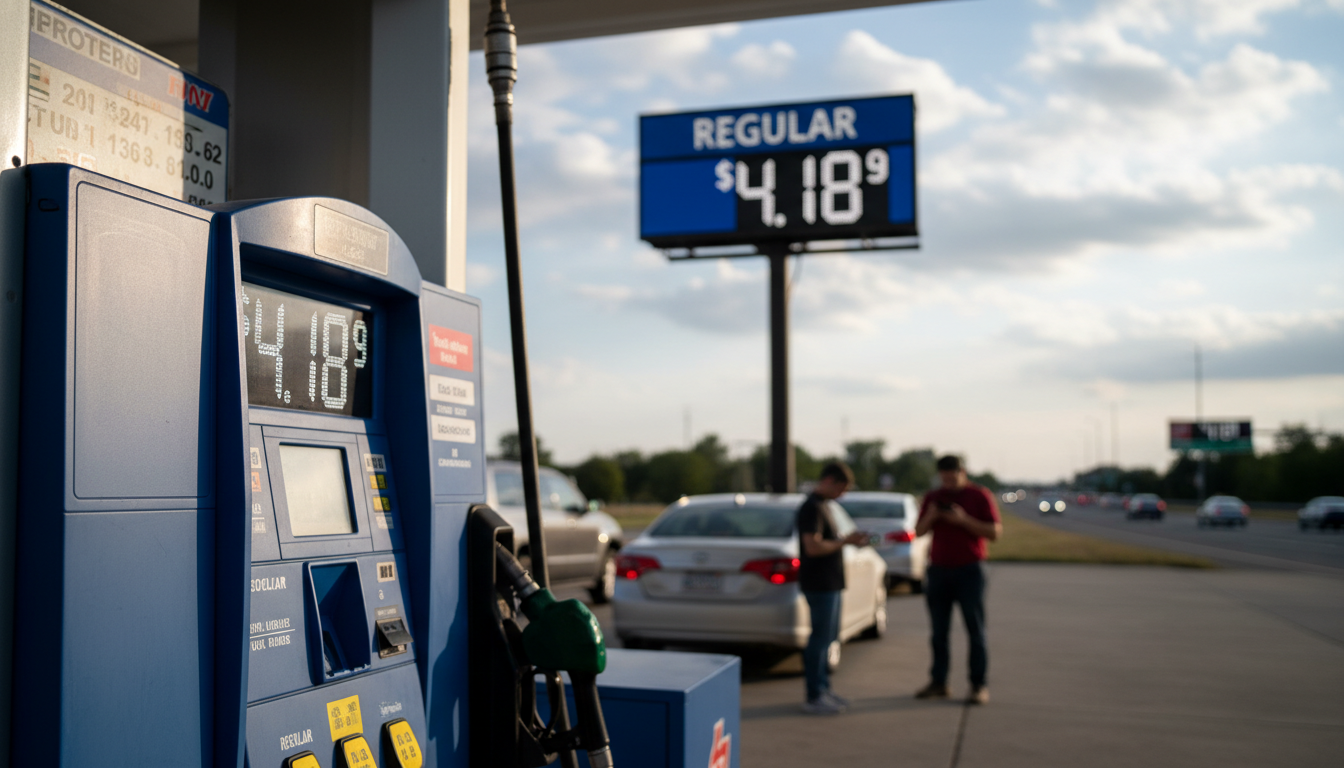
U.S. gasoline prices climb to highest level since August 2022 amid Middle East tensions
U.S. gasoline prices surged to about $4.18 per gallon, the highest since August 2022, driven by geopolitical tensions and a near 40% rise since late February.
The U.S. national average gasoline price rose to approximately $4.18 per gallon on Tuesday, the American Automobile Association reported, marking the highest level seen since August 2022. U.S. gasoline prices have increased by roughly $1.19 per gallon — about a 40 percent rise — since late February, when strikes by the United States and Israel on Iran heightened geopolitical risks and market uncertainty. The AAA data underscores renewed pressure on consumers at the pump as volatility returns to global energy markets.
Price jump confirmed by AAA data
The American Automobile Association’s weekly survey showed the uptick in retail gasoline prices across the United States, with the national average near $4.18 per gallon. AAA’s tracking is widely used by motorists and policymakers to gauge short-term fuel cost trends. The association’s numbers reflect retail pump prices and are based on a rolling sample of station-level data nationwide.
Magnitude and timeline of the increase
Since late February, retail gasoline costs have risen by about $1.19 per gallon, an increase AAA quantified as roughly 40 percent from late-February levels. That pace of escalation has outstripped the seasonal norms typically seen in spring, when demand gradually rises ahead of the summer driving season. The movement to a level not seen since August 2022 signals a notable break from the more stable price environment that followed last year’s declines.
Market drivers and geopolitical context
Market participants attribute much of the recent rally to heightened geopolitical tensions after strikes on Iran in late February, which raised concerns about potential supply disruptions in the wider Middle East. Traders also reacted to broader risk sentiment that pushed oil futures higher, feeding through to gasoline. Refinery output patterns, maintenance schedules and regional distribution bottlenecks have amplified the effect of crude price moves on pump prices.
Regional and consumer impacts
The rise in U.S. gasoline prices is showing uneven effects across states, with motorists in some regions facing sharper increases due to local taxes, fuel blends and transportation costs. For many consumers, the gain translates into noticeably higher weekly fuel bills, affecting commuting costs and household budgets. Businesses that rely on road transport may pass some of the increase to consumers, potentially adding modest upside pressure to inflation measures tied to energy and transport.
Analysts’ outlook and near-term expectations
Energy analysts say volatility is likely to persist while geopolitical uncertainty remains elevated and as markets factor in refining capacity and seasonal demand. Some forecasters expect prices to moderate if crude markets ease or refineries increase output, while others warn of further upside if conflicts expand or supply interruptions occur. Policy responses, strategic reserve releases and coordination among producers could also shape the trajectory in coming weeks.
U.S. gasoline prices reaching multi-year highs highlights how swiftly global events can ripple through retail energy costs, reinforcing the sensitivity of consumer fuel bills to developments abroad and domestic supply dynamics.
