
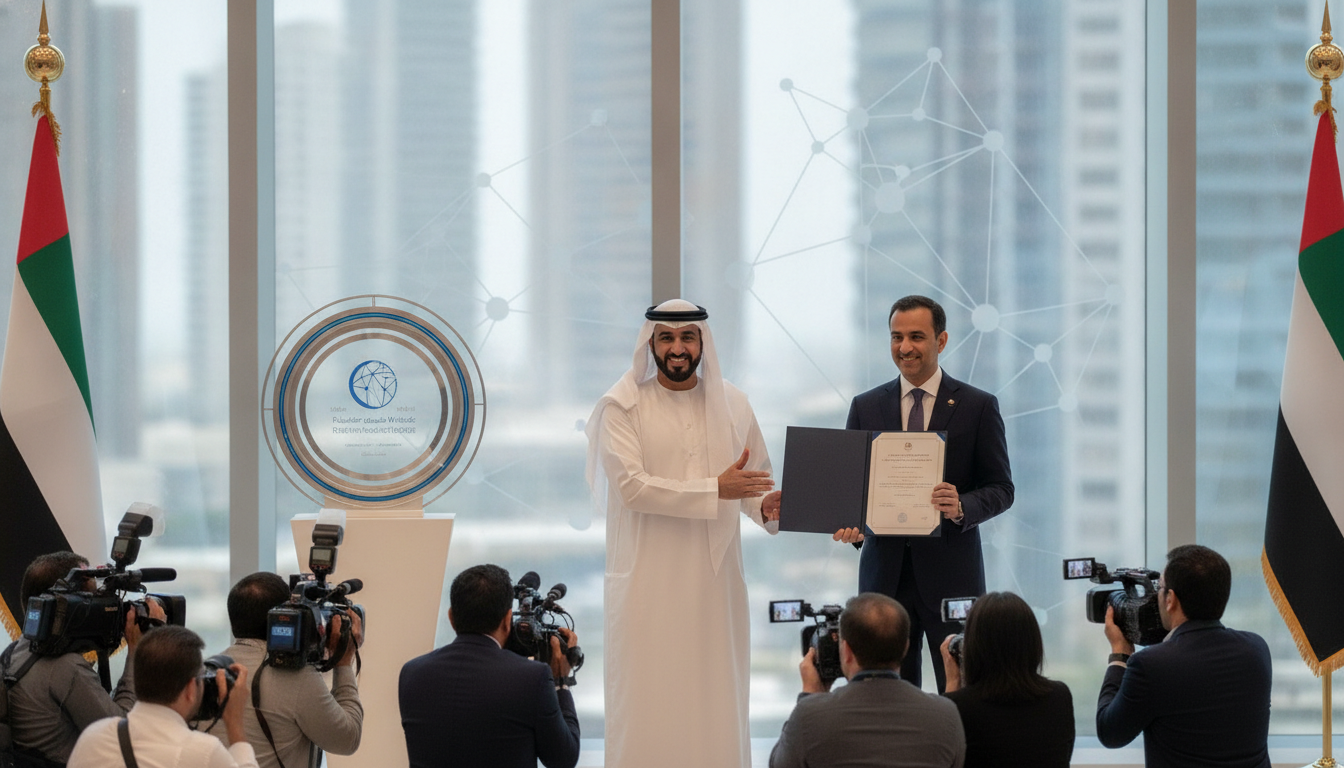
UAE CEPA project awarded Future-Readiness mark after driving major trade and GDP gains
UAE CEPA project earns Future-Readiness mark; expected to add AED 245bn to GDP by 2033, boost non-oil trade and expand partnerships with AI-driven agreements.
The UAE’s Comprehensive Economic Partnership Agreements (CEPA) project has been awarded the Future-Readiness mark by the Office of Government Development and the Future, underscoring its strategic role in preparing the country’s trade architecture for global shifts. The recognition highlights CEPA’s central role in the nation’s trade policy and its contribution to projected economic gains through 2033. Officials say the initiative will expand market access, strengthen resilience and accelerate the digital transformation of trade.
Future-readiness mark awarded to CEPA project
The Office of Government Development and the Future granted the mark to federal and local bodies, and to national companies executing projects that enhance the UAE’s preparedness for future challenges. CEPA was singled out for its strategic design and measurable contribution to trade readiness. The accolade signals government confidence in the project’s capacity to shield the economy from geopolitical shifts, protectionist trends and supply chain disruptions.
Projected economic impact through 2033
According to ministry figures, the CEPA project is expected to raise the cumulative contribution of partnership agreements to real GDP growth by up to 13 percent by 2033, equivalent to roughly AED 245 billion. Over the period 2024–2033, the project is forecast to increase the value of the UAE’s foreign trade by more than AED 735 billion. That forecast includes an anticipated rise in exports of about AED 390 billion and imports of around AED 343 billion during the same timeframe.
Trade and export gains recorded in 2025
Ministry data show exports to countries covered by comprehensive partnership agreements reached AED 175.5 billion in 2025, representing annual growth of 18.2 percent. Those exports accounted for 21.6 percent of the UAE’s non-oil exports in 2025, a year in which non-oil foreign trade was valued at AED 3.8 trillion. International rankings also improved, with the UAE moving from 17th to ninth in global goods exports over five years, while total trade in goods and services reached an estimated $1.637 trillion in 2025.
Expansion of the UAE’s partnership network
By April 2026 the UAE had broadened its network to 37 comprehensive and regional trade agreements, reflecting a deliberate push to diversify market ties. The widening web of accords is intended to open new destinations for Emirati exporters across strategic sectors. Officials emphasize that the network expansion is not limited to tariff reductions but includes regulatory cooperation, services liberalization and provisions designed to enhance trade facilitation.
Technology and AI shaping new trade agreements
A core element of CEPA’s design is the use of technology and artificial intelligence to develop integrated, future-ready agreements. The project leverages data analytics, AI and digital tools to tailor agreements that respond to evolving business needs and emerging global trends. This tech-led approach aims to boost resilience, accelerate market entry for exporters and support sectors such as food and pharmaceuticals, metals and petrochemicals, logistics, finance, technology, renewable energy, tourism and the digital economy.
Ministers highlight strategic and economic benefits
Dr. Thani bin Ahmed Al Zeyoudi, Minister of Foreign Trade, described the Future-Readiness mark as recognition of the UAE’s strategic vision to build a more competitive and open economy prepared for future shifts. He stressed that CEPA has been instrumental in turning foreign trade into a primary engine for sustainable growth and economic diversification. Ohood bint Khalfan Al Roumi, Minister of State for Government Development and the Future, said CEPA exemplifies leadership ambition to shape future trade pathways and to reinforce the UAE’s role as a global trade hub.
The ministry also highlighted that CEPA’s emphasis on agile governance, digital trade frameworks and innovation-backed rules will help businesses seize new opportunities while maintaining regulatory clarity and market stability. Officials point to targeted sectoral gains and the potential for CEPA to deepen regional and global supply chain integration.
The Future-Readiness mark adds an external validation to a project the UAE frames as central to its We the UAE 2031 vision and the national trade agenda. Policymakers expect CEPA-driven market access, coupled with technological tools, to sustain trade growth, attract investment and support efforts to upscale domestic industry over the coming decade.
The recognition is expected to galvanize further governmental and private-sector collaboration to implement the agreements and to deploy the digital platforms and governance mechanisms needed to realize the projected economic outcomes.
