
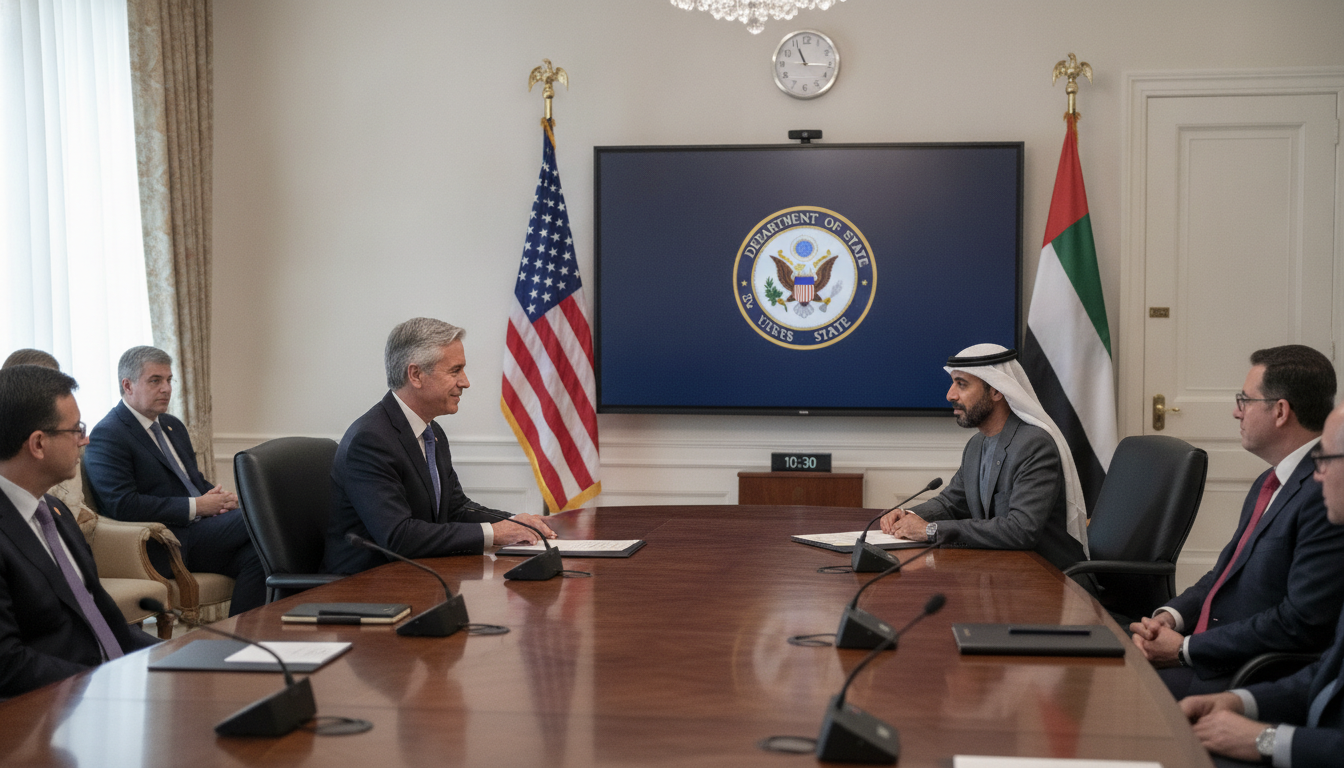
UAE Elevated to US Export Controls Group EAR A:5, First Arab State to Receive New Classification
U.S. export controls EAR A:5 designation for the UAE signals deeper technology partnership and trust, opening opportunities in advanced sectors and supply chains.
The United Arab Emirates has been elevated by the United States into the EAR A:5 classification under American export controls, a move announced by Minister of State Saeed Al Hajri that makes the UAE the first Arab country to receive this status. The minister said the change, posted on X, follows the removal of the UAE from the D:3 and D:4 categories and reflects international recognition of the country’s export controls and compliance systems. The EAR A:5 designation is expected to affect cooperation in high‑end technology areas, streamline certain licensing pathways, and broaden collaboration with U.S. partners.
U.S. Export Controls Change
The U.S. Department of Commerce’s decision shifts the UAE into a grouping reserved for close and trusted partners, according to the minister’s statement. This reclassification removes the UAE from lower trust categories that carried tighter restrictions and places it alongside nations with stronger export control alignment. Officials described the move as an acknowledgement of the UAE’s strengthened regulatory framework and adherence to international standards.
The minister highlighted that the step reflects more than transactional ties; it is a measure of institutional trust and operational alignment between the two governments. For businesses and research institutions, the new status may translate into faster engagement on certain advanced technologies and smoother cross‑border transactions where export licensing previously posed hurdles.
Removal from D:3 and D:4 and the Practical Consequences
Being taken out of the D:3 and D:4 groups alters the licensing and approval landscape for items subject to the Export Administration Regulations. Companies in the UAE that import, export or develop controlled technologies will now operate under revised U.S. licensing presumptions and review criteria. The precise operational changes will depend on guidance issued by U.S. agencies in the coming weeks.
The reclassification does not eliminate all controls or requirements, and affected firms should expect continued scrutiny for genuinely sensitive transfers. Compliance officers and legal teams will need to review contracts, supply‑chain agreements and export control policies to align with the updated framework and to take advantage of newly available avenues for cooperation.
Sectors Named in the Announcement
Minister Al Hajri specifically listed several strategic areas that stand to benefit from the classification change, including artificial intelligence and advanced computing, semiconductors, quantum technologies, space, and peaceful nuclear energy. He also noted advanced dual‑use technologies as a focal point for deeper collaboration with U.S. counterparts.
These sectors are central to national development plans and industrial strategies across the UAE, supporting ambitions in digital transformation, scientific research and high‑value manufacturing. Increased access and partnership in these fields could accelerate domestic capabilities while integrating the UAE more tightly into global research and production networks.
Economic and Supply‑Chain Implications
Analysts say the EAR A:5 status could attract higher levels of foreign direct investment into UAE technology firms and research institutions by reducing certain export uncertainties. Investors and global suppliers often view export control clarity as a key factor in decisions about joint development, localized production and long‑term contracts.
For multinational companies reliant on semiconductor and advanced computing components, the UAE’s new classification may enable more direct sourcing, regional R&D centers and collaborative projects that were previously constrained by tighter export restrictions. At the same time, firms will need to maintain robust compliance programs to manage any residual licensing requirements and end‑use restrictions.
Government Statements and International Messaging
In his post on X, Saeed Al Hajri framed the decision as the outcome of national policy and international engagement, attributing it to leadership priorities that emphasize trust, credibility and adherence to global norms. The minister said the move opens wider prospects for research, investment and technology transfer with international partners.
The announcement also serves as a diplomatic signal, indicating strengthened strategic alignment between the UAE and the United States on sensitive technological governance. Other governments and private partners may view the reclassification as an implicit endorsement of the UAE’s export control institutions, potentially encouraging further bilateral and multilateral cooperation.
Next Steps for Businesses and Regulators
UAE companies, universities and government entities engaged in advanced technologies should immediately review how the EAR A:5 designation affects current projects and agreements. Legal counsel and compliance teams will need to assess licensing regimes, update internal controls and seek clarifications from U.S. authorities where necessary. Regulators in the UAE are likely to issue guidance to help domestic entities navigate the operational changes and leverage new collaboration opportunities.
International partners and suppliers should also reassess contractual terms and risk models to reflect altered licensing expectations. Both public and private stakeholders will be watching follow‑on announcements from the U.S. Department of Commerce for technical details and implementation timelines.
The UAE’s elevation to EAR A:5 marks a notable moment in the country’s technology diplomacy and regulatory maturation, offering expanded avenues for cooperation while underscoring the continued importance of rigorous export control compliance.
