
JLL: UAE real estate market sees industrial rent surge and mixed residential trends in Q1 2026
JLL Q1 2026 report finds the UAE real estate market led by double‑digit industrial rent growth, mixed residential sales, and a hotel stimulus supporting recovery. Now.
The UAE real estate market showed resilience in the first quarter of 2026, with industrial and logistics assets driving headline gains while residential activity varied by segment. A new report from JLL covering Q1 2026 highlights strong rent growth in industrial estates, divergent performance between off‑plan and secondary housing markets, and targeted government support for the hospitality sector.
Industrial rents climb in Dubai and Abu Dhabi
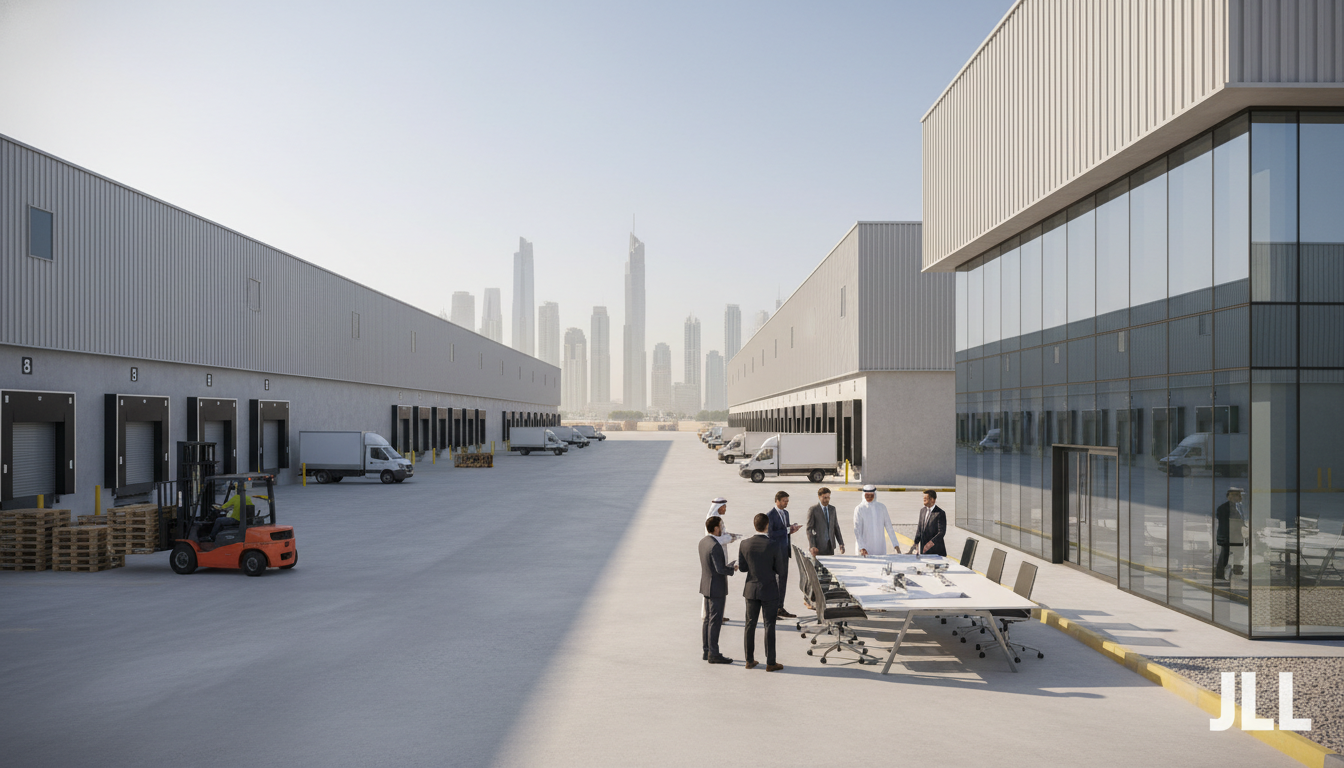
Industrial and logistics properties recorded robust rental growth across the UAE in Q1 2026, underscoring steady demand for warehousing and distribution space. JLL notes double‑digit increases in headline rents, with Dubai reporting a 12.8% year‑on‑year rise and Abu Dhabi seeing an 18.2% increase, driven by constrained supply and continued leasing activity. Market participants attribute the surge to sustained demand from essential goods distribution, pharmaceuticals and medical supplies logistics, and e‑commerce fulfilment needs.
Leasing activity signals tenant confidence in Dubai
Lease registrations in Dubai rose modestly in the quarter, reflecting renewed tenant confidence amid broader market adjustments. JLL recorded a 3.4% increase in registered leases in Dubai during Q1, pointing to steady occupier interest in industrial space despite wider economic and geopolitical headwinds. Landlords and operators report that tenants are prioritising quality logistics locations that support supply‑chain resilience and shorter lead times.
Residential market shows split between off‑plan and secondary sales
Residential transactions in the UAE diverged across market segments during Q1 2026, with off‑plan sales outperforming the secondary market. Off‑plan transactions rose by 9.5% in Dubai, indicating persistent appetite for new development stock and investor interest in staged delivery profiles. Conversely, secondary market sales declined by 8.2% in Dubai, suggesting that resale activity remains subdued while buyers weigh pricing and liquidity considerations.
Abu Dhabi transaction volumes rise on new launches
Abu Dhabi reported a marked uptick in transaction volumes, with the launch of fresh projects more than doubling activity versus Q1 2025. JLL highlights that new supply introductions supported higher sales counts and helped stimulate buyer engagement across multiple price bands. The increase in deal flow in Abu Dhabi reflects developers’ strategic timing of launches and buyers’ responsiveness to product that aligns with current affordability and amenity preferences.
Supply pipeline points to significant completions in 2026 and 2027
Looking ahead, the report anticipates a material delivery of residential units to the UAE market, with roughly 59,000 units expected to come to market across Abu Dhabi and Dubai during the remainder of 2026. JLL’s forward pipeline further projects approximately 92,000 units pencilled for delivery in 2027, a volume that market participants say will require close monitoring for absorption dynamics. Developers and policymakers will be watching sales velocity and rental trends to assess whether new supply can be absorbed without exerting undue pressure on prices.
Hotel sector supported by AED 1 billion stimulus and operator strategies
The hospitality segment faced strong near‑term challenges but has benefitted from a targeted government stimulus valued at AED 1 billion aimed at preserving liquidity across the hotel sector. Measures including deferrals of certain fees and financial obligations have provided breathing room for operators to accelerate refurbishments and refocus on domestic demand. Hoteliers have used temporary closures to upgrade assets and to relaunch with more competitive staycation offers, positioning the sector for recovery as international travel continues to normalise.
The head of JLL’s research for the Middle East and Africa noted that the quarter displayed contrasting dynamics across real estate sub‑sectors, with hospitality under pressure while residential and industrial sectors maintained resilience. JLL emphasised that government incentives and flexible operator strategies had helped cushion short‑term stresses and that the underlying market fundamentals and investor confidence support the prospect of a broader rebound as travel and economic conditions improve.
Market watchers say the near‑term trajectory of the UAE real estate market will hinge on absorption of incoming supply, the pace of tourism recovery and continued strength in logistics demand. Policymakers and industry stakeholders will likely focus on calibrated measures to support liquidity and demand while ensuring that new completions align with long‑term market fundamentals.
