
UN Warns Syria Humanitarian Needs Remain Acute as Funding Shortfall Hampers Aid
UN: Syria humanitarian needs remain acute as funding covers just 16% of the $2.9bn appeal, while returns, price shocks and mines slow recovery and demining.
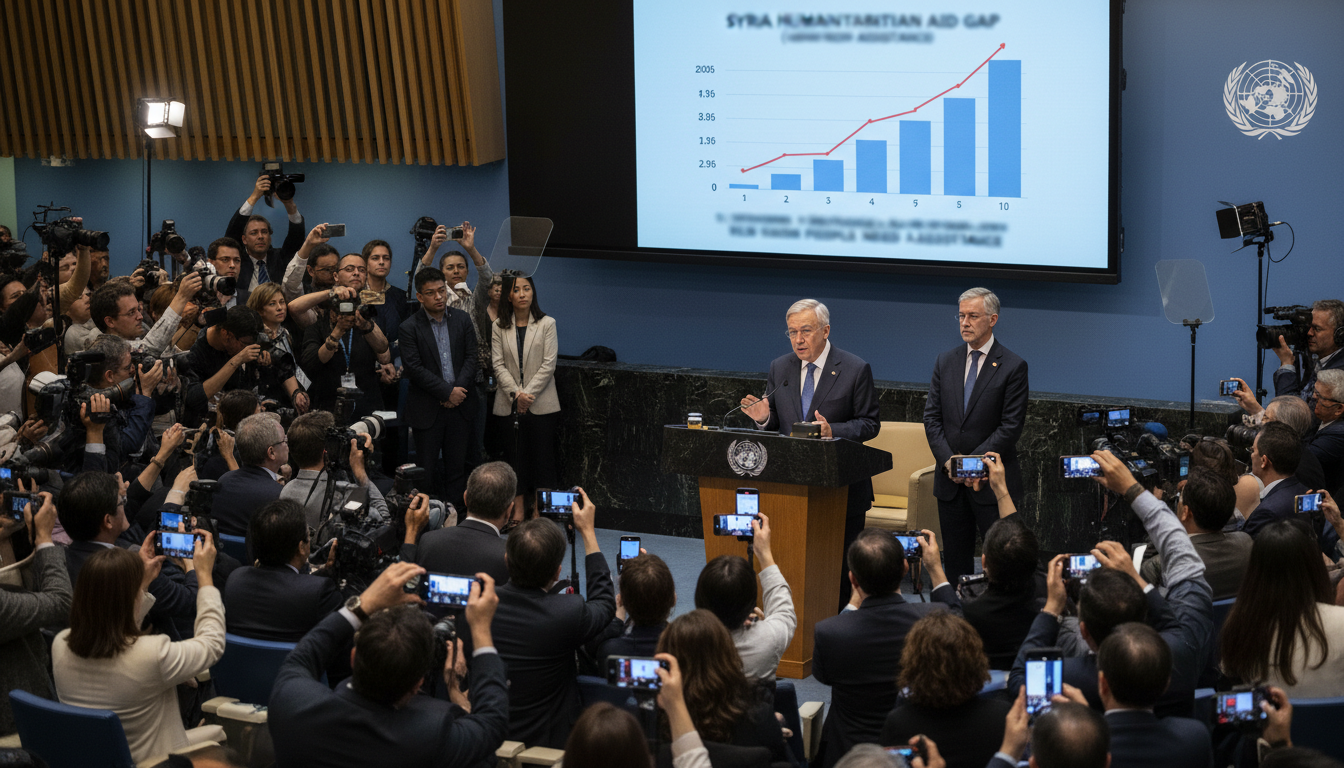
Tom Fletcher, the UN Assistant Secretary-General for Humanitarian Affairs and Emergency Relief Coordinator, told the UN Security Council that Syria’s humanitarian needs remain sizeable even as violence has eased and access has improved. He said Syria humanitarian needs are expected to affect roughly 15.6 million people this year, most of them women and children, underscoring a gap between growing needs and available assistance. Fletcher warned that current funding levels seriously limit operations on the ground and urged immediate international support to sustain recovery and stability.
UN Briefing: Violence Down but Needs High
Tom Fletcher briefed Security Council members on recent developments in Syria, noting a measurable reduction in violence and improved humanitarian access in several areas. He reported increased returns of refugees and internally displaced persons, signaling a tentative shift toward stabilisation in parts of the country. Despite those advances, Fletcher made clear that the scale of need remains extensive and that humanitarian actors are still only reaching a portion of those who require help.
Claudio Cordoni, the UN Deputy Special Envoy for Syria, echoed the cautious optimism, describing the current period as a test for Syria’s commitment to the rule of law and wider recovery. Cordoni said he plans to return to Damascus to resume talks with Syrian authorities on supporting a transitional phase and on deepening cooperation between the UN and local institutions. Both UN officials stressed that progress remains fragile and contingent on sustained international engagement.
Funding Shortfall Limits Aid Reach
The UN’s consolidated appeal for Syria has been severely underfunded, according to Fletcher’s briefing, constraining the delivery of basic services and protection. The humanitarian response plan has secured only about 16 percent of the $2.9 billion sought, with roughly $480 million received to date. That shortfall means aid agencies can currently reach only around half of the people identified as in need.
Humanitarian coordinators warned the council that without a substantial scaling up of donor contributions, critical programs — including food assistance, health services and shelter — will face cuts or suspension. The officials urged member states and philanthropic partners to prioritise funding that supports both immediate lifesaving aid and longer-term recovery projects, including rehabilitation of essential infrastructure.
Price Shocks Hit Fuel and Food Supplies
Fletcher told council members that regional disruptions have translated into sharp price increases inside Syria, worsening the humanitarian situation for vulnerable households. He attributed part of the recent spike in food and fuel costs to the continued closure of the Strait of Hormuz, noting diesel prices have risen by about 17 percent. The rise in fuel costs has also driven up electricity expenses in some areas, stretching household budgets further.
Meanwhile, subsidised bread rations have been reduced in size by roughly 12 percent even though prices have remained fixed, effectively lowering caloric intake for many families that rely on the subsidy. UN coordinators warned these compounding economic pressures could reverse gains in food security and push additional communities into crisis if immediate measures are not taken.
Mine Clearance and Safe Returns Prioritized
Clearing landmines and unexploded ordnance remains a top priority for ensuring the safe return of displaced people, Fletcher said. Humanitarian actors emphasised that a lack of clearance is a key barrier to resettlement and reconstruction, noting the dangers posed by remnants of war to civilians and to the restoration of agricultural and commercial activities. Safe mobility and removal of explosive hazards are central to plans that aim to enable durable returns.
The briefing included figures on cross-border movements: more than 390,000 people have crossed from Lebanon into Syria since early March, with over 86,000 reporting an intention to remain permanently. UN officials cautioned that returns must be voluntary, informed and safe, and that clearance, services and access to documentation are essential to a sustainable reintegration.
Diplomacy, Transitional Justice and Next Steps
Cordoni highlighted developments in accountability and transitional justice as part of the broader recovery agenda, calling for a comprehensive strategy that includes truth-seeking, reparations, institutional reform and accountability mechanisms. He noted ongoing judicial processes within Syria related to alleged past abuses and urged that such steps be embedded in a wider, credible transitional justice approach. The deputy envoy stressed that addressing grievances will be critical to building public trust and long-term stability.
Cordoni also called on authorities and regional actors to remove obstacles to investment, financial flows and reconstruction, arguing that economic normalisation and legal clarity are necessary to attract the capital and technical support Syria needs. He further raised security concerns, including reported military movements east of the ceasefire line and the detention of Syrian nationals, urging restraint and the release of detainees.
Sustained diplomatic engagement, combined with a major scaling-up of humanitarian funding and targeted demining and repair efforts, will determine whether recent improvements can translate into durable recovery. The UN appealed to Security Council members and international partners to back an integrated approach that links immediate relief with recovery, accountability and governance reforms.
The coming weeks will be critical as UN envoys engage Syrian authorities and donors consider additional contributions to the response plan. Without a prompt and coordinated international effort, UN officials warned, the gap between needs and resources risks deepening, undermining fragile stability and slowing the return of normalcy for millions of Syrians.
