
U.S. sanctions on Iranian arms networks target Chinese satellite suppliers and international firms
U.S. sanctions on Iranian arms networks target Chinese satellite suppliers and international firms accused of aiding Tehran’s missile and drone programs.
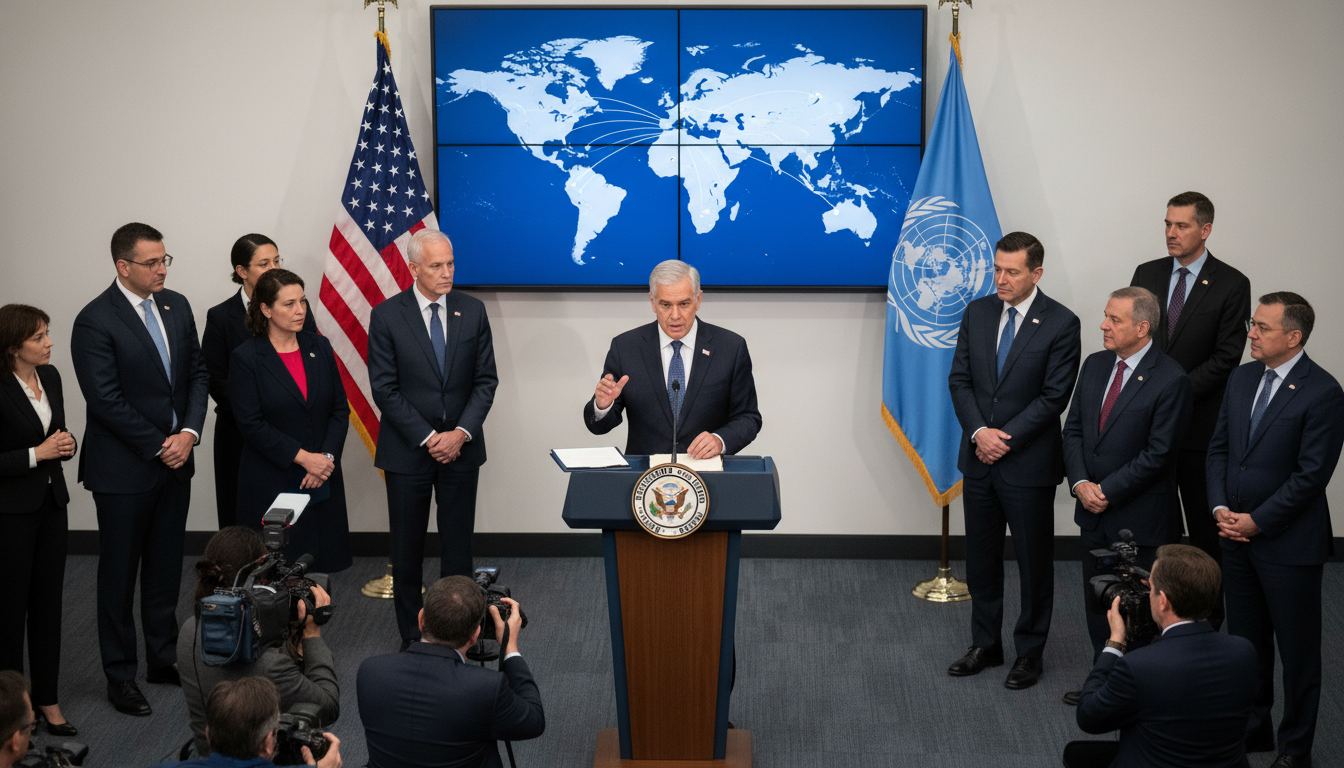
The United States announced a new package of sanctions aimed at Iranian arms networks, singling out Chinese companies and several international entities accused of supplying Tehran with satellite imagery and raw materials. U.S. Senator Marco Rubio, speaking to reporters, said the measures are intended to disrupt channels that have supported attacks against U.S. forces and to choke off supply lines for Iran’s missile and drone programs. The move underscores Washington’s insistence on using unilateral economic measures to hold third parties accountable for assisting Iran’s sensitive military capabilities.
Sanctions name Chinese firms and international suppliers
The sanctions package identifies Chinese firms alleged to have provided satellite imagery to Iran, according to the U.S. announcement. Those images are accused of aiding operational planning and targeting for strikes against U.S. forces stationed in the Middle East. In addition, a number of international companies were listed for supplying materials that can be used in missile and unmanned aerial vehicle development.
U.S. links satellite imagery to attacks on forces
U.S. officials stated that commercially available satellite imagery, when transferred to Iranian military users, can enhance targeting precision and battlefield awareness. Senator Rubio said this capability materially contributed to recent attacks on American positions in the region. The designation of satellite suppliers marks a notable step toward policing dual-use space services that can have direct military applications.
Sanctions focus on missile and drone supply chains
Beyond imagery, the sanctions target entities accused of providing raw components and technical support critical to Iran’s missile and drone programs. Washington framed the measures as aimed at cutting off parts, materials and expertise that enable Tehran to advance and proliferate those systems. Officials stressed that disrupting supply chains is central to preventing the qualitative improvement of Iran’s conventional strike capabilities.
U.S. warning on unilateral enforcement
Senator Rubio issued a stern warning that the United States will use unilateral sanctions to pursue and hold accountable any party found to be violating U.N. resolutions or materially aiding Iran’s prohibited activities. The statement reiterated that Washington views sanctions as one of several tools available to respond to what it describes as destabilizing Iranian actions. U.S. officials said enforcement measures will include designations that can freeze assets and restrict international business activity for listed entities.
Potential diplomatic and economic fallout
Analysts say the designations could complicate diplomatic relations with countries whose companies are targeted, particularly if foreign firms contest the U.S. allegations. Financial institutions and business partners may re-evaluate ties with named entities to avoid secondary sanctions or reputational risk. The actions could also accelerate compliance reviews across global supply chains for space imagery and specialized industrial inputs related to missile and drone manufacturing.
Washington underscores non-proliferation objective
U.S. statements accompanying the sanctions emphasized a continuing American commitment to preventing Iran from rebuilding or advancing sensitive programs, including those related to proliferation concerns. Officials framed the package as part of a broader strategy to deny Tehran the means to threaten regional stability or to pursue nuclear breakout capabilities. The measures were presented as preventive, designed to disrupt capabilities before they can be consolidated or exported.
The new U.S. sanctions on Iranian arms networks signal a sustained focus on curbing Tehran’s access to technologies and materials that can enhance its strike capabilities, and they represent a sharpened effort to hold third-party suppliers to account.
