
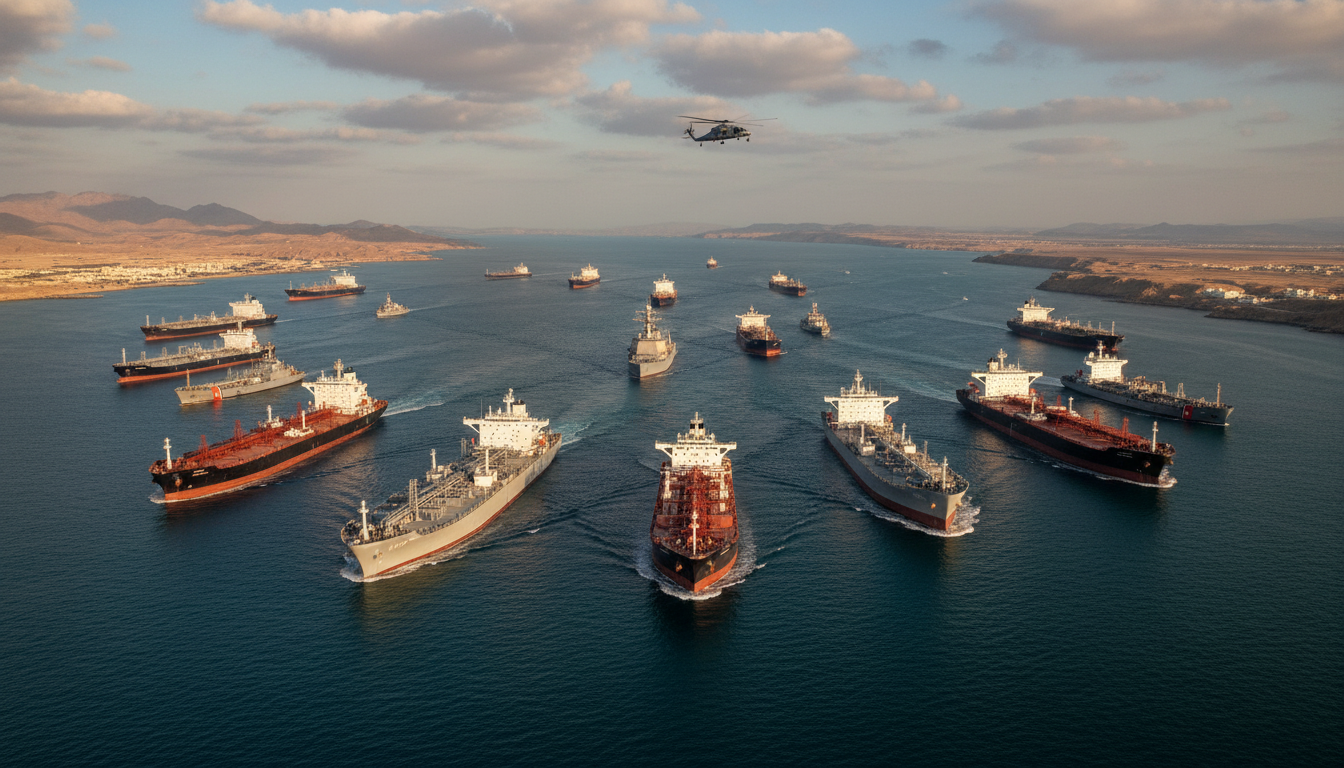
US Redirects 75 Commercial Ships in Strait of Hormuz as Naval Blockade Enters Fourth Week
CENTCOM says U.S. forces have redirected 75 commercial ships since the start of the U.S. naval blockade of Iranian ports; four vessels were intercepted for compliance.
The U.S. Central Command (CENTCOM) announced on Friday, May 15, 2026, that American forces have redirected 75 commercial vessels in the Strait of Hormuz since the start of the U.S. naval blockade of Iranian ports. CENTCOM said the ships were ordered to return to their berths or to port as part of the maritime enforcement operation, and that U.S. units intercepted the routes of four vessels to ensure compliance. The move comes amid sustained U.S. military deployments in the region and follows a period of intense kinetic strikes on Iran that Washington has described as “Epic Fury.”
CENTCOM Confirms Redirects and Interceptions
CENTCOM’s statement, posted on social media, said the redirections were carried out “in the context of a maritime blockade” and that four vessels had their courses actively intercepted by U.S. forces. The command did not publish names of the ships or provide detailed timelines for each interception, citing operational security. The announcement framed the action as part of broader measures to restrict maritime access to Iranian ports.
U.S. Military Posture in the Region
U.S. forces remain widely deployed across the Middle East, with CENTCOM noting the presence of naval assets, carrier strike groups and air defence systems. American officials have repeatedly warned Tehran that actions perceived as aggressive could lead to further escalation. The persistent deployment underlines Washington’s stated intent to both enforce the blockade and deter wider conflict.
Transition from Kinetic Strikes to Economic Measures
The blockade and sanctions campaign form part of a dual strategy Washington describes as shifting from an earlier phase of heavy strikes—referred to in some announcements as “Epic Fury”—to an economic pressure phase labelled “economic fury.” That strategy combines intensified sanctions with the ongoing maritime restrictions now in their fourth week, according to CENTCOM’s account. U.S. officials say the approach aims to curb Iran’s capacity to sustain hostile operations without immediately broadening the battlefield.
Effects on Commercial Shipping and Regional Trade
Shipping companies operating through the Strait of Hormuz have been ordered to reverse course or seek alternative berthing, CENTCOM said, leaving commercial operators to reroute or delay sailings. The Strait, a vital chokepoint for global energy shipments, is particularly sensitive to disruptions, and the redirections are likely to add transit times and costs for affected carriers. While CENTCOM emphasised enforcement of the blockade, maritime insurers and logistics firms are monitoring developments closely for broader supply-chain impacts.
Regional Tensions and Diplomatic Signals
Washington’s repeated warnings to Tehran about a potential return to full-scale hostilities have intensified diplomatic tensions across the Gulf. Iran has not publicly accepted the blockade and statements from Tehran suggest readiness to respond to actions it regards as unlawful or provocative. Regional capitals and international maritime bodies are facing pressure to respond or mediate as commercial flows and security calculations shift in response to the blockade.
Potential Trajectories and International Implications
Analysts say the continuation of a maritime blockade combined with sanctions risks prolonging economic pressure on Tehran while keeping the door open to further military measures if perceived provocations continue. The enforcement action by CENTCOM is intended to be surgical, but unintended consequences — including accidents, miscommunications at sea, or third-party reactions — could widen the crisis. Diplomatic avenues remain the main route to de-escalation, but so far public statements indicate deep mistrust between the parties.
The CENTCOM announcement that 75 ships have been redirected and four intercepted marks a significant intensification of maritime measures in the Strait of Hormuz, with immediate operational, commercial and diplomatic ramifications. As the blockade enters its fourth week, regional stability, shipping costs and the potential for further escalation will hinge on both military postures and parallel efforts — or failures — at diplomacy.
