
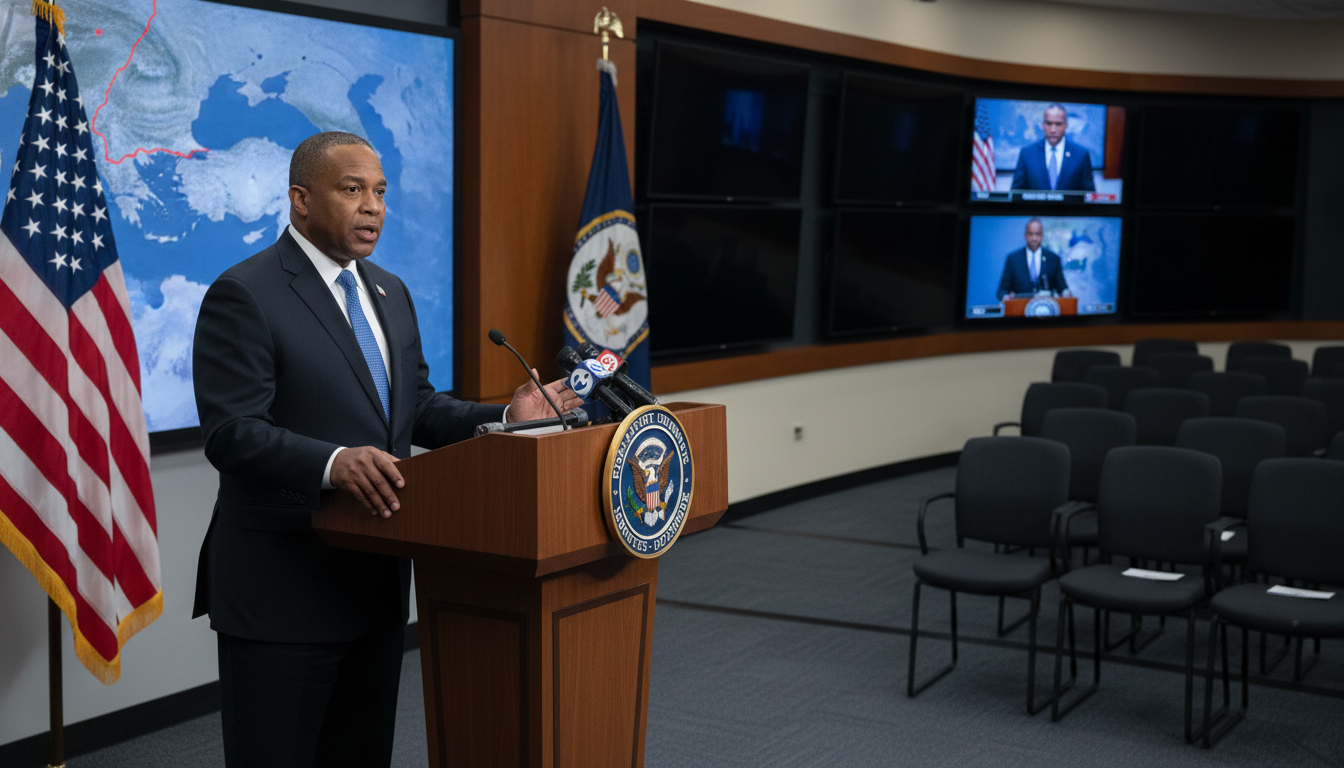
US warns Iran as Defense Secretary Pete Higgsith says pressure forced Tehran to talks and warns military action remains an option
US warns Iran: Defense Secretary Pete Higgsith says pressure has forced Tehran to negotiate and warns Washington is ready to use military force if talks fail.
The United States warns Iran after Defense Secretary Pete Higgsith said on Wednesday that the administration’s strategy has created conditions to prevent Tehran from obtaining a nuclear weapon. Higgsith told reporters the so-called maximum pressure campaign has produced “field results” that have degraded Iran’s economic capacity and pushed its leadership toward negotiations. He framed the outcome as protection for the American people and the international community, while stressing that all options remain available if diplomacy does not deliver a definitive denuclearisation outcome.
Defense Secretary says pressure brought Tehran to talks
Higgsith made his remarks at a press briefing following a White House meeting between President Donald Trump and his national security team. He attributed recent Iranian willingness to engage to the cumulative effect of sanctions and other pressure measures. The secretary said those pressures have compelled Iran to return to the negotiating table in a position less favorable than before.
Higgsith emphasized that the administration assesses the economic strain inside Iran as a principal driver of that change in posture. He described the decline in Tehran’s economic resilience as “severe” and argued it was decisive in moving Iranian officials toward talks. The comments underline a diplomatic strategy that links economic leverage directly to non-proliferation objectives.
Official links economic strain to negotiation posture
According to the defense official, sustained financial and operational constraints on Iran have eroded the regime’s negotiating leverage. He said the combination of sanctions and targeted measures has created tangible pressure across key sectors of Iran’s economy. This assessment was advanced as justification for continuing the current policy mix until a verifiable nuclear outcome is achieved.
Higgsith did not provide operational details about specific measures, but he framed economic distress within a larger strategy aimed at denying Tehran a nuclear weapons capability. Analysts say such public framing serves both diplomatic and deterrence purposes. It is intended to influence Iranian calculations while signalling resolve to allies and adversaries.
Washington leaves military option on the table
In a clear deterrence message, Higgsith warned that the United States stands ready to undertake a direct military operation if diplomacy fails to secure an ironclad guarantee that Iran will not acquire nuclear weapons. He said that while negotiations are preferred, “all options remain on the table” to ensure the threat is eliminated. The language was described as deliberately unambiguous by officials present at the briefing.
The secretary’s comments reiterated longstanding U.S. policy that seeks to prevent nuclear proliferation through a combination of economic, diplomatic and, if necessary, military tools. Military planners and diplomats alike will be watching Tehran’s responses closely as talks proceed. Experts caution that explicit threats of force can complicate bargaining dynamics and raise regional tensions.
Meeting followed by firm deterrence message
The White House meeting that preceded the briefing gathered senior security and policy advisers to review the evolving situation with Iran. Officials said the purpose was to assess the impact of sanctions and to calibrate next steps for both diplomacy and preparedness. The resultant statement from the defense secretary was designed to send a unified message of deterrence and urgency.
Observers noted the administration’s communication strategy combined public attribution of Iranian economic pain with a reminder of the potential for military escalation. That mixed message aims to maximise leverage while limiting surprise. Allies in the region and in Europe will be assessing how public rhetoric aligns with behind-the-scenes diplomacy.
Implications for regional security and allies
Higgsith framed the U.S. approach as protecting not only American interests but the broader international community from the prospect of a nuclear-armed Iran. Regional partners, particularly Gulf states and Israel, have long pressed for robust measures to prevent Tehran’s nuclear advancement. Those governments will likely welcome a firm U.S. posture, while also seeking reassurances that military options would remain a last resort.
Global reaction may vary, with some diplomatic partners urging continued sanctions and negotiations and others pressing for more measured public language to preserve diplomatic space. The balance Washington strikes between pressure and diplomacy will be critical to maintaining coalition support. International organisations and non-proliferation experts will be monitoring developments for signs of de-escalation or renewed confrontation.
Next steps and diplomatic timeline unclear
Higgsith did not lay out a specific timetable for further talks or for potential escalation if negotiations stall. Officials said the administration will continue to evaluate Iranian responses and adjust its policy mix accordingly. The absence of an explicit timeline leaves both allies and adversaries uncertain about when, if ever, military thresholds might be crossed.
Diplomats are expected to intensify outreach to partners to synchronise pressure and offer pathways for a verifiable agreement. At the same time, contingency planning within the Pentagon and allied militaries will continue to account for the possibility of rapid changes in Tehran’s behaviour. The coming weeks will be closely watched for signals from Iranian negotiators and for any shifts in the economic indicators cited by U.S. officials.
The United States warns Iran while publicly stressing a preference for diplomacy, but the administration’s readiness to consider force if talks fail sets a high-stakes backdrop for any negotiations.
