
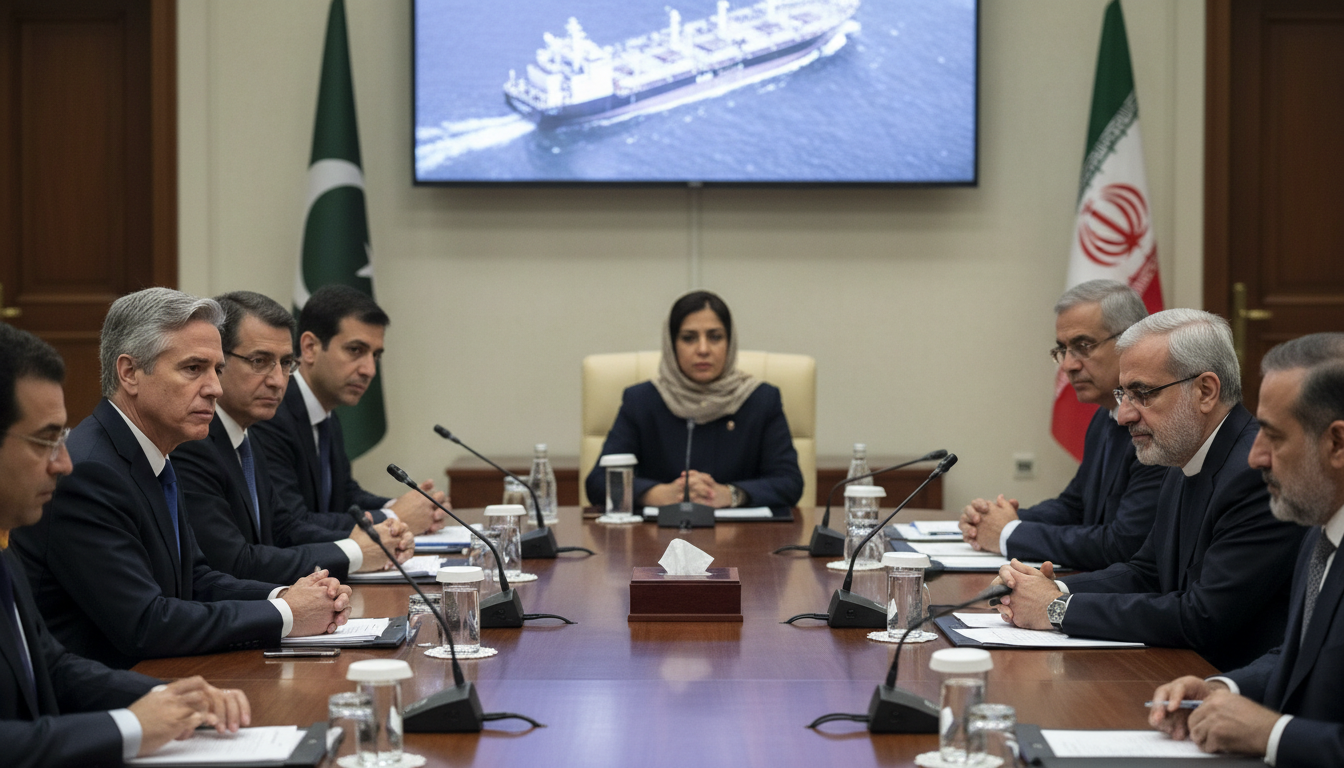
Tensions Mount as US-Iran Talks in Islamabad Hinge on Tehran’s Participation
Rising tensions and a seized Iranian ship cast doubt on the US-Iran talks in Islamabad as mediators race to extend a fragile ceasefire before truce ends.
Opening summary
The planned second round of US-Iran talks in Islamabad faces uncertainty after a rapid escalation in military and diplomatic exchanges between Washington and Tehran. Pakistan has prepared to host extended negotiations aimed at formalising a memorandum of understanding to prolong the existing ceasefire, but Iran has yet to confirm its delegation. The talks, which follow an initial meeting in the Pakistani capital, now hinge on whether Tehran will travel amid renewed threats and the seizure of an Iranian-flagged cargo vessel.
Pakistan tightens security and readies venues
Islamabad has moved quickly to secure the capital ahead of the anticipated negotiations, closing roads into the heavily fortified Red Zone and increasing the presence of police and paramilitary forces. Major hotels used for the first round instructed guests to leave and temporarily halted reservations as authorities prepared controlled access to meeting sites. Barbed wire, barricades and checkpoints were installed around diplomatic and government compounds to limit movement and protect delegations.
Pakistan’s role as principal mediator has required significant logistical effort, with officials coordinating secure transport routes and additional security details. The Serena Hotel, which hosted the first talks, and nearby venues were readied to accommodate delegations and support staff for what mediators say could be multi-day negotiations. Islamabad has emphasised its commitment to providing neutral ground while urging restraint from outside parties to enable diplomacy to proceed.
Shifting US delegation plans and arrivals
The composition and timing of the US delegation changed amid concerns over security and the shifting diplomatic climate. Initial announcements suggested a smaller advance team might travel first, with senior figures joining later if conditions allowed. Flight movements into Pakistan’s primary VIP entry point indicated a significant US logistical footprint, including aircraft equipped with communications and motorcade support.
Officials conveyed mixed messages about Vice President JD Vance’s attendance, with the White House at one point confirming his participation while later signalling potential adjustments. Senior US envoys who led the first round remain central to the effort, but Washington has also publicly restated firm demands, complicating coordination even as negotiators prepare to return to the table.
Iran’s public denials and private signalling
Tehran’s public statements have been sharply critical of recent US actions, describing the naval blockade and continued threats as violations of the ceasefire and grounds to suspend talks. State outlets and diplomats characterised the blockade as unlawful and rejected what they called maximalist demands, even as some Iranian officials engaged in private channels suggesting a delegation might still travel. This dual-track posture reflects Tehran’s effort to preserve domestic legitimacy while keeping diplomatic options open.
Analysts point to deliberate ambiguity between public rhetoric and private manoeuvring as a bargaining strategy. Iranian sources previously signalled the possible inclusion of senior figures in a follow-up delegation, yet Tehran’s formal confirmation has been withheld pending clearer security and political guarantees. That ambiguity has left mediators assessing whether Tehran is testing conditions for a negotiated extension rather than abandoning diplomacy outright.
Escalations complicate a fragile ceasefire
Recent public threats by US leadership to target Iran’s energy and infrastructure, coupled with the reported interception of an Iranian-flagged cargo ship, have heightened tensions and complicated the path to agreement. Washington described the vessel as subject to sanctions and said US forces seized control after it failed to comply with warnings. Tehran labelled the interdiction “piracy” and warned that such actions undermine trust and the ceasefire’s stability.
Those exchanges followed incidents in the Strait of Hormuz that both sides have used to justify hardline responses, including accusations over attacks on commercial shipping. Each side’s public statements have amplified domestic and international pressure, reducing the political space for compromise even as mediators urge restraint to salvage negotiations.
Mediators seek a short-term memorandum to extend truce
Mediators are aiming for a memorandum of understanding that would extend the ceasefire and create a longer window for comprehensive talks, possibly lasting several weeks to months. The proposed MoU would function as a bridge, giving negotiators more time to address core disputes such as control of the Strait of Hormuz and issues tied to Iran’s nuclear programme. Pakistani officials described the initiative as a step toward sustained diplomacy rather than an endpoint.
Observers say the immediate objective is pragmatic: secure a limited extension that prevents a return to large-scale hostilities while establishing a framework for incremental progress. Diplomats cautioned that a full settlement is unlikely in a single round, and that a phased approach focused first on preserving the ceasefire offers the most realistic near-term outcome.
Diplomatic outreach and regional stakes
Pakistan has intensified outreach to regional actors and engaged directly with both capitals to build consensus for continued talks, including high-level calls between Islamabad and Tehran. The Pakistani prime minister briefed Iran on recent shuttle diplomacy in the Gulf and underlined Islamabad’s role as a trusted intermediary. Field visits by Pakistani envoys and sustained contacts with Gulf states reflect broader efforts to marshal regional support for a negotiated process.
Experts say Pakistan’s credibility as host rests on outcomes, but note its rare access to both sides gives it distinct leverage. Even without immediate breakthroughs, Islamabad’s facilitation may preserve communication channels crucial for avoiding escalation. The coming days will test whether diplomatic momentum can withstand public posturing and the operational challenges created by recent confrontations.
The coming rounds in Islamabad will determine whether a provisional agreement can hold long enough to open substantive talks, or whether renewed clashes and retaliatory measures will derail the fragile pause.
