
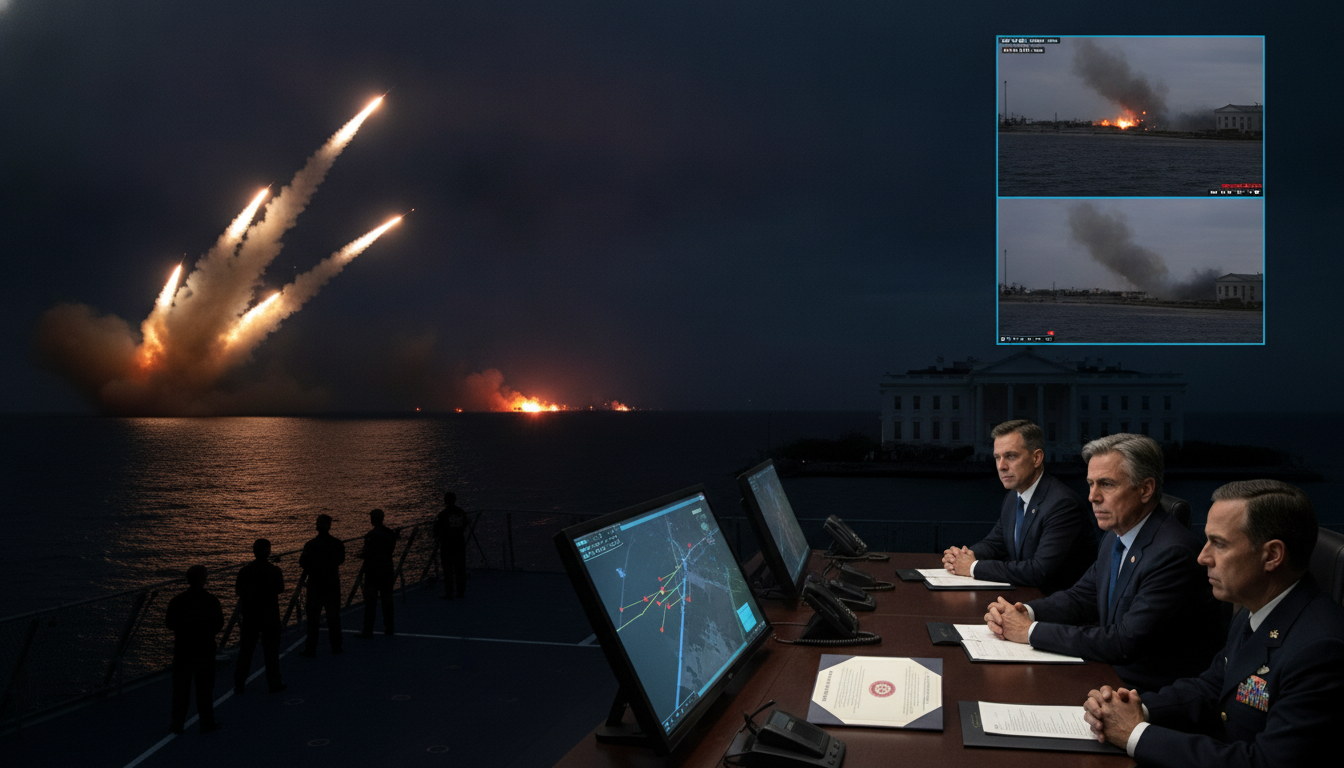
US strikes Iran for third consecutive night, CENTCOM says attacks began at 20:45 GMT
US strikes Iran, marking a third night of operations, as CENTCOM says strikes aim to degrade Tehran’s ability to attack civilians and commercial shipping in the Strait of Hormuz.
The United States launched a fresh round of strikes against Iranian targets in the early hours of Tuesday, marking the third consecutive night of operations in the region. The strikes, described by US Central Command (CENTCOM) as intended to impose “heavy losses” on Iranian forces, began at 20:45 GMT and targeted capabilities said to threaten civilians and maritime traffic.
CENTCOM said the strikes were designed to reduce Iran’s capacity to carry out attacks on commercial vessels and innocent bystanders in and around the Strait of Hormuz. Officials framed the operations as a defensive measure to protect shipping lanes that are critical to global energy flows and regional trade.
The sequential strikes raise immediate concerns about the stability of a memorandum of understanding that had been seen as a fragile pathway toward ending hostilities. Diplomats and regional observers warned that continued military action risks unraveling any progress toward de-escalation.
Third night of US operations in the Gulf
US military aviation and maritime units conducted coordinated strikes for a third night, according to CENTCOM’s statement on X. The command said the intent was to degrade Iranian strike capabilities while deterring further attacks on commercial ships and civilians.
Military briefings indicated a combination of sea- and air-launched munitions were used to strike what the US described as operational nodes, weapons emplacements and launch sites. CENTCOM did not publish a full target list in its initial post, citing operational security.
CENTCOM timing and public messaging
CENTCOM announced on X that the most recent strikes commenced at 20:45 GMT and emphasized that operations would continue as necessary to neutralize threats. The statement framed the campaign as proportionate and focused on specific militant capabilities.
Officials used public messaging to underline a defensive rationale, stating the strikes sought to “weaken” Iran’s ability to threaten civilians and commercial traffic. The timing and cadence of the releases signal a deliberate information campaign alongside kinetic activity.
Risk to the memorandum of understanding
Diplomats said the renewed strikes place significant strain on a memorandum of understanding that had been brokered to reduce the scope of active hostilities. That pact, regarded by some as a stopgap toward a broader ceasefire, now faces uncertainty if military actions continue.
Regional mediators and UN envoys expressed concern that escalating operations could prompt retaliatory attacks and a breakdown of channels that had kept open lines of communication. Analysts warned that erosion of trust may complicate future negotiations.
Implications for maritime security in the Strait of Hormuz
The Strait of Hormuz, a chokepoint for a large share of global oil shipments, remains central to the US justification for the strikes. CENTCOM highlighted the protection of commercial shipping as a principal aim of its operations.
Maritime insurers and shipping firms closely monitor the situation because disruptions or heightened risk levels can trigger route changes and insurance surcharges. Any sustained pattern of attacks or counterattacks could increase transit costs and affect energy markets.
Regional diplomatic response and escalation risks
Neighbouring states called for restraint while urging a return to diplomatic channels. Several governments stressed the importance of avoiding wider confrontation that could draw in additional regional or international actors.
Analysts cautioned that an extended campaign could prompt Iran-affiliated groups to respond asymmetrically, including through proxy networks across the region. Such responses would complicate attribution and raise the prospect of unintended escalation.
Possible next steps and international stakes
Washington has framed the strikes as targeted and conditional, but has not outlined a clear end state beyond degrading immediate threats. The continued sequence of strikes suggests US forces are prepared to sustain pressure until perceived operational goals are met.
European and Gulf partners are likely to intensify diplomatic efforts to prevent further deterioration and to preserve any remaining elements of the memorandum of understanding. International stakeholders have stressed the need for transparent communication to reduce the risk of miscalculation.
The renewed US strikes mark a critical juncture for diplomacy and security in the Gulf, with maritime safety and the future of the ceasefire understanding hanging in the balance.
