
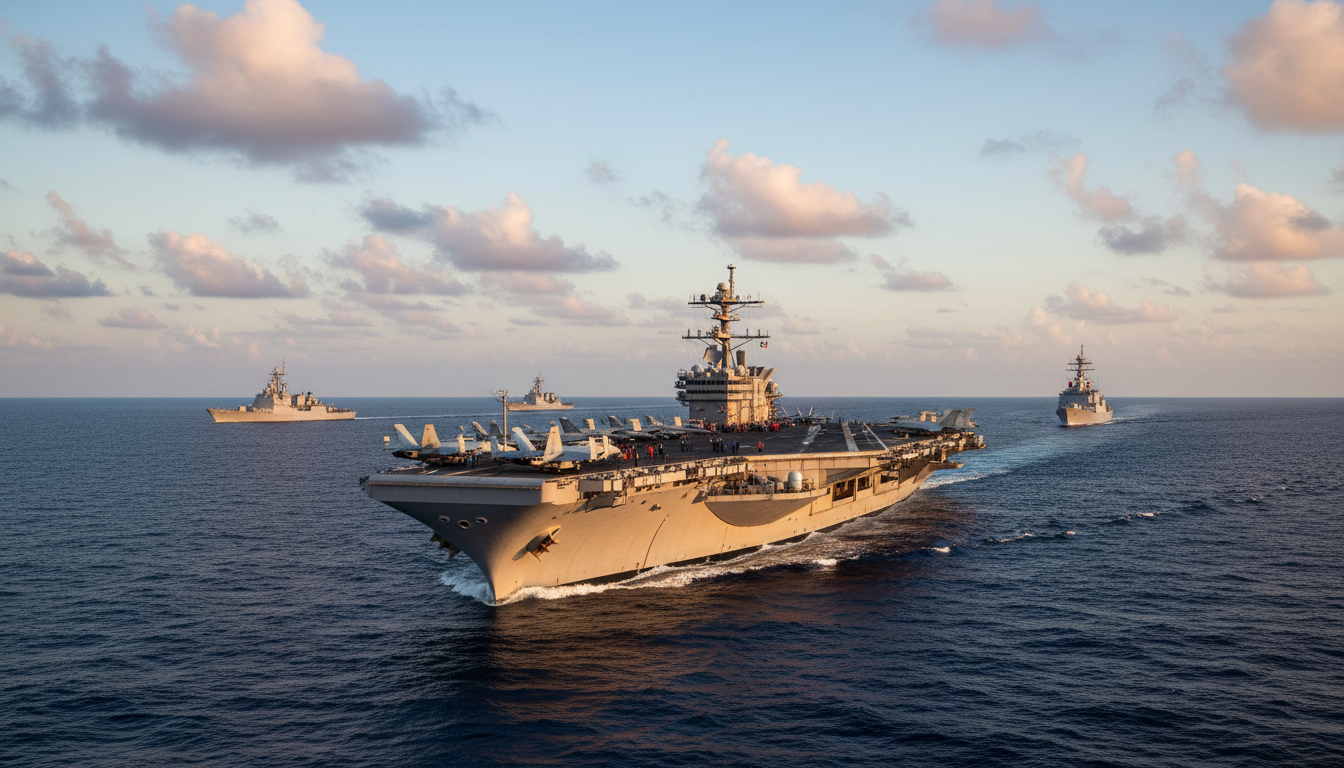
USS Gerald Ford Carrier Returns to Middle East Ahead of US-Iran Negotiations
US aircraft carrier USS Gerald Ford has redeployed to the Middle East, transiting the Suez Canal into the Red Sea as part of a U.S. naval buildup reported ahead of renewed talks with Iran.
The USS Gerald Ford’s return to the region — alongside escorting destroyers and in concert with the USS Abraham Lincoln operating in the North Arabian Sea — was reported by CBS News and attributed to a U.S. official, signaling an elevated naval posture as diplomatic engagement with Tehran is expected. The carrier had been sidelined after a March 12 onboard fire that damaged sleeping quarters, and the Navy says investigations into the incident remain ongoing.
Carrier Movement Through the Suez Canal
The Gerald Ford and its escort ships passed through the Suez Canal and entered the Red Sea, according to media reports citing U.S. officials. The transit reunited the carrier with another Navy capital ship, the USS Abraham Lincoln, which has been operating to the north in the Arabian Sea.
Officials described the movement as part of a wider task group deployment, with destroyers and other surface combatants providing anti-air and anti-submarine capability. The repositioning follows months of shifting U.S. naval assets across the region as tensions and diplomatic activity evolve.
Positioning Ahead of US–Iran Negotiations
U.S. naval officials and Western media framed the deployment as timed ahead of a scheduled round of negotiations between the United States and Iran. Sources told reporters the carrier’s presence is intended both as a deterrent and as assurance to regional partners while talks are underway.
While diplomatic channels prepare for dialogue, military planners often position forces to maintain operational flexibility. Analysts say such moves are designed to provide options to national leaders without constraining negotiators at the table.
Reports of a Maritime Blockade and Regional Presence
Several reports referenced a heightened maritime posture against Iranian ports, describing measures intended to limit Tehran’s ability to project maritime influence. U.S. military statements characterize these actions as part of broader maritime security operations, though specific blockade claims have been framed differently across outlets.
The Gerald Ford’s arrival adds substantial air, sea and logistical capability to U.S. forces in the area, reinforcing patrols and surveillance missions. Regional partners, including Gulf states, have been closely monitoring the shift in order to coordinate security and deconfliction measures.
Recent Onboard Incidents on USS Gerald Ford
The carrier had been removed from front-line operations after a fire broke out in a laundry area on March 12, a U.S. official told reporters. The Navy reported the blaze caused significant damage to roughly 100 berths, prompting an internal safety inquiry.
Separately, crew accounts and reports indicated the ship suffered problems with waste and toilet systems while at sea during this period. The Navy has acknowledged system malfunctions but maintains that the incidents were not associated with combat operations and that safety protocols were followed.
Investigation and Repair Efforts Underway
U.S. Navy investigators continue to examine the causes and chain of events that led to the March blaze, with preliminary statements emphasizing that the incident occurred in a non-combat section of the ship. Repair teams have been working to restore habitability and operational readiness while maintaining the carrier’s mission capability.
Naval engineers and shipyard contractors typically undertake damage assessments before full combat operations resume, and officials say corrective actions will follow any findings from the probe. The Navy has publicly stated the inquiry remains open and that updates will be provided as results are confirmed.
Implications for Regional Security and Naval Operations
The redeployment of the Gerald Ford underscores the persistent strategic focus on the Persian Gulf and adjacent waterways amid diplomatic and security challenges. Carrier presence offers airpower projection, early warning capabilities and a visible symbol of U.S. commitment to maritime security in critical shipping lanes.
For local governments and commercial interests, heightened naval activity increases both reassurance and the need for clear communication to avoid accidental confrontations. Military analysts caution that while such moves are routine in crises, careful coordination is essential to prevent escalation while diplomacy proceeds.
The U.S. Navy’s repositioning of the USS Gerald Ford illustrates how military assets and diplomatic efforts frequently operate in parallel to influence outcomes. The ship’s redeployment, ongoing investigations into the March 12 fire, and continued operational adjustments will remain focal points for observers tracking developments between Washington, Tehran and regional capitals.
