
Venezuela earthquake rescue: Caracas doctors race to La Guaira as collapsed towers yield bodies, not survivors
Venezuela earthquake rescue teams faced collapsed buildings, blocked highways and scarce equipment as Caracas doctors raced to La Guaira to find survivors.
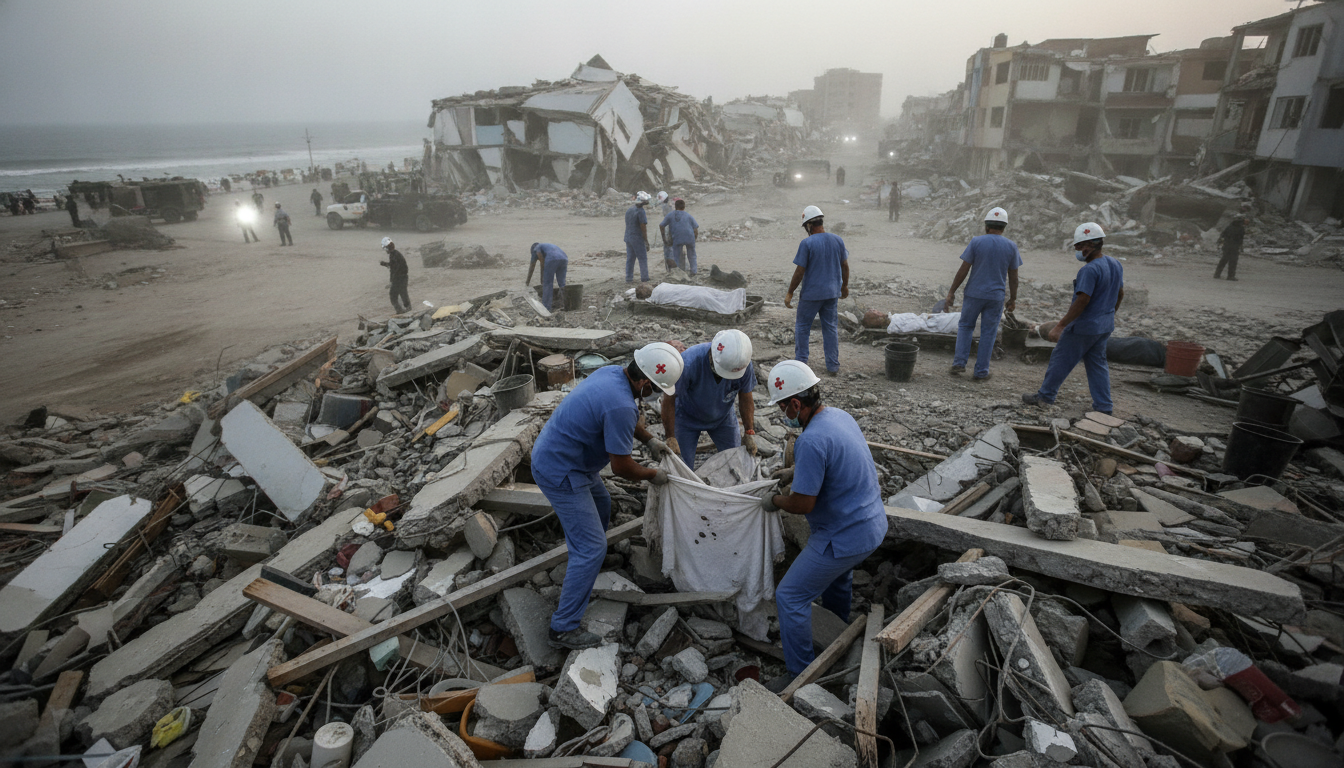
Dr. Zaira Medina led a team of volunteer doctors from Caracas to La Guaira less than 48 hours after two powerful quakes struck, arriving ready to treat the wounded but told they would likely search for the dead. The group encountered collapsed residential towers, congested roads clogged with civilians and aid vehicles, and emergency crews constrained by limited protective gear. Despite exhaustion and scarce lighting, the doctors worked through the night, shifting from hopes of rescue to grim recovery operations.
Doctors Mobilize from Caracas
Dr. Zaira Medina, director of Pérez de León Hospital, assembled colleagues and donated supplies and set out for her hometown with a clear objective: help neighbors. Her daughter, surgeon Gabriela Herrera, accompanied the team as they loaded into vehicles wearing scrubs, sneakers and makeshift helmets. The convoy took four hours to reach La Guaira, a trip that normally requires an hour, as buses, aid trucks and residents jammed the sole highway.
Portofino Beach Reduced to Rubble
Portofino Beach, a nine‑storey sand‑colored apartment block that served as a home to several doctors, had its lower floors buckle and crumble in the tremor. Rescue workers described piles of exposed rebar, concrete and dust where corridors and living rooms once stood. Civil Protection teams initially reported no signs of life inside and described a pervasive odor of decomposition around the site.
Civil Protection and Local Teams Coordinate Under Strain
Germán Ortiz, head of a Civil Protection unit on the ground, warned that his team had heard no voices from inside the collapsed building and urged caution. He allowed volunteers to work on the periphery but kept heavy equipment and interior breaches to trained crews because of safety risks and a shortage of appropriate helmets. Red Cross and other aid convoys were present but struggled to move through the clogged access road, limiting the speed of a coordinated response.
Search Efforts Hindered by Darkness and Equipment Gaps
As evening fell, the lack of large lighting and protective gear forced search efforts to slow and eventually pause, even as volunteers continued to rotate in 20‑minute shifts. A yellow excavator sat idle at the scene, unused during that first night, raising questions among volunteers about deployment decisions. Doctors and rescuers improvised where they could, but the disparity between urgent need and available resources was stark.
Chaos and Tension on the Ground
Teams searching in near‑total darkness encountered confusion, with reports of people moving in the shadows that turned out to be looters rather than trapped survivors. At times rescuers clashed over whether to call for silence to listen for voices or to shout to coordinate teams, complicating delicate recovery work. Exhaustion and emotional strain were evident as the medical volunteers, having hoped to treat living patients, found instead that many victims were already out of reach.
From Rescue to Recovery
Despite their initial mission to save lives, Dr. Medina’s group spent a 12‑hour expedition without treating a single living patient, returning to Caracas around 4 a.m. The journey underscored the rapid shift from immediate medical intervention to body recovery in heavily damaged coastal neighborhoods. Volunteers and officials repeatedly emphasized the need for more protective equipment, lighting and heavy machinery to reduce risk and accelerate recovery.
The scenes in La Guaira reflect broader challenges after major quakes: single‑point access routes overwhelmed, coordination stretched across agencies, and local volunteers risking their safety to assist amid unclear command structures. As search and recovery continue, officials and aid organizations face the urgent tasks of restoring safe access, delivering equipment and supporting survivors left homeless by the tremors.
