
Wonocolo oil field sustains local livelihoods amid declining reserves and safety concerns
Wonocolo oil field in East Java remains a hub of community-run shallow wells, sustaining livelihoods while raising safety and environmental concerns amid declining reserves.
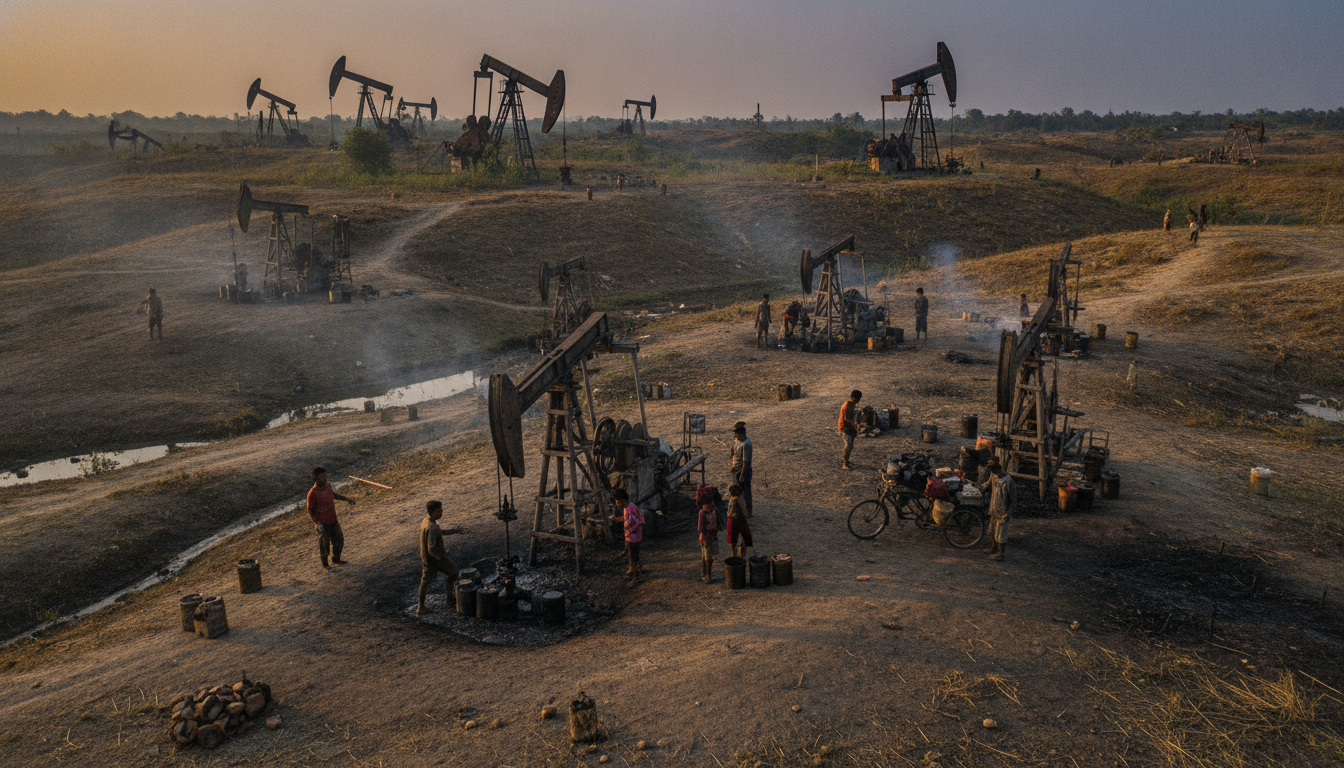
The Wonocolo oil field, a century-old shallow deposit in East Java, continues to supply small-scale crude to villagers who operate rudimentary derricks and pumps. Locally known as Teksas Wonocolo or Little Texas, the field was first tapped in 1893 and still supports dozens of families despite thinning reserves and informal practices. The community’s hands-on extraction methods underline the field’s role as both a source of income and a focal point for regulatory and environmental debates.
How villagers extract crude at Wonocolo
Residents use adapted truck engines, teak log frameworks and simple pump rigs to reach depths of roughly 1,600 feet in what is one of the world’s shallowest oil fields. Workers lower pumps into wells by hand or with improvised winches, recover pooled crude with buckets and then distill it in small furnaces to separate water from fuel. Individual sites can yield modest daily volumes — teams sometimes collect a few hundred liters from a cluster of wells — and the work remains intensely manual and localized.
Economic lifeline for households
For many families, proceeds from Wonocolo oil sales are an essential supplement to farm or day-labour income. Small-scale collectors may gather 40 litres or so in a day to sell for modest sums, while more ambitious operators investing in abandoned wells report larger weekly returns. Most crude is sold through informal channels or to the state oil company, providing men who work multiple wells with monthly earnings that can rise to several hundred dollars in good months.
Regulatory gaps and safety incidents
Despite its longevity, much of the activity at Wonocolo takes place outside formal registration and oversight. Local officials note that many community wells are unregistered, leaving them beyond routine safety inspections or enforced standards. The absence of formal controls has had tragic consequences in the past, when mechanised equipment and improvised rigging produced fatal accidents for workers inspecting or repairing wells. Those incidents have prompted calls for clearer regulation and better training for local drillers.
Environmental and health risks
Distillation and open handling of crude have left visible scars across the landscape: soil stained black, plumes of smoke from primitive furnaces and contaminated runoff in nearby drains and puddles. Environmental advocates warn that prolonged exposure to fumes and polluted groundwater can have health impacts for drillers and residents, and that unregulated spills threaten agricultural land and local ecosystems. Local non-governmental groups frame the wells as indicators of limited job alternatives, urging a coordinated response to mitigate long-term damage.
Production trends and market dynamics
Wonocolo spans roughly 120 acres with hundreds of pits across two villages; only a fraction of those continue producing significant quantities. Where a single well once delivered dozens of barrels per day in past decades, extraction now often requires more time and effort for smaller returns. Global price fluctuations can boost income for local sellers, and some entrepreneurs have made targeted investments in old wells to increase output, advocating for deeper drilling as a path to revive yields.
Tourism initiative struggles to gain traction
A government program aimed at promoting the field’s geological heritage built an observation tower, a small museum and vendor facilities to draw researchers and visitors to Wonocolo. While the museum remains open and the tower offers a panoramic — if stark — view of the working field, the wider tourism plan has largely stalled and public amenities sit underused. Officials and community members say the initiative has potential, but it needs renewed investment, better maintenance and a safer environment to attract sustained interest.
Community resilience is a defining feature of the Wonocolo oil field: generations have adapted old techniques and improvised equipment to extract value from shallow reserves discovered more than a century ago. Yet the field’s future will hinge on balancing short-term livelihoods with measures to improve safety, formalise operations and address environmental harms, while exploring alternative economic opportunities for local residents.
