
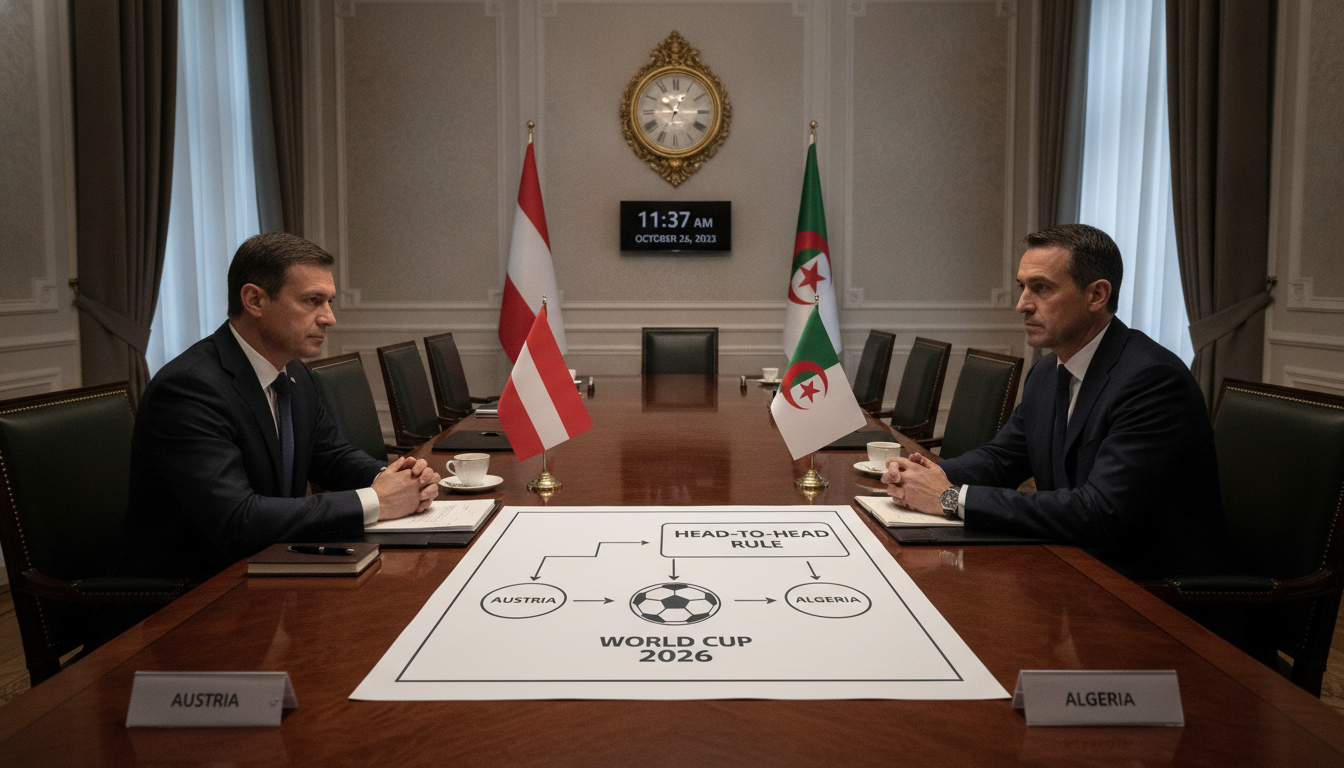
Austria vs Algeria: Head-to-head tiebreaker turns June 28 match into a strategic decider at World Cup 2026
Austria vs Algeria showdown on June 28, 2026: FIFA head-to-head tiebreakers create incentive for defeat as Rangnick rejects 1982 Gijón scandal comparison.
Austria and Algeria head into a decisive World Cup 2026 group match with identical records and an unusual incentive structure caused by FIFA’s head-to-head tiebreaker rule. The Austria vs Algeria game on Sunday, June 28, 2026, will determine who finishes second and who falls to third in Group Ten despite both teams having three points. The outcome could shape the knockout path each team faces, making the fixture about more than immediate victory.
Group Ten standings and immediate context
Argentina secured top place in Group Ten with six points, leaving Austria and Algeria level on three points each ahead of their meeting. Jordan sits bottom of the group with zero points and is already eliminated from contention. The match between Austria and Algeria is effectively a direct qualification playoff that will finalise the group’s second and third positions.
FIFA’s head-to-head rule changes the calculus
Under FIFA’s current regulations, results between tied teams are considered before overall goal difference, meaning head-to-head outcomes can trump a superior goal margin. That ordering differs from formats used in some past tournaments and can produce counterintuitive incentives for teams. When teams know a direct encounter determines a tie, match strategy and broader tournament planning can shift from seeking goals to managing specific match outcomes.
Why a loss might be strategically attractive
Because of the knockout bracket alignments, finishing third in Group Ten could avoid an immediate match-up with a heavy favourite from another group. That dynamic means a team may prefer a particular finishing position even if it requires losing the final group match. In this case, the third-placed side could face a purportedly more favourable opponent than the second-placed team, creating a situation where a defeat in the final group game has potential competitive upside.
Rangnick dismisses parallels with 1982 Gijón controversy
Austria coach Ralf Rangnick rejected comparisons between the current situation and the so-called Gijón incident from the 1982 World Cup, when match results between West Germany and Austria eliminated Algeria on goal difference. Asked directly whether Austria might opt not to win, Rangnick answered emphatically that the team was not planning to lose. He emphasised uncertainty around results from other fixtures and said his squad’s focus remains on playing to win rather than calculating which finish might prove convenient.
Historical echo and tournament sensitivities
The 1982 episode remains a sensitive touchstone in tournament history because it highlighted the ethical and sporting tensions that can arise from scheduling and tie-breaking rules. Organisers and governing bodies have since adjusted formats to reduce the chances of collusion, but any situation where a losing result could provide a clearer route forward revives public and media scrutiny. Players and coaches are aware of those optics, which can intensify pressure and public debate ahead of a decisive fixture.
Scenarios and pathways after Sunday’s result
If Austria beats Algeria, Austria will secure second place and Algeria will finish third, with both teams progressing behind Argentina. A draw would leave the two sides level and move tie-breaking criteria into head-to-head details or further FIFA regulations if necessary. If Algeria wins, roles reverse and the new second-placed side will face the knockout opponent aligned with that position. The practical consequence is that the final group placements will determine which opponent each team meets in the next round and therefore how favourable their path might be.
The final group games earlier on Sunday and other results across the tournament also influence which knockout opponents emerge from neighbouring groups. Rangnick stressed that many variables remain unknown until all matches are completed, noting that even a single result elsewhere can change the competitive landscape. For supporters and analysts, the complicated permutations add drama but also spotlight the sometimes-unintended consequences of tournament rules.
Beyond the tactical and regulatory debate, the Austria vs Algeria match promises intensity on the pitch as both sides seek to control their World Cup destinies. Coaches will balance competitive ambition with cautious calculation, but players are expected to pursue victory as the clearest route to momentum heading into the knockout phase.
The outcome on June 28 will settle the immediate strategic puzzle in Group Ten and may renew discussion about tie-breaker design in future tournaments. Regardless of the permutation that follows, the match will be judged both for its result and for how the teams approach the responsibilities of competition under the current FIFA framework.
