
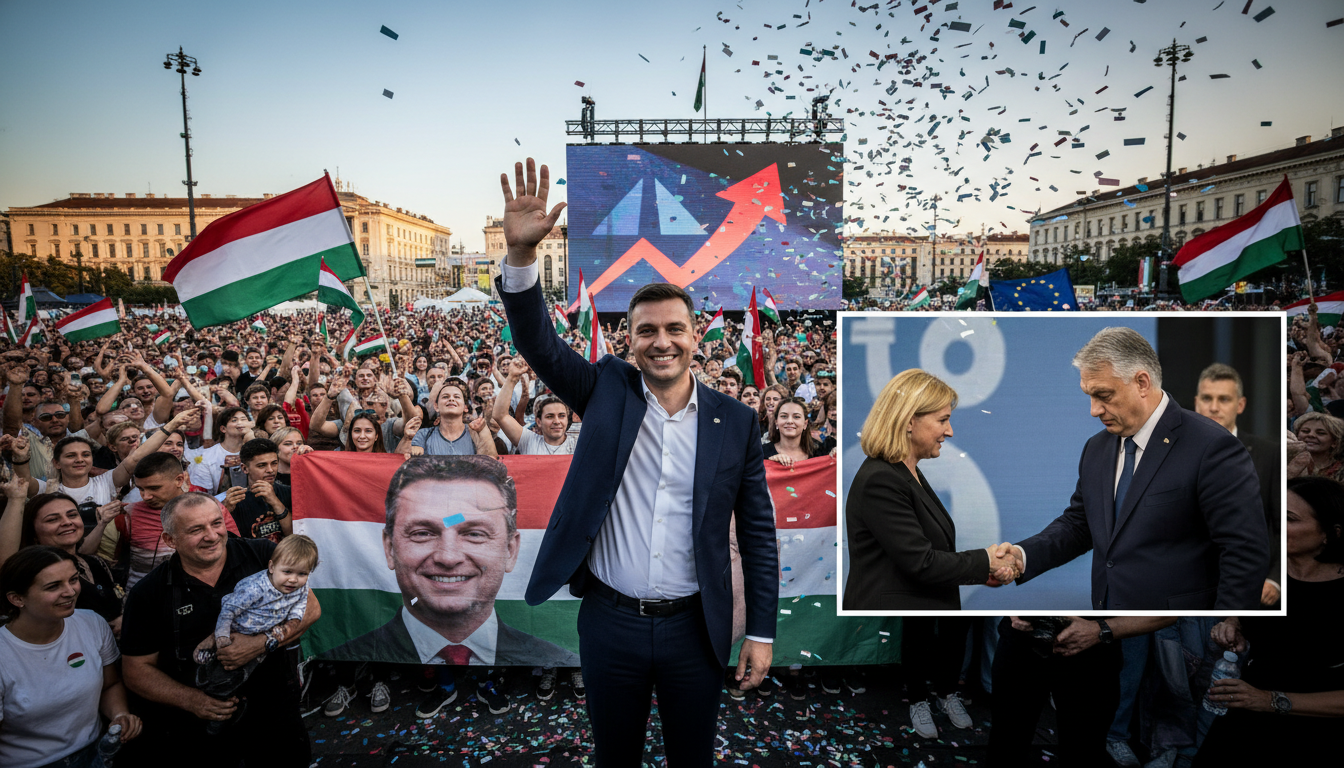
Peter Magyar’s Landslide Victory Ends Viktor Orban’s 16-Year Rule in Hungary Election
Peter Magyar’s decisive win in the Hungary election on April 18, 2026, ends Viktor Orban’s 16-year rule and ushers in a new political chapter for Budapest and Europe.
Peter Magyar secured a sweeping victory in Hungary’s parliamentary contest on April 18, 2026, defeating long-time prime minister Viktor Orban and ending a 16-year tenure that reshaped the country’s politics. The result, described by observers as a landslide, gives Magyar a clear mandate to form a new government and pursue a fresh policy agenda. Voters cited a mix of economic concerns, institutional fatigue and desire for change as drivers of the outcome.
Election Night and Official Outcome
Early returns and final tallies confirmed Peter Magyar’s dominance across multiple regions, handing his alliance the parliamentary seats needed to govern. Election officials declared the result on April 18, with Magyar’s camp celebrating a decisive margin that left Orban’s Fidesz movement unable to maintain its majority. International outlets and diplomatic observers immediately noted the speed and scale of the shift in Hungary’s political landscape.
The margin of victory has practical consequences: Magyar now faces the task of presenting a governing coalition or a parliamentary program that can translate the campaign promise of change into legislation. How quickly the transition of power proceeds will depend on formal procedures in the coming days and weeks, including government formation and ministerial appointments.
Campaign Themes That Resonated with Voters
Peter Magyar ran a campaign focused on restoring institutional checks, economic stability and stronger ties with European partners, messages that resonated with a wide segment of the electorate. Opponents framed the vote as a referendum on governance style and long-term direction after nearly two decades under a single leader. Turnout patterns suggested voters in both urban centers and swing districts mobilized to deliver change.
Economic worries, concerns about democratic norms and generational desires for a different political tone were repeatedly cited by analysts as central to the result. Magyar’s ability to capture those concerns and present a coherent narrative of renewal appears to have been decisive on election day.
End of a 16-Year Era Under Viktor Orban
Viktor Orban’s premiership, beginning in 2010, transformed Hungary’s political institutions, media environment and international posture, making his departure a major turning point. Orban’s approach combined economic nationalism, institutional centralization and a confrontational stance toward some EU initiatives, establishing him as one of Europe’s most prominent conservative populist leaders. The April 18 result breaks that continuity and opens a period of political recalibration.
For many Hungarians, the vote signaled a desire to move away from the policies and political style that defined the Orban years. For supporters of Orban, the outcome will prompt introspection and potential reorganization inside the opposition and across the conservative spectrum.
Potential Impact on EU Relations and Regional Policy
Peter Magyar’s victory is likely to reverberate in Brussels and among Hungary’s regional partners, where Budapest’s positions on rule-of-law disputes and foreign policy had been a persistent source of tension. EU institutions have for years pressed Hungary on judicial independence, media pluralism and state influence; a new government could change the tone and possibly the substance of those interactions. Diplomats in the region signalled cautious optimism that a reset in relations might be possible.
Changes to Hungary’s stance on trade, migration cooperation and alignment with EU directives are possible but will depend on the pace and priorities of the incoming administration. Magyar’s immediate statements and early appointments will be closely watched in capitals across Europe to gauge whether Budapest moves toward greater cooperation or preserves elements of the previous government’s independent course.
Challenges Facing the New Government
Despite the emphatic mandate, Peter Magyar inherits a complex set of domestic challenges, including economic management, institutional reform and social cohesion after a polarizing campaign. Delivering on promises to strengthen checks and balances while maintaining economic stability will require careful legislative planning and negotiation. Magyar will also need to manage expectations among voters who sought swift change.
Rebuilding trust in public institutions and addressing long-term structural issues such as investment, labour market dynamics and regional disparities will test the new administration. The composition of Magyar’s cabinet and his strategy for engaging both domestic stakeholders and international partners will shape the early credibility of his government.
The coming weeks will reveal the timetable for transition, the makeup of the governing team and the policy priorities that will guide Hungary’s next chapter. Observers inside and outside Hungary will closely monitor how Peter Magyar balances reform ambitions with the practical demands of governing in a politically fractured environment.
