
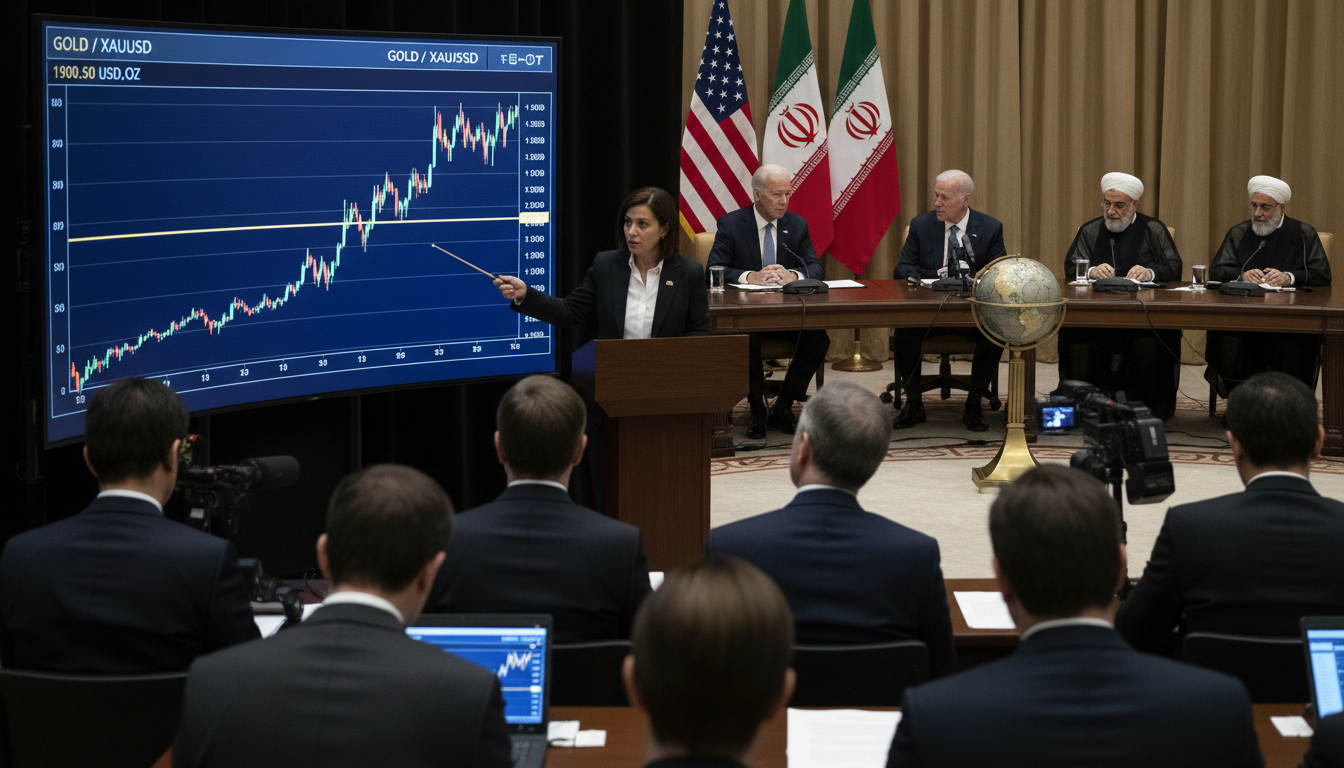
Gold prices hold largely steady as US‑Iran tensions and Fed outlook shape markets
Gold prices held largely steady as investors weighed fresh US‑Iran tensions and Federal Reserve timing; spot gold rose to $4,744.31/oz while other precious metals climbed.
Market snapshot
By 01:00 GMT spot gold was trading at $4,744.31 per ounce, up about 0.1% on the day amid choppy flows and cautious positioning by traders.
U.S. gold futures for June delivery rose roughly 0.2% to $4,762.20 an ounce, reflecting modest appetite for bullion as a risk hedge and liquidity adjusted to geopolitical headlines.
Geopolitical developments influence flows
Markets moved after an announcement by Donald Trump that he had unilaterally extended a ceasefire, a development that briefly eased some risk aversion among investors.
That lull was short lived, however, as Iran’s reported detention of two commercial vessels in the Strait of Hormuz reignited concerns about supply disruptions and prompted energy and safe‑haven flows to swing back and forth.
Wall Street and oil reactions
Wall Street equities posted gains following the ceasefire extension, a reaction that undercut some safe‑haven demand for gold during the Asian and European sessions.
At the same time, oil prices resumed an upward trend after the incidents in the Strait of Hormuz, a move that has the potential to stoke inflationary pressures and, indirectly, support bullion over the medium term.
Monetary policy expectations and inflation risks
A Reuters poll of economists indicated the Federal Reserve is unlikely to cut interest rates for at least six months, given renewed energy shocks stemming from regional hostilities.
That expectation of a prolonged restrictive policy stance reduces some of the appeal of non‑yielding assets like gold in the near term, though persistent inflation concerns may limit downside for the metal.
Performance of other precious metals
Silver in the spot market gained 0.5% to $78.06 an ounce, outpacing gold on the session as traders adjusted positions across the complex.
Platinum rose 0.3% to $2,080.35 an ounce while palladium advanced 0.4% to $1,553.01, reflecting selective industrial and investment demand across different metals.
Trading dynamics and investor behavior
Traders described the market as rangebound, with price moves largely dictated by headline risk rather than a sustained shift in underlying demand.
Hedging flows by producers and speculative positioning by funds contributed to intraday volatility, leaving technical levels intact while fundamental drivers continue to attract attention.
Regional implications for Gulf markets
The Strait of Hormuz incidents underscored the vulnerability of regional shipping lanes and heightened attention from Gulf markets, where energy security is a central concern.
Local bullion dealers and regional investors often react quickly to such developments, potentially increasing demand for physical metal in the UAE and wider Gulf as a short‑term safe harbor.
Outlook for gold prices
Analysts say gold prices are likely to remain sensitive to geopolitical headlines and any shifts in U.S. monetary policy expectations, with ranges set by technical resistance and support levels.
If energy‑related inflation pressures persist and markets price in later Fed easing, bullion could regain stronger upward momentum; conversely, a durable rise in risk appetite would cap near‑term gains.
Volatility in the coming weeks is expected to hinge on further developments in the Gulf and on incoming U.S. economic data that could alter the Fed timeline.
Investors and traders will be watching both geopolitical updates and central bank communications closely for cues that could determine direction.
Short‑term market participants should prepare for headline‑driven swings, while longer‑term buyers may view current levels as an opportunity to reassess allocations to precious metals.
