
US official says Iran planted new mines in the Strait of Hormuz this week
US official tells Axios that Iran planted new mines in the Strait of Hormuz, a move the US military is monitoring amid rising regional tensions.
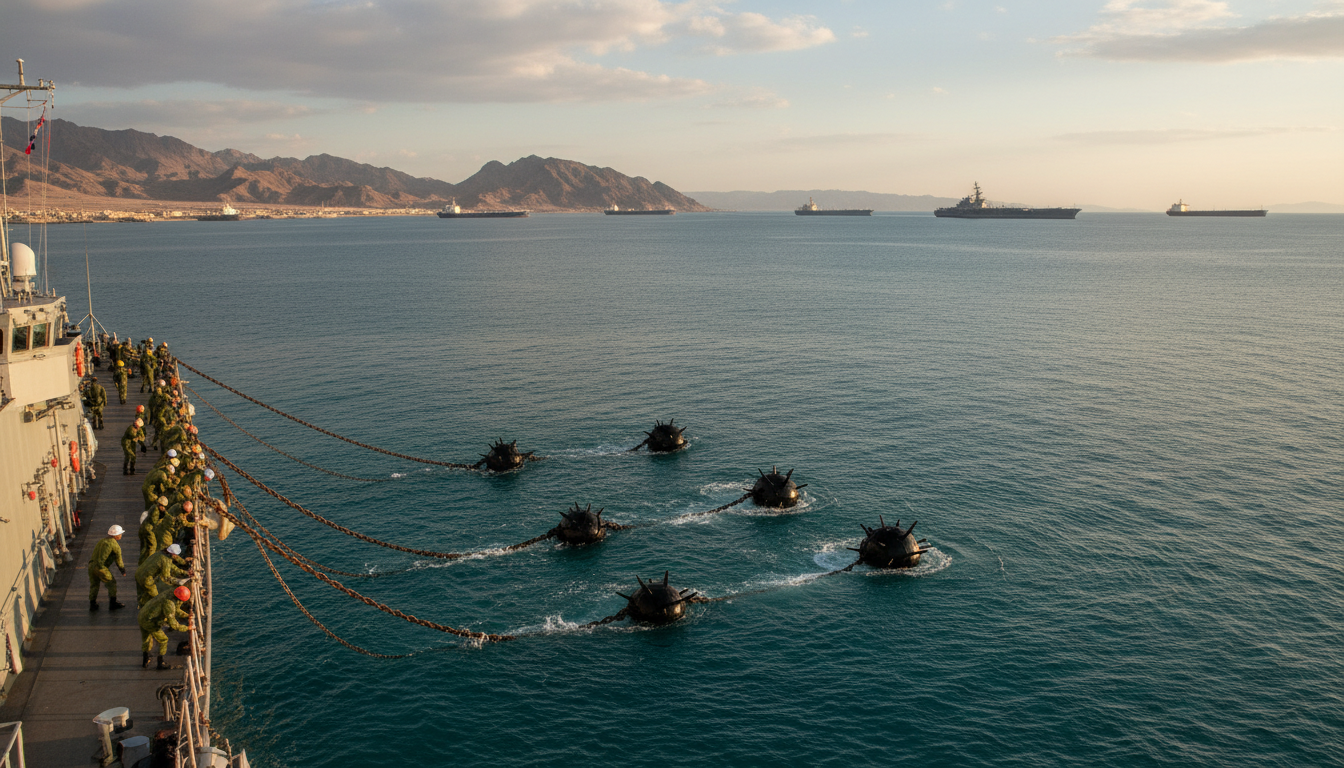
A United States official told Axios that Iran planted new naval mines in the Strait of Hormuz this week, and the US military has detected and is closely monitoring the operation. The development, reported on Thursday, raises fresh concerns about the safety of commercial shipping lanes that carry a significant portion of the world’s oil exports.
US official reports mine-laying activity
A US official briefed on the matter told Axios that American forces observed the mine-laying operation in the strait and are tracking the devices. The official declined to provide detailed locations or the exact number of mines, citing operational security and the ongoing monitoring effort.
US Central Command confirmed heightened surveillance operations in the area but provided limited public detail. Officials said their priority is to protect maritime traffic and to collect further intelligence on the scope of the activity.
US military monitoring and response posture
US naval and airborne assets have been repositioned to enhance surveillance across the Strait of Hormuz, according to officials familiar with the response. Patrols by unmanned systems and maritime patrol aircraft are being used to detect and catalog hazardous objects in the waterway.
Commanders emphasized that detection and tracking are essential before any clearance or interdiction actions are taken. The US military is coordinating with allied navies in the region to share information and to reduce risk to merchant vessels.
Potential impact on commercial shipping and oil flows
The Strait of Hormuz is a narrow chokepoint through which a large share of global seaborne oil passes, and the presence of mines can cause immediate rerouting or delays for tankers. Shipping companies often adopt heightened caution when mines are reported, which can push freight costs and insurance premiums higher.
Analysts warned that sustained mine threats could force vessels to take longer, more expensive routes around the Arabian Peninsula. Any disruption in transit through the strait would have implications for global energy markets and for Gulf economies that rely on steady exports.
History of incidents in the Strait of Hormuz
The strait has been a locus of intermittent confrontations and maritime incidents in recent years, including attacks on commercial vessels and confrontations between Iranian forces and Western navies. Previous episodes of mines or unexploded ordnance have prompted international naval responses and damage assessments.
Observers note that mine-laying increases the danger to civilian mariners and complicates search-and-rescue operations. International maritime organizations have repeatedly warned that the indiscriminate use of mines poses long-term environmental and safety hazards.
Legal and security options under consideration
Under international law, deliberate mining of international shipping lanes can be illegal if it endangers neutral shipping or violates the rules of armed conflict. Diplomatic channels and maritime security bodies are likely to be engaged to seek de-escalation and safer passage.
Military planners said options range from increased patrols and escort missions to coordination for professional mine-clearing operations if necessary. Any kinetic action to remove threats would be weighed carefully against the risks of escalation in an already tense region.
Implications for regional partners and UAE interests
States bordering the Gulf, including the United Arab Emirates, have a direct interest in preserving safe passage through the Strait of Hormuz for trade and energy shipments. Port authorities and commercial operators typically heighten risk advisories when credible threats are reported.
Regional governments and international shipping consortia are likely to monitor advisories from naval forces and maritime security centers closely. Businesses with exposures to crude oil shipments or Gulf-based logistics could face immediate operational and cost impacts while uncertainty persists.
The US official’s account to Axios underscores a continuing pattern of maritime friction in the Gulf that complicates navigation and global energy security. Authorities have emphasized surveillance and information-sharing as immediate steps to protect civilian shipping and to assess whether further measures are necessary.
