
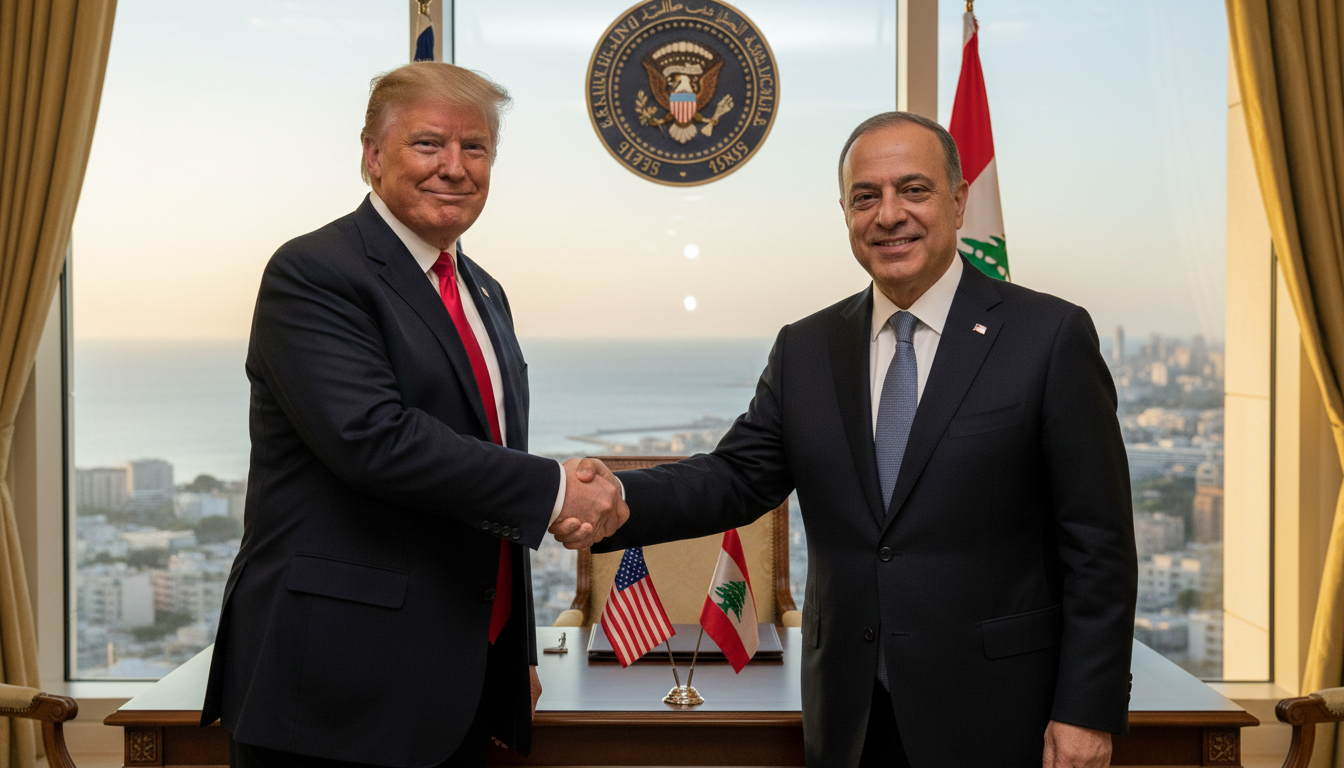
Trump and Lebanon: US President Pledges to “Make Lebanon Great Again” after Ceasefire Extension
Trump told Lebanon’s envoy he could ‘make Lebanon great again’ after Beirut secured a ceasefire extension; diplomats demand protection for civilians.
Strong message from Washington, ambassador says
Lebanon’s ambassador to the United States, Nida Hamadeh Mouawad, told reporters that President Donald Trump expressed keen interest in Lebanon during recent talks.
She said the administration pledged support and used the phrase that it could “make Lebanon great again,” underscoring high-level attention to the crisis.
The ambassador also reported that Lebanon’s primary request — a halt to cross-border violations — was front and center in discussions.
Officials say the outcome included a negotiated extension of the ceasefire that Beirut had sought to limit further destruction in southern Lebanon.
Ceasefire extension secured at Lebanon’s request
Lebanese diplomats said they obtained an extension of the truce after raising concerns about ongoing Israeli incursions.
The extension, they said, was granted in response to Lebanon’s appeal for an immediate reduction in hostilities and damage to civilian areas.
Ambassador Mouawad indicated that securing the pause in fighting was a priority for Beirut and that Washington played a role in facilitating the arrangement.
Details about the duration and enforcement mechanisms of the extension were not disclosed by the ambassador.
Prioritising protection for civilians and infrastructure
Lebanon insisted that the ceasefire be accompanied by strict protection measures for civilians, journalists and humanitarian personnel.
Mouawad emphasized that safeguarding hospitals, relief operations and places of worship remains a top concern for the Lebanese government.
Humanitarian agencies operating in southern Lebanon have repeatedly warned about the exposure of relief workers to hostilities and the wider risk to essential infrastructure.
Beirut’s diplomatic message called for immediate respect for those protections to allow aid to reach affected communities.
Lebanon reaffirms internationally recognised borders
In her remarks, the ambassador reiterated Lebanon’s commitment to its internationally recognised borders and sovereignty.
She said the Lebanese state is taking concrete steps to preserve security and bolster stability along its frontier.
Beirut has been vocal about asserting its territorial rights while seeking international backing to prevent further violations.
Officials framed the diplomatic engagement as part of a broader strategy to deter escalation and maintain national integrity.
Diplomatic implications and regional response
Lebanon’s direct engagement with the White House marks a notable diplomatic moment amid heightened regional tensions.
Analysts say a public pledge of interest from the U.S. president could recalibrate external support and influence the behaviour of other parties on the ground.
Regional actors will likely watch closely to see whether the ceasefire holds and whether Washington follows up with concrete political or security measures.
The Lebanese government appears keen to translate diplomatic attention into practical safeguards for civilians and infrastructure.
Next steps outlined by Beirut and Washington
Ambassador Mouawad called for full respect of the ceasefire declaration and repeated Lebanon’s demand for the cessation of cross-border hostilities.
She stressed that protecting non-combatants and essential services must be enforced if the extension is to prevent further humanitarian harm.
Lebanon said it will continue diplomatic engagement to ensure compliance and to seek international monitoring where possible.
Washington has not released a detailed public account of the talks, leaving some elements of the agreement and future steps opaque.
Lebanon now faces the immediate challenge of ensuring the ceasefire’s durability while preparing contingency plans should violations resume.
Officials in Beirut will also press for international support to rebuild damaged infrastructure and to provide humanitarian relief to affected communities.
