
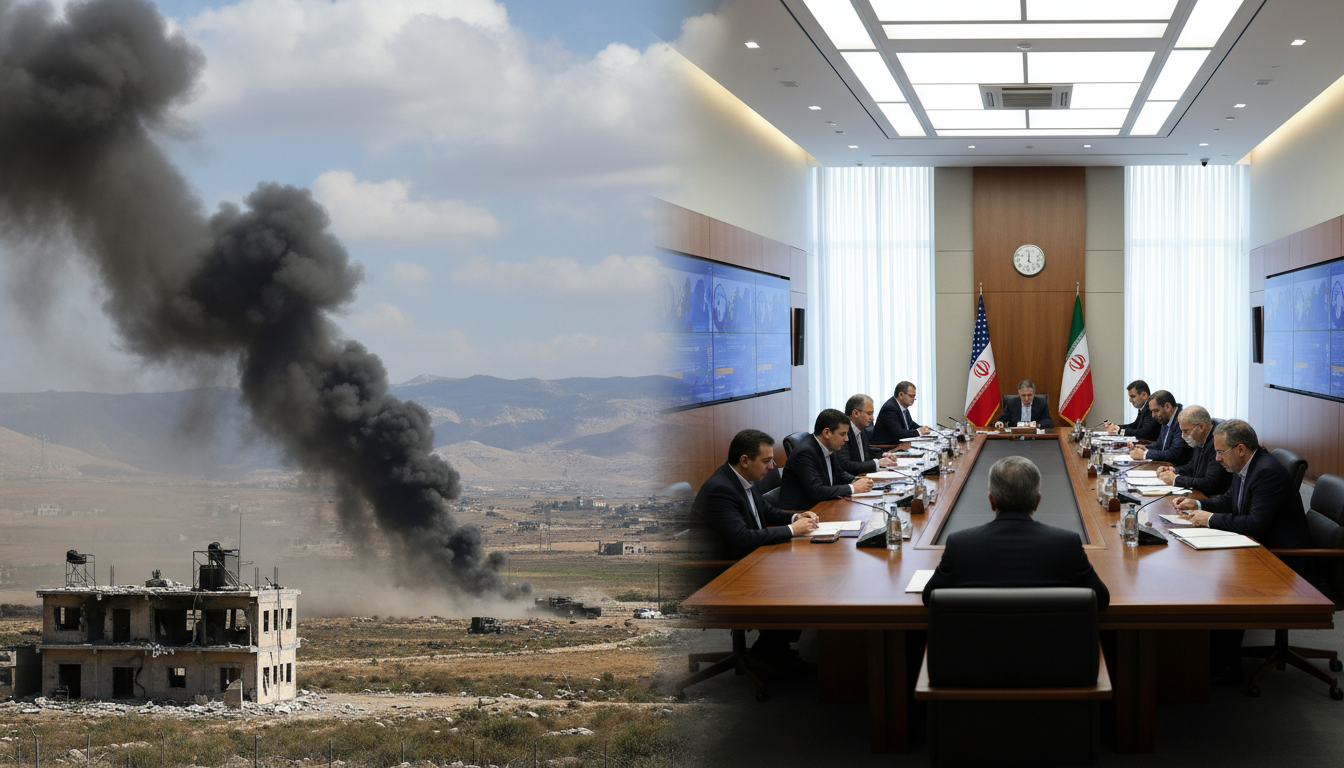
Lebanon cease-fire under strain as Israel and Hezbollah exchange strikes and U.S.-Iran talks stall
Israel and Hezbollah exchanged strikes along the Lebanon border as the Lebanon cease-fire showed signs of erosion, while U.S.-Iran cease-fire negotiations were left in limbo after an aborted Pakistan mediation trip. The dual strains have heightened concerns about a wider escalation across the region.
Cross‑border strikes follow recent cease‑fire extension
Israeli forces said they struck structures in southern Lebanon used by Hezbollah overnight, just days after the existing cease-fire in Lebanon was extended. The Israeli military described the targets as operational sites, while Hezbollah continued to fire on Israeli troops in areas of Lebanon where they have clashed.
The exchange of fire marks a sharp reminder of how fragile the Lebanon cease-fire has become despite formal extensions. Local residents and analysts warned that repeated attacks on both sides risk undoing the limited calm achieved in recent days.
Casualties and combat incidents reported
The Israeli military reported one soldier killed and several others wounded during fighting in southern Lebanon, without providing detailed circumstances of the engagement. Israeli officials said some of the recent strikes killed militants, and Lebanese officials and media reported civilian casualties, including a well‑known journalist.
Such incidents underscore the human cost of the ongoing tit‑for‑tat operations and the difficulty of distinguishing military targets from populated areas. Humanitarian concerns are rising as skirmishes continue near civilian communities and movement remains constrained.
Israeli leadership signals tougher posture
Prime Minister Benjamin Netanyahu said the military was operating “with significant force” and accused Hezbollah of “effectively eroding the cease‑fire.” Israeli public statements framed the strikes as necessary to deter attacks and degrade Hezbollah’s cross‑border capabilities.
The Israeli government has also linked its operations in Lebanon to broader security objectives in the region, signaling a willingness to sustain pressure if hostile activity continues. Observers say any escalation risks drawing in additional actors and complicating diplomatic efforts.
U.S.-Iran cease‑fire talks stall after Pakistan trip cancellation
Separately, talks to secure a U.S.-Iran cease‑fire appeared to stall after President Trump abruptly cancelled a planned trip by American officials to Pakistan, a key mediator in the negotiations. Mr. Trump told Fox News the administration would not send aides on a long journey and suggested Iran could call or come to the U.S. to continue talks.
Iran’s lead negotiator, Abbas Araghchi, returned to Islamabad and then proceeded to Russia, according to Iranian state media, where he was slated to meet President Vladimir Putin. The interruption has left the diplomatic track uncertain, with mediators and officials weighing whether diplomacy can proceed through intermediaries.
Diplomatic channels and mediation options remain fragile
Pakistani mediators had been facilitating the talks, but the sudden U.S. decision not to proceed with the delegation undermined momentum built in recent meetings. Officials from all sides have previously used third‑party venues and secure communications to exchange proposals without direct face‑to‑face contact.
Analysts say neither Washington nor Tehran appears interested in a prolonged war, yet both sides have strong conditions that complicate any durable deal. The current impasse highlights the limits of shuttle diplomacy and the challenge of translating tentative proposals into binding agreements.
Broader regional implications and energy concerns
Tensions between Washington and Tehran have been amplified by naval measures in the Persian Gulf, with Iran demanding an end to a U.S.-imposed blockade of Iranian ports as a precondition for direct talks. The disruption of shipping in and around the Strait of Hormuz has already contributed to spikes in global energy prices.
U.S. officials have intermittently threatened strikes on Iranian infrastructure as leverage in negotiations, but have repeatedly stepped back and offered extensions to allow more time for diplomacy. The tug‑of‑war between coercion and negotiation continues to shape regional markets and security calculations.
The Trump administration has also expressed intent to broker a longer-term peace between Israel and Lebanon and has floated invitations for Israeli and Lebanese leaders to visit the White House. Whether such high‑level diplomacy can move forward while cease‑fire violations and stalled U.S.-Iran talks persist remains unclear.
The immediate future for the Lebanon cease-fire and the U.S.-Iran diplomatic track looks precarious, with cross‑border exchanges and a breakdown in scheduled mediation deepening uncertainty across the Middle East.
