
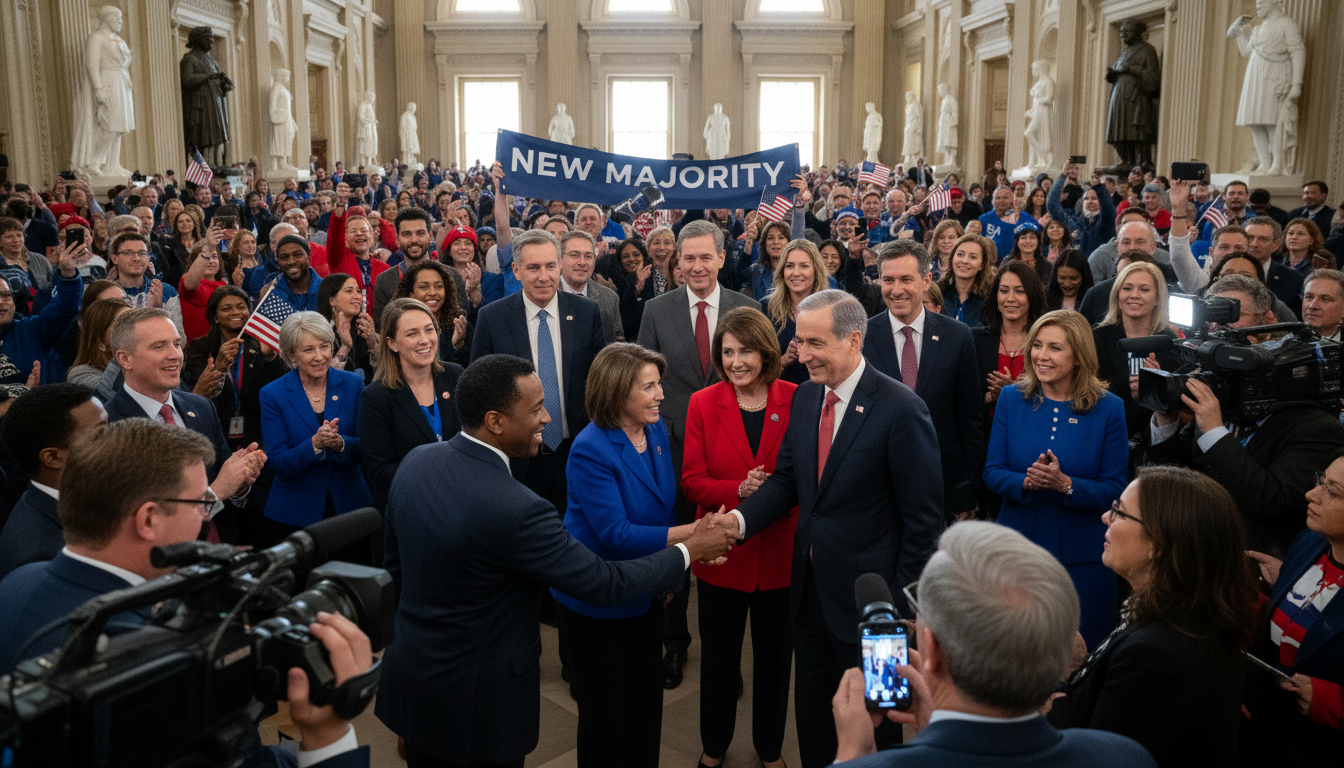
2026 U.S. Midterm Elections: Democrats Poised for House Gains as Voter Anger Reshapes the Race
The 2026 U.S. midterm elections are shaping up as a referendum on presidential leadership rather than a celebration of either major party, with voter anger at President Trump and broader disillusionment lifting Democratic prospects and creating openings for third-party challengers.
Democratic Momentum Driven by Presidential Unpopularity
Polls and analyst commentary suggest the Democratic Party may capture control of the House in November largely because swing voters are reacting against the president’s standing, not out of renewed enthusiasm for Democratic policies. Many undecided voters describe their November choice as selecting the lesser of two evils, a judgment shaped more by frustration than partisan loyalty. That dynamic favors the opposition party when the presidency is unpopular, a pattern historians and strategists say typically plays out in midterm cycles.
Political operatives note that the Democratic gain narrative is less about a surge of devotion and more about a rollback of support for Republican incumbents tied, fairly or not, to the president’s agenda. The practical consequence is a likely Democratic majority in the House that may come without a decisive mandate for sweeping change.
Voter Sentiment Focused on Leadership, Not Party Platforms
Surveys indicate many Americans are losing confidence in the country’s direction, citing a combination of economic strain, educational shortcomings and social divisions. Voters appear to hold the party in the White House responsible for those day-to-day pains, which transforms midterm contests into a vehicle for expressing discontent. This personalization of blame reduces the influence of programmatic debates and elevates the impact of presidential approval on congressional outcomes.
As a result, congressional candidates must contend with a nationalized electoral environment where local races are increasingly framed around presidential behavior and national headlines rather than district-level policy records. For some incumbents, distancing themselves from party leadership has become a strategic necessity.
Structural Strain on the Two-Party System
Longstanding analysts warn the U.S. two-party system is showing structural cracks after decades of hyper-partisanship and mutual escalation between Republicans and Democrats. Both parties, critics say, have traded away moderating norms and governance compromises in favor of scorched-earth tactics aimed at defeating the other side. That strategy has deepened mistrust in institutions and left a sizable portion of the electorate feeling politically homeless.
The erosion is visible in declining institutional confidence and the steady rise of voters who decline to identify as strictly Democratic or Republican. The failure of traditional party structures to address everyday concerns — from public education to the stability of the middle class — has amplified calls for alternatives that can break the cycle of partisan stalemate.
Economic Pressures and Public Services Eroding Trust
Economic anxieties, including stagnating middle-class incomes and the perceived decline of public services, are central to voters’ frustration. Observers point to the growing national debt and unmet needs in former industrial centers as evidence that political leadership has not delivered on core promises. These material pressures translate into electoral consequences when constituents feel their livelihoods are at stake.
Public confidence in government institutions has declined alongside these socioeconomic trends, and civic conversations about policy increasingly give way to disengagement. Families and communities report avoiding political discussions, reflecting a deeper sense that established politics is failing to improve everyday life.
Independents and Third Parties Gain Organizational Footing
A rising share of Americans now identify as politically independent, and that trend has encouraged new organizing efforts outside the two major parties. Emerging groups are investing in local campaigns, framing pragmatic agendas around fiscal responsibility, environmental protection and administrative competence. One notable example cited by observers is a recent municipal victory by a third-party candidate, signaling that alternatives can win at the local level and build credibility.
Organizers of centrist and forward-leaning movements argue that disciplined platforms and tangible commitments to governance can attract disaffected voters from both sides. While national-level breakthroughs remain difficult under the U.S. electoral system, party builders are focused on a gradual strategy of local wins, candidate training and message discipline that could over time alter national dynamics.
Possible Outcomes and Limits of a November Shift
Most analysts expect Democratic gains in the House in November 2026, but they caution that a change in chamber control may not immediately resolve systemic problems. A narrower, partisan turnover risks repeating patterns of legislative gridlock and symbolic victories without substantive policy follow-through. The incoming majority will face intense pressure to translate electoral advantage into meaningful improvements for voters’ daily lives.
Moreover, short-term shifts do not preclude a longer-term reordering of American politics. Political realignments often begin with incremental wins at the municipal and state levels before reshaping national power structures, and current conditions suggest such a process may be underway.
If the midterms serve primarily as a public rebuke of presidential leadership, Congress may reflect that sentiment without delivering lasting remedies to the grievances that produced it. Observers say the larger question is whether new political formations can convert local momentum into a sustainable national alternative.
Public frustration with governance is significant, and the 2026 U.S. midterm elections are likely to be remembered as a moment when voters signaled that the status quo — dominated by two less-popular parties — is increasingly fragile. Policymakers and party leaders will face pressure to respond to that message, but the pace and extent of any political realignment will depend on whether emerging movements can build durable institutions and offer credible solutions to the economic and social challenges driving voter discontent.
