
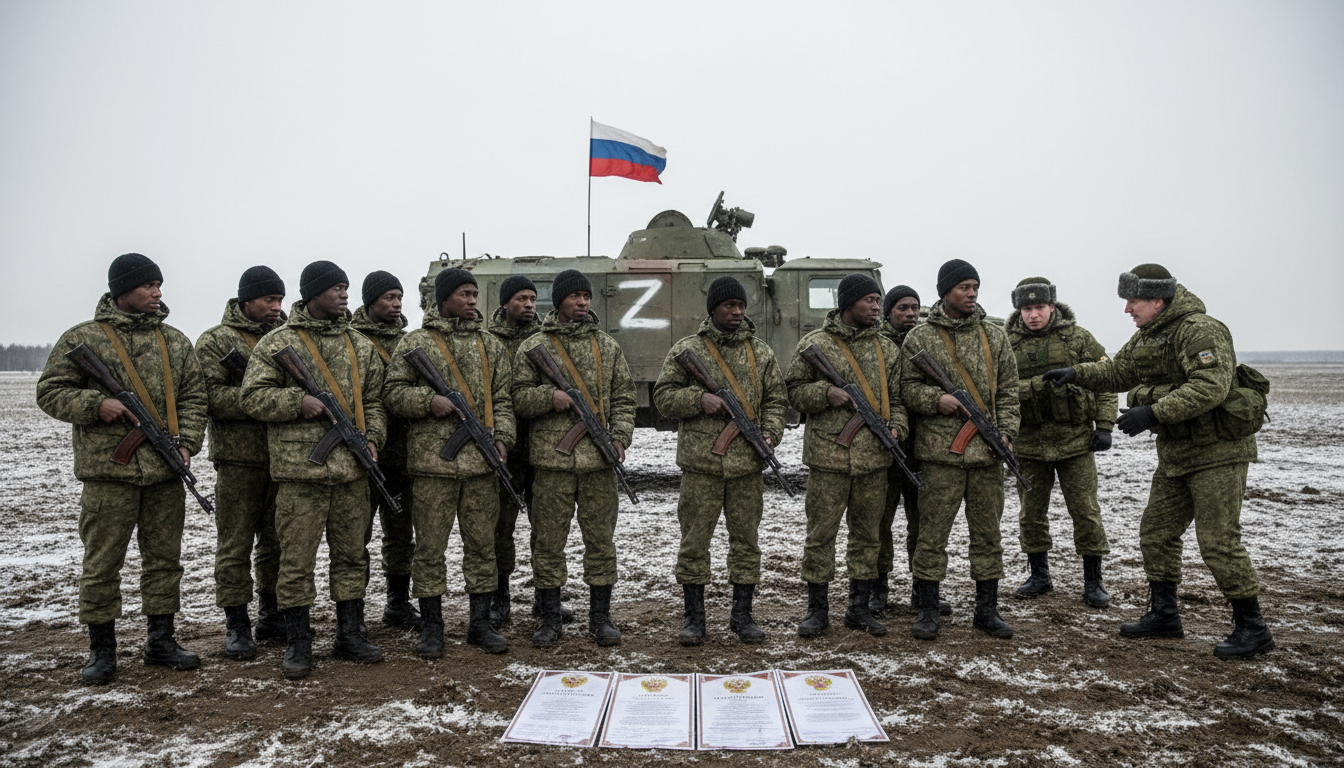
False recruitment of Africans into Russia’s war: job offers lured men to Ukraine frontline
False recruitment of Africans into Russia’s military leaves many dead and hundreds trapped after job offers became coerced service on Ukraine’s front lines.
A growing number of young men from across Africa have been drawn into Russia’s war in Ukraine after being promised ordinary civilian work, according to interviews with survivors and reporting from affected countries. The false recruitment of Africans has seen job adverts, social-media solicitations and small agencies funnel men to Russia, where some were pressured to sign contracts in Russian and sent to fight. Governments and prosecutors across the continent are now investigating a network of recruiters and intermediaries that is exposing vulnerable youth to lethal risk.
Kenyans report disappearances and official counts
Families in Kenya have been among the most visible victims, with relatives left searching for answers after last contacts from men who travelled for work and later appeared in military uniforms. Kenyan authorities, including the National Intelligence Service, have said around 1,000 Kenyans went to Russia and subsequently ended up in Ukraine, with only about 30 reported to have returned alive.
Public memorials and court cases have followed as prosecutors pursue suspects accused of recruiting Kenyans for travel that culminated in frontline deployment. The government has responded by tightening checks on young men departing international flights and by opening investigations into recruitment rings operating domestically.
Travel agencies and social media described as recruitment front
Investigations and survivor accounts point to a network of small travel firms, recruitment intermediaries and social-media groups as key entry points into the scheme. Advertisements posted on platforms such as Facebook, Telegram and WhatsApp offered roles from cooks and drivers to security staff, sometimes promising cash bonuses and expedited citizenship after a short period of service.
Several businesses named in reporting operated as travel or staffing agencies, arranging tickets and paperwork before recruits discovered that contracts and orders presented on arrival were for military service. Middlemen in Africa and contacts in Russia often coordinated logistics, creating a pipeline that preyed on unemployment and limited information among prospective migrants.
Survivors detail brutal training and combat experiences
Men who escaped or were repatriated describe rapid transitions from promised civilian jobs to harsh military training and immediate deployment to contested sectors of the front. One survivor recounted being shipped by train to a camp near Shebekino, given uniforms and rifles, and then ordered into combat near Vovchansk in Ukraine’s Kharkiv region where units were decimated under intense fire.
Accounts include graphic descriptions of battlefield conditions, severe injuries, improvised medical care and coercion by Russian personnel to continue fighting. Several recruits said they only agreed to sign military contracts after being told they owed money for travel and had no means to repay otherwise.
Contracts, language barriers and legal duress
Contracts provided to recruits were frequently written in Russian, leaving non-Russian speakers unable to understand terms that converted travel arrangements into military service obligations. Survivors and their families said they were pressured—sometimes under threat or physical force—to sign, while recruiters justified enlistment as the only route home without large repayments.
Legal cases in several countries reflect these claims, with at least one individual charged in Kenya for recruiting dozens of men and prosecutors in South Africa probing alleged political involvement in recruitment. Governments have emphasized the need to distinguish voluntary foreign enlistment from schemes that amount to trafficking or coercion.
Scope extends across Africa, with multiple governments reporting cases
Officials in Tanzania, Zambia, South Africa, Nigeria, Ghana, Togo, Botswana, Mali and other states have reported citizens targeted by recruitment networks or found in Russian military formations. Some countries have recorded fatalities among their nationals; Ghana reported dozens killed, and Cameroon and Botswana also confirmed citizen deaths linked to the conflict.
Individual stories cut across socioeconomic backgrounds but converge on common drivers: acute unemployment, the promise of rapid earnings, and persuasive personal contacts. In one case from Botswana, a young man who had sought to rebuild his life after imprisonment said he was recruited via Telegram by a purported travel agent and later discovered he was being trained as a soldier.
Diplomatic reactions and denials from Moscow; Kyiv and African governments push back
Moscow officials have acknowledged the presence of foreign volunteers but deny systematic coercion, with statements asserting that any foreign fighters are present under Russian law. Kremlin spokespeople and foreign ministry representatives have said they are unaware of cases in which civilians were tricked into military service.
Ukraine’s diplomatic representatives and African officials have countered that recruiters are exploiting economic desperation, while some African heads of state and foreign ministries have raised the issue directly with Russian counterparts. International concern has prompted stricter exit screening in some countries and ongoing criminal probes into recruitment rings and traffickers.
Vulnerable young people across Africa remain at risk while demand for manpower in the war persists and recruitment offers continue to circulate online and in person. As investigations proceed, authorities and civil-society groups are calling for stronger cross-border cooperation, clearer public warnings and targeted support for unemployed youth to reduce the lure of offers that can lead to forced military service.
