
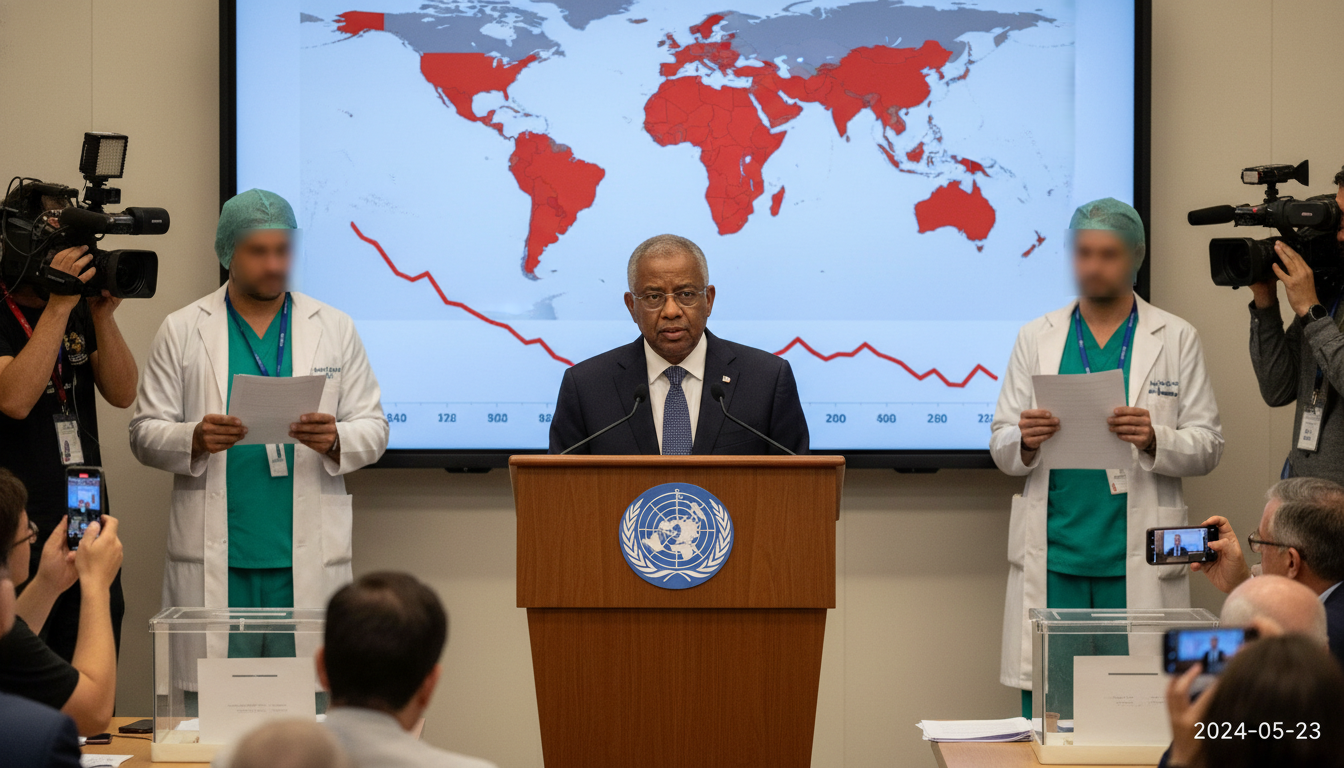
WHO funding crisis raises alarm as Ebola declared global emergency and hantavirus spreads
WHO funding crisis weakens outbreak readiness as Ebola is declared a PHEIC and a hantavirus tied to a cruise prompts urgent international health coordination.
The World Health Organization’s declaration that Ebola outbreaks in Uganda and the Democratic Republic of the Congo are a “public health emergency of international concern” has renewed scrutiny of global preparedness and the WHO funding crisis. Health agencies are also confronting a separate hantavirus cluster linked to a cruise ship, pressuring cross-border surveillance and response systems. Public health experts warn that funding shortfalls and political disputes are amplifying risks at a moment when rapid coordination is essential.
WHO Declares Ebola Outbreak a Global Emergency
The WHO’s PHEIC determination signals the highest level of international alert and triggers intensified coordination and resource mobilization. The decision follows rising case counts in both Uganda and the DRC, with deployments of laboratory support, personal protective equipment, and emergency teams to affected areas. Officials emphasised that declaring a PHEIC is intended to galvanize global action while also guiding travel and trade advice based on evolving evidence.
The concurrent hantavirus cases tied to a South America cruise have complicated the response landscape by requiring monitoring, contact tracing and medical evacuations across multiple countries. Public health authorities say the two events require different clinical approaches but share a common need for swift international data sharing and operational support. The WHO has been acting to coordinate both responses, even as resource constraints limit its reach.
Funding Shortfalls Erode Global Preparedness
Since 2025 the WHO has faced a pronounced funding squeeze that officials say is hampering routine surveillance and surge capacity. Budget revisions for 2026–27 trimmed programme spending, and key preparedness activities have been scaled back as donor contributions fell. Experts argue that cutting surveillance and laboratory networks reduces the ability to detect and contain outbreaks in their earliest stages.
Observers point to the withdrawal of a major donor and broader geopolitical shifts as contributors to the shortfall, noting that sustained investment is needed for workforce training, laboratory networks and rapid deployment capabilities. The WHO funding crisis is cited by epidemiologists as a pivotal factor that can slow outbreak detection and delay life-saving responses. Independent bodies warn that gaps created by funding volatility increase the chance that local outbreaks will cross borders before they are controlled.
Cross-Border Coordination Strained by Political Disputes
International cooperation on pathogen sharing remains unresolved, complicating rapid scientific and public health action during a crisis. Negotiations over the Pathogen Access and Benefit-Sharing annex — aimed at ensuring equitable access to vaccines and therapeutics — have stalled amid disagreements over terms for sample sharing. Health officials say delays in finalizing these rules can slow the development and distribution of diagnostics and countermeasures when time is most critical.
The Protocol’s impasse also highlights how political friction can undercut the International Health Regulations framework and hinder the WHO’s ability to orchestrate a pooled global response. Advocates for a swift agreement argue that clear, agreed mechanisms for sharing samples and benefits would incentivize transparency and speed up research. Without consensus, countries may be less willing to share vital data quickly, increasing the risk of wider spread.
Antivaccine Influence and Cuts to Vaccine Research
Rising antivaccine sentiment and policy decisions have also affected preparedness, according to public health specialists. The erosion of public trust complicates vaccination campaigns and can reduce uptake during emergencies, while leadership that questions vaccine safety may influence funding and policy priorities. Experts warn that weakened public messaging and reduced immunization capacity can magnify the human toll of outbreaks.
Funding shifts have further impacted vaccine research pipelines, including cuts to mRNA and other platform development in recent years. Analysts note that investments made before a crisis are crucial for rapid vaccine adaptation and manufacturing scale-up. Reductions in these programmes risk slowing the pace at which new vaccines and boosters can be developed and distributed in response to emerging threats.
Economic Pressures and Supply Chain Disruptions
Global economic shocks and regional conflicts are adding another layer of complexity to outbreak preparedness and response. Recent disruptions in energy markets and supply chains have increased costs for medical supplies and transport, while diverting government attention and resources. Higher prices for essential medicines and logistical bottlenecks make it harder for health systems to maintain stockpiles and surge capacities.
Public health officials caution that wars, inflation and strained trade routes can force countries to prioritize immediate economic needs over long-term preparedness. Those choices can leave vulnerable populations and fragile health systems exposed when new outbreaks arise. Analysts argue that framing preparedness as both a health and economic safeguard could help shift policy toward sustained funding.
Scientific Advances and Preparedness Gains Since COVID-19
Despite these challenges, there have been tangible improvements in global health architecture and scientific capability since the COVID-19 pandemic. The adoption of a Pandemic Agreement and the establishment of funds and rapid response mechanisms have expanded surveillance, lab networks and workforce training in many countries. Initiatives such as the Global Health Emergency Corps and pooled financing have produced targeted investments to strengthen readiness in vulnerable regions.
Technological progress, especially in vaccine platforms like mRNA, has shortened the timeline for candidate vaccine design and early manufacturing efforts. Rapid genomic data sharing during recent outbreaks demonstrates that scientific collaboration can still move quickly when trust and resources align. Public health leaders stress that these gains must be preserved and multiplied through predictable funding and political commitment.
The WHO funding crisis has once again underscored the fragile balance between scientific capacity, political will and financial support in global health. As Ebola responses scale up and hantavirus clusters are traced, experts urge sustained, multilateral investment and immediate agreement on sharing frameworks so that diagnostics, therapeutics and vaccines can be developed and deployed without delay. Only stable financing and cooperative governance, they say, will close the gap between what is possible in laboratories and what is achievable in communities.
